
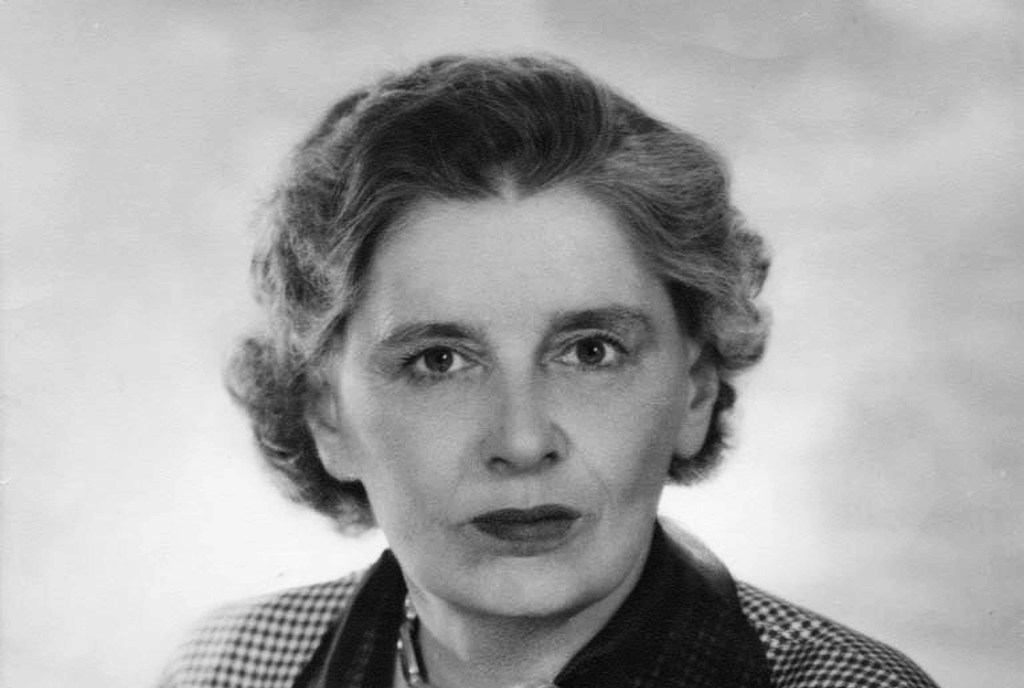
Rebecca West was the pseudonym adopted by Cicely Isabel Fairfield (1892-1983).
She was the youngest of three daughters born to Charles Fairfield (1841-1906), an Anglo-Irish journalist and author, and Isabella Campbell Mackenzie (1854-1921), a Scotswoman, who, prior to marriage, had been a concert pianist.
Fairfield had a colourful past. He had served in the Rifle Brigade and as a stretcher-bearer during the American Civil War. He had also been sentenced to five years’ imprisonment for stealing gold and silver coins worth over £100.
West’s two elder sisters were Josephine Letitia Fairfield (1885-1978), later a medical doctor and public health official, and Winifred Alice Fairfield (1887-1960), who married an Admiralty civil servant.
Her parents married in Melbourne, living for a while in Australia before returning to London. Here they had a succession of homes, in Richmond, Bayswater and Streatham Place.
Although it was a lively, loving, intellectual upbringing, encompassing music, art, books and political ideas, the family were financially insecure. Fairfield periodically gambled away the money he earned, or squandered it on numerous affairs.
By 1900 the family had nominally returned to live in Richmond, but Fairfield had already deserted them, ostensibly to begin manufacturing pharmaceuticals in Sierra Leone . He had also revealed the existence of a second family in the United States!
He was to die alone, in poverty, just six years later.
Mother and children moved to live with relatives in Edinburgh, where the girls attended George Watson’s Ladies’ College.
West trained as an actress and worked as a journalist on suffragette magazines, acquiring her pseudonym from the heroine of Ibsen’s play Rosmersholm (1886).
In 1913 she began a long-term affair with H.G.Wells and they had a son together, the novelist Anthony West (1914-1987), with whom she later had a notoriously difficult relationship, threatening to sue over his semi-autobiographical novel ‘Heritage’ (1955).
She married banker Henry Maxwell Andrews in 1930 and they remained together until his death in 1968, despite his end-of-life obsession with a Norwegian ballerina.
West’s first novel ‘The Return of the Soldier’ appeared in 1918, followed by ‘The Judge’ (1922) and ‘The Thinking Reed’ (1936).
There was a 20-year hiatus before ‘The Fountain Overflows’ (1956).
Two sequels to ‘The Fountain Overflows’ – ‘This Real Night’ (1984) and the unfinished ‘Cousin Rosamund'(1985) were published posthumously, forming a trilogy. The lengthy delay indicates the struggle West had to write them, and they do not really match the quality of their precursor.
The novel has strong autobiographical elements.
Piers Aubrey is a talented journalist and pamphleteer, hopeless with money and given to disastrous investments. But he is also handsome, charming, loved by his wife and family.
Clare Aubrey, formerly Clare Keith, was an outstanding concert pianist. She met Piers in Ceylon, while serving as companion to a female admirer who was travelling round the world. She had taken this extended break following the sudden death of her brother.
They married and moved to South Africa, Clare abandoning her musical career. They have four children: Cordelia, Mary, Rose and Richard. Rose is the novel’s narrator.
As the story begins, the family has returned to Edinburgh, where Piers has been employed by The Caledonian newspaper. But there have been undisclosed difficulties, and they will shortly move to London, where Piers has been given employment as editor and leader writer on a local newspaper, The Lovegrove Gazette.
The move is effected, to a house Piers visited often as a child, but he uses it as an opportunity to sell the family’s best furniture.
All the children are musical. Rose and Mary expect to become professional pianists, under their mother’s rigorous tutelage, while Cordelia plays the violin and, once old enough, Richard learns the flute.
Though Cordelia is equally as committed as her sisters, and far more popular with the teachers at their school, her mother privately insists that she is not a true musician, nor will she ever become one.
Clare and Rose make a surprise visit to see their cousins, Constance and her daughter, Rosamund. Constance is married to Jock, an outstanding flautist who hides his abilities behind a veneer of unpleasant sarcasm.
As Clare and Rose arrive, they find the house in the grip of a poltergeist, which they eventually persuade to depart. This is something to do with the four of them being in the room together.
Thereafter, Constance and Rosamund often come to stay with the Aubreys.
Rosamund is neither musical nor intellectual but, though often considered stupid at school, she is outstandingly good at chess. She wants to become a nurse.
She and her mother earn money from sewing clothes for West End boutiques for, though Jock earns a good living, he does not share his wealth with them.
Rose displays further psychic abilities at a party, held at the home of Nancy Phillips, a fellow pupil. She demonstrates her mind-reading skill to Nancy’s mother, Queenie.
After that, this paranormal strand disappears from the plot. Mrs Aubrey definitely does not approve.
Queenie is a ‘fast’ woman, eventually found guilty of murdering her husband. Nancy and her Aunt Lily are taken in by the charitable Aubreys.
Piers is instrumental in saving Queenie from the gallows, proving the judge to be mentally unstable and using his influence with a prominent parliamentarian. He willingly accompanies Aunt Lily on several visits to her sister in prison.
Meanwhile, Cordelia has fallen under the influence of her misguided teacher, Miss Beevor. She arranges for Cordelia to give several concerts, which prove popular. Miss Beevor is at odds with Clare Aubrey over her daughter’s musical talent, and has a crush on her to boot.
Eventually, Cordelia is accidentally drawn to the attention of Hans Fechter, a particularly cruel teacher her mother has expressly warned her against meeting. Fechter is scathing, but we do not learn exactly what he says.
Cordelia is crushed, but ultimately emerges from the ensuing crisis, now seemingly more interested in dressmaking.
As the novel ends, both Mary and Rose successfully win scholarships to music schools. Rose learns that Mary is considered the more talented, but that she should be able to succeed too, by dint of greater industry.
But, a few chapters earlier, their father has already deserted them. In a note to his wife, he asks their forgiveness, but it is clear he plans never to return.
He has apparently taken some hidden valuables from a secret compartment which they did not know existed. They presumably belonged to his great aunt, who once lived in the house.
They possess three portraits of his ancestors. Their mother reveals that she has deceived everyone into thinking they are copies. They are in fact originals, and their sale will fund the family until Mary and Rose can support them.
I had mixed feelings about this novel.
It provides a vivid family portrait of life in Edwardian London, as experienced by the children of one atypical household, musical and intellectual, but also in straitened circumstances.
The plot is sufficiently gripping to hold the reader from beginning to end.
Giving the narrative voice to a child has both strengths and weaknesses.
It enables West to explore in some depth the impact of marital breakdown upon a couple’s children. We understand that their childhoods have been happier and more fulfilling than we might have been led to expect.
On the other hand, there is an embarrassment of Pappa-ing and Mamma-ing.
And, because the children are almost completely insulated from the real business between man and wife, so of course are we.
The child’s eye view is deflected elsewhere while Piers and Clara discuss their relationship and, presumably, strive to resolve the difficulties that arise from his selfishness and irresponsibility. If adultery is part of the equation, it is never exposed.
In short, we see Piers and Clara as father and mother, but never really as husband and wife.
This is well worth reading, nevertheless.
TD
September 2026








Leave a Reply