

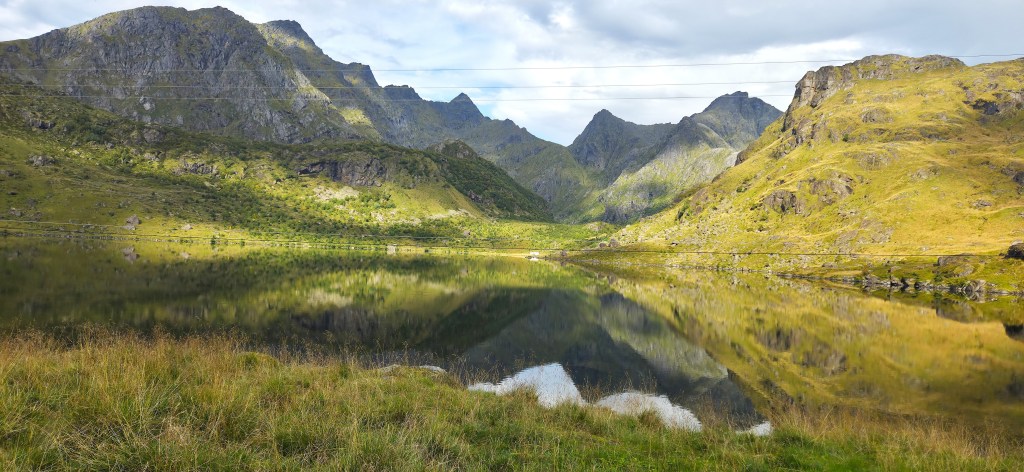
Since I’m heading imminently to Norway, it seemed appropriate to read a seminal work by a Norwegian author.
This was my second encounter with Hamsun, having completed his early, semi-autobiographical novel ‘Hunger’ (1890) some 20 to 30 years ago.
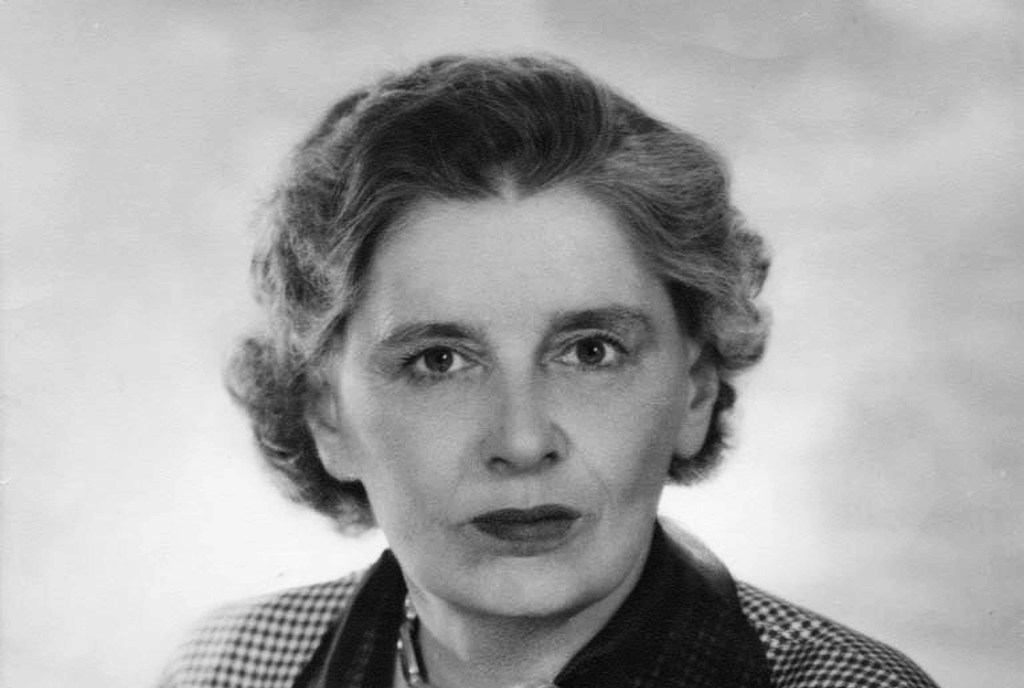
Knut Hamsun (1859-1952) was originally Knud Pederson, born into comparative poverty in central Norway. Knud’s father was a tailor and he was one of seven children.
At the age of three, his family moved north, to Hamsund. Here they eked out a living by farming land owned by a wealthier relative.
As a teenager, Hamsun acquired a variety of jobs, including shop assistant, apprentice shoemaker, apprentice ropemaker and sheriff’s assistant.
During his twenties he twice relocated to the United States. He spent four years there, predominantly in Minnesota and Wisconsin, sometimes working as a farm labourer, sometimes in other roles.
He had already published early writings under the name ‘Knud Pederson Hamsund’, but received little attention until the publication of ‘Hunger’, exploring the impact of poverty and fasting on a young writer living hand-to-mouth in the Norwegian capital.
He became ‘Knut Hamsun’.
Hamsun married Bergljot Bech in 1898 and they had a daughter, but that relationship foundered in 1906.
In 1909 he married Marie Andersen, an actress, poet and writer of children’s books, who ultimately outlived him. They had four further children, two sons and two daughters.
By now he had written several novels, as well as poetry, plays and collections of short stories. But ‘ Growth of the Soil’, his most celebrated work, was not published until 1917.
In 1920 it won him the Nobel Prize for Literature.
Hamsun’s reputation has been tarnished by racism and his undisguised admiration for Hitler and Nazi Germany. (In contrast, he was violently anti-British.)
He supported the German Reich throughout the Second World War and, afterwards, only escaped imprisonment because of his advanced age and the (apparently mistaken) belief that he was mentally unsound.
He paid a heavy fine instead, living a further seven years until his death in 1952, aged 92.
I read the 2007 English translation by Sverre Lyngstad, which is broadly fine, but does occasionally lapse into an incongruous Americanism, such as ‘howdy and goodbye’, or ‘gotten into trouble’.
The narrative deals with the painstakingly slow and backbreaking cultivation of the north Norwegian wilderness – whether forest, moorland, heath or bog – which lies between an unnamed village below and unnamed mountains above.
The first settler is Isak, a strong, simple, taciturn man who keeps his few thoughts and feelings to himself.
Isak soon realises that he needs female assistance and, eventually, this need is supplied by Inger, a strongly-built young woman disfigured by a hare lip.
Nature takes its course and Inger gives birth to two sons, Eleseus and Sivert.
But she kills her third child immediately after birth because it, too, has a hare lip. She is determined to spare it the childhood struggles that she has experienced.
She is eventually tried and imprisoned for eight years. Early in her sentence she gives birth to an unblemished daughter, Leopoldine. Her own lip is surgically repaired.
Meanwhile, another settler arrives, called Axel Strom. He, too, struggles to find a female helpmeet, but eventually secures Barbro, who has returned from a spell in Bergen.
Hamsun portrays town life only indirectly, through his characters’ memories of their time away but, for him, it clearly ranks a poor second to life in the wilderness. Though superficially attractive, especially to the young, it is frivolous and, ultimately, vacuous.
Barbro loses Axel’s baby at birth, probably another infanticide (she later admits to Axel that she has murdered a previous baby by throwing it into the sea). No longer tied to Axel by the child, she is free to return to Bergen, where she would much rather be.
She, too, is eventually arrested but, at her trial, is saved by Mrs Heyerdal, the sheriff’s wife, who makes an impassioned speech in defence of women driven to kill their children. Barbro is not imprisoned but taken in to Mrs Heyerdal’s home, becoming her servant.
Inger eventually returns to Isak, now able to read and write, and with valuable weaving and needleworking skills. She strives to fit back into the solitary life of settlers in the wilderness.
She gives birth to a final daughter, Rebecca, but is afflicted by ‘wildness in the blood’, embarking on a fling with an itinerant workman. Eventually, though, she settles down.
While Sivert proves a valuable assistant to his father, Eleseus is taken into an engineer’s office in town. When he eventually returns, his job having vanished, he too misses town life.
His father eventually sets him up as a storekeeper. He contents himself with occasional trips to buy stock, all the while sponging off his father. Ultimately, though, Eleseus leaves for America, never to return.
Meanwhile, Barbro goes back to Axel, unable to cope with the restrictions placed upon her freedom by Mrs Heyerdal. Despite these, she is seemingly pregnant once more. Axel accepts her anyway.
A former sheriff named Geissler appears several times during the narrative, either descending from the mountains or ascending from the village below.
Almost a god-like figure, he often finds ways to support the principal characters, particularly Isak, not least by encouraging or discouraging exploitation of copper deposits in the mountains.
The novel ends with a final celebration of the settlers’ lifestyle and the land they have made fertile:
‘Nothing grows here? Everything grows here, man and beast and fruit of the soil. Isak sows. The evening sun shines on the grain, which radiates from his hand in a circle and sinks like a spray of gold into the ground. There comes Sivert to harrow; later he will use the roller and then harrow again. The forest and the mountains are watching, it is all sublime and majestic, there is meaning and purpose.’
This was a backward-looking, nostalgia-filled novel, even when it was written. It may seem almost irrelevant to a contemporary audience, its characters’ motivations impossible to understand.
But, stylistically, Hamsun’s use of interior monologue to portray his characters’ thoughts and feelings was a key staging post, almost a missing link, between Edwardian fiction and some of the great experimental novels of the 1920s.
‘Growth of the Soil’ still deserves our time and attention, if we are prepared to set aside the author’s distinctly unpleasant beliefs.
I did so and found this book a worthwhile reading experience.
TD
August 2026





Leave a Reply