
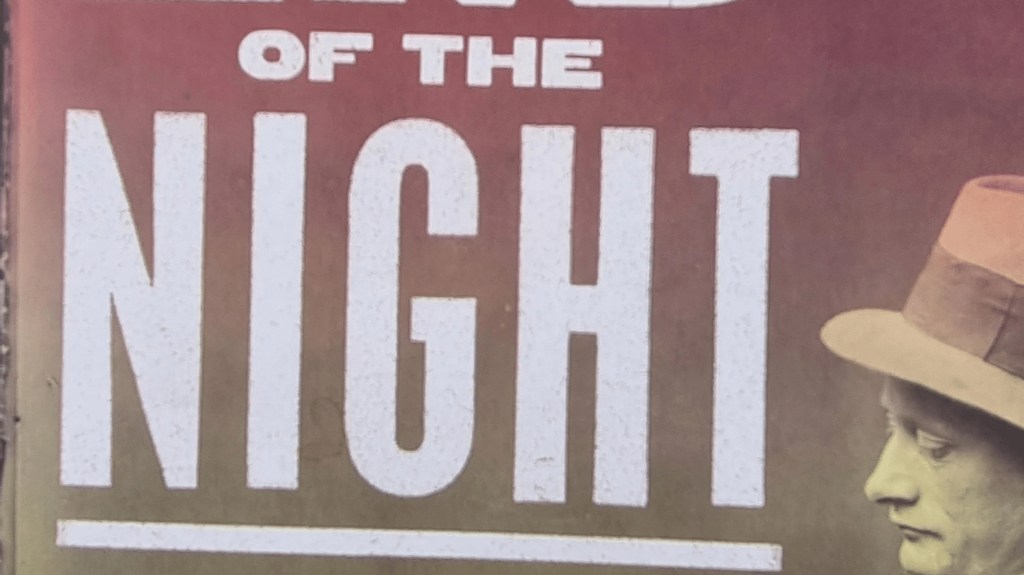
Céline was the nom de plume of Frenchman Louis Ferdinand Destouches (1894-1961).
‘Voyage au bout de la nuit’ was his first and most celebrated novel, published in 1932. I read the 1983 English translation by Ralph Manheim.
Destouches was a medical doctor whose later anti-semitism and Nazi sympathies have undermined his literary reputation.
Even so, he is widely regarded as one of the most influential French novelists of the Twentieth Century – a profound influence on the likes of Henry Miller, William Burroughs and the wonderful Kurt Vonnegut.
The novel is loosely autobiographical, recounting the serial (mis)adventures of anti-hero Frederick Bardamu: as a soldier trying to evade the Great War; in a remote tropical African trading post; as an escaped galley slave in New York and Detroit; and as a doctor, initially ministering to the poor in a Parisian suburb, then to wealthier patients in a private mental hospital.
He repeatedly encounters the equally anti-heroic Léon Robinson, whose reappearances are central to the plot and whose death concludes the novel.
The narrative is scatological and has a haunting, nightmarish quality. Celine’s view of the human condition is wholly pessimistic.
The original text utilised heavily the spoken French of the Parisian streets and is peppered with contemporary slang.
Essential reading for those seeking a greater understanding of the Twentieth Century literary tradition, but not for the faint-hearted perhaps.
TD
August 2023






Leave a Reply