
This Dracup family history post still has some loose ends.
There are conundrums in every family tree, and I have long puzzled over the marital history of this particular Arthur Dracup.
I flatter myself that I’ve made considerable progress, but I’m still missing a few pieces of the jigsaw. I’ve flagged those up below, in case there are readers who may be able to supply them.
This post is also unusual because Arthur, the man at the centre of this narrative, is something of an enigma.
It is as if, by fading into the background himself, he has given far greater prominence to the women in his life, particularly the three partners that he definitely married.
Arthur lived in Bradford, working as a compositor on local newspapers, but I can discover little else about him.
He seems to have avoided the limelight, and with good cause, since his convoluted marital history might otherwise have caught up with him.
I might have sought to fill this gap by writing at some length about the working life of printers and compositors, except that I have already done so in this post about Edmund Dracup and his descendants.
We are only distantly related, our first common ancestor being Nathaniel Dracup (1728-1798).
Despite these shortcomings, I hope that this piece of investigative family history will be of some interest, because it provides the ideal opportunity to explore some rich veins of social history during the first third of the Twentieth Century.
As always, I am open to discussion with anyone, especially direct descendants, who may feel that I have been unfair to these subjects.
Though I believe it important to shine a light on all facets of our ancestors’ lives, including the seamier side, I strive not to be overly judgmental.
And, although I don’t intend to cause unnecessary embarrassment, I’m acutely aware that there may be living relatives who might have preferred to let these sleeping dogs lie.
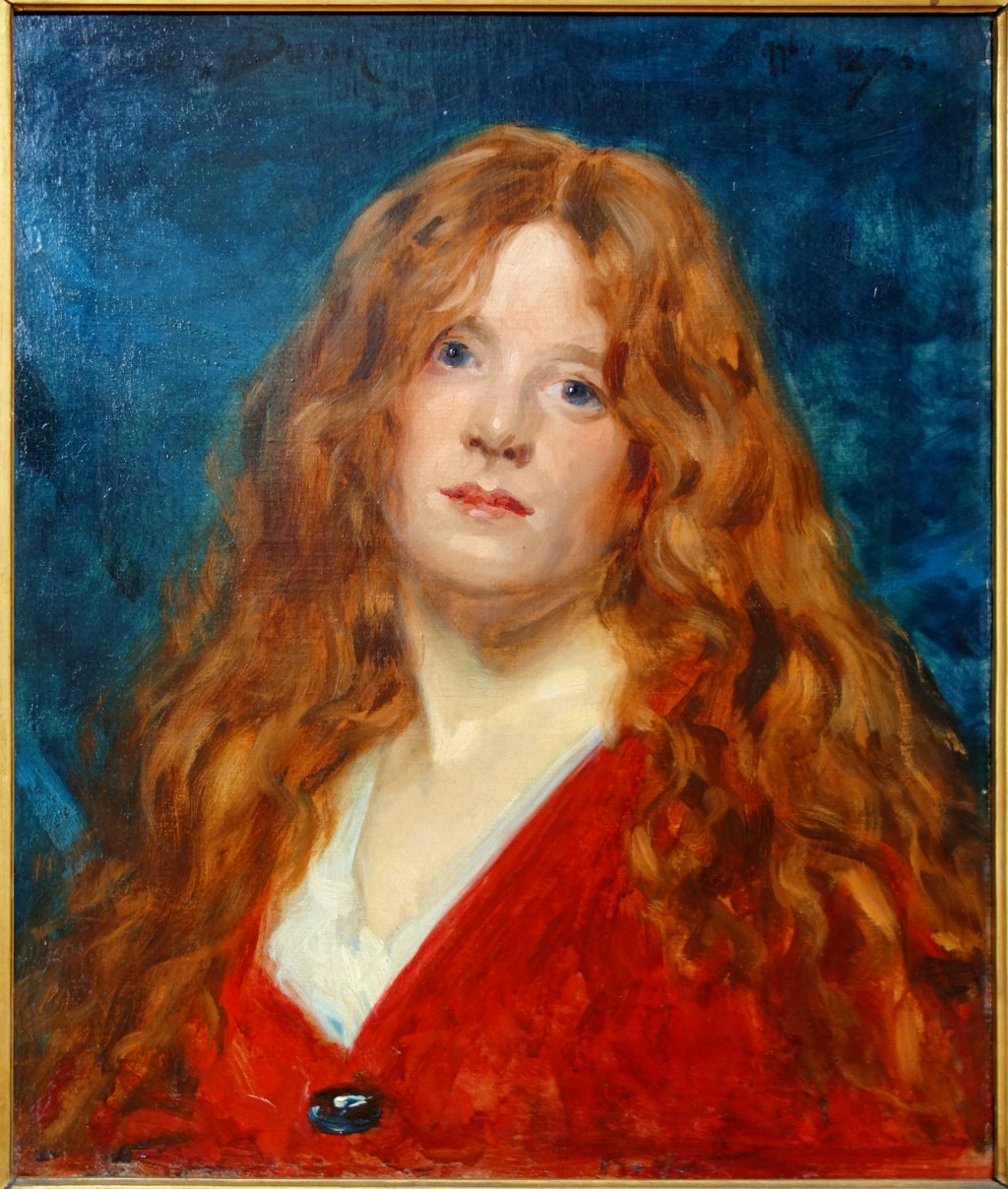
One final preamble: red hair often seems unusually prevalent amongst Dracups, including amongst my particular branch.
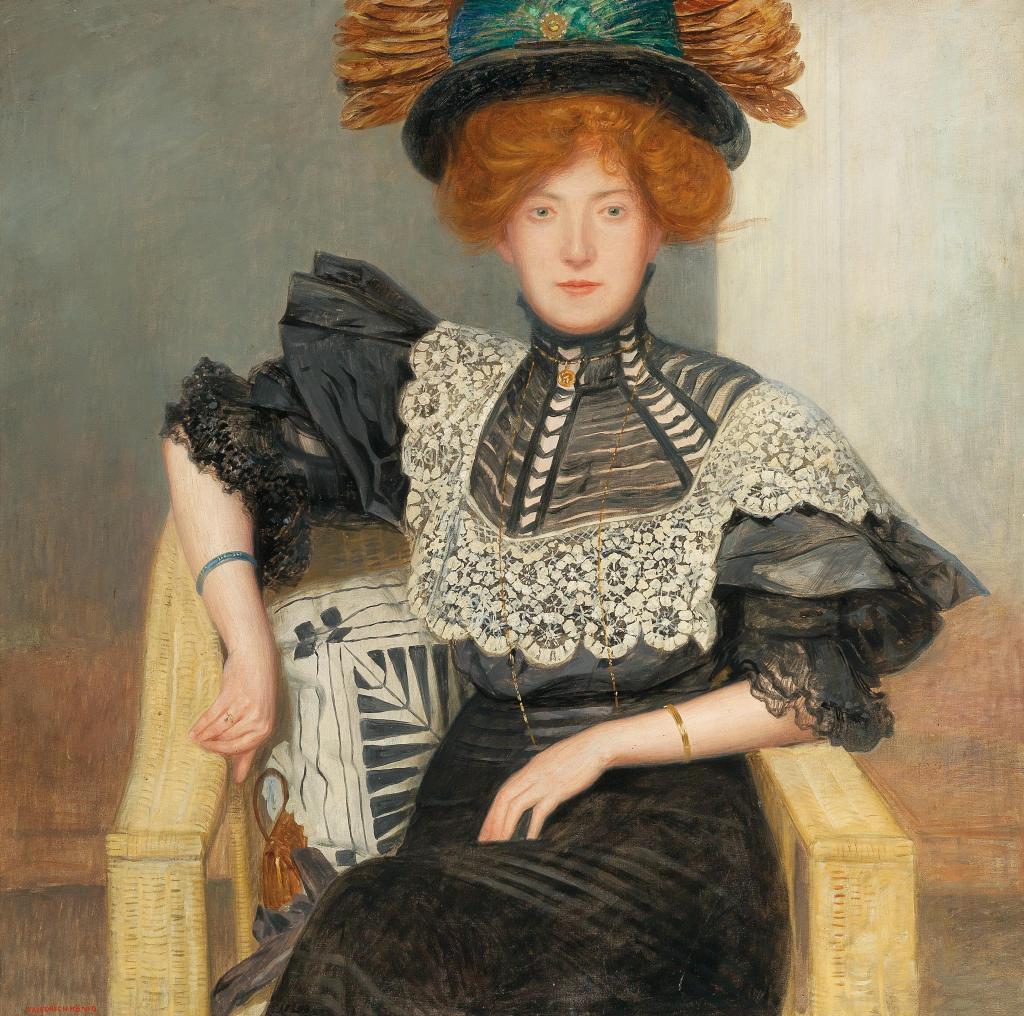
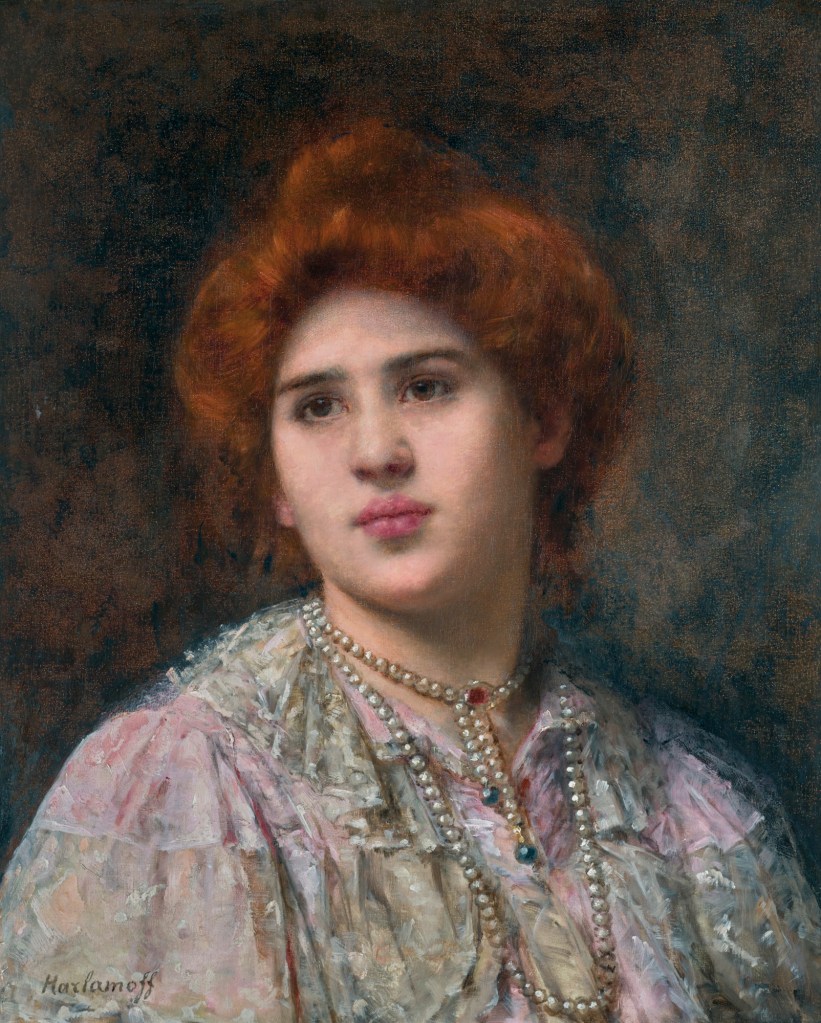
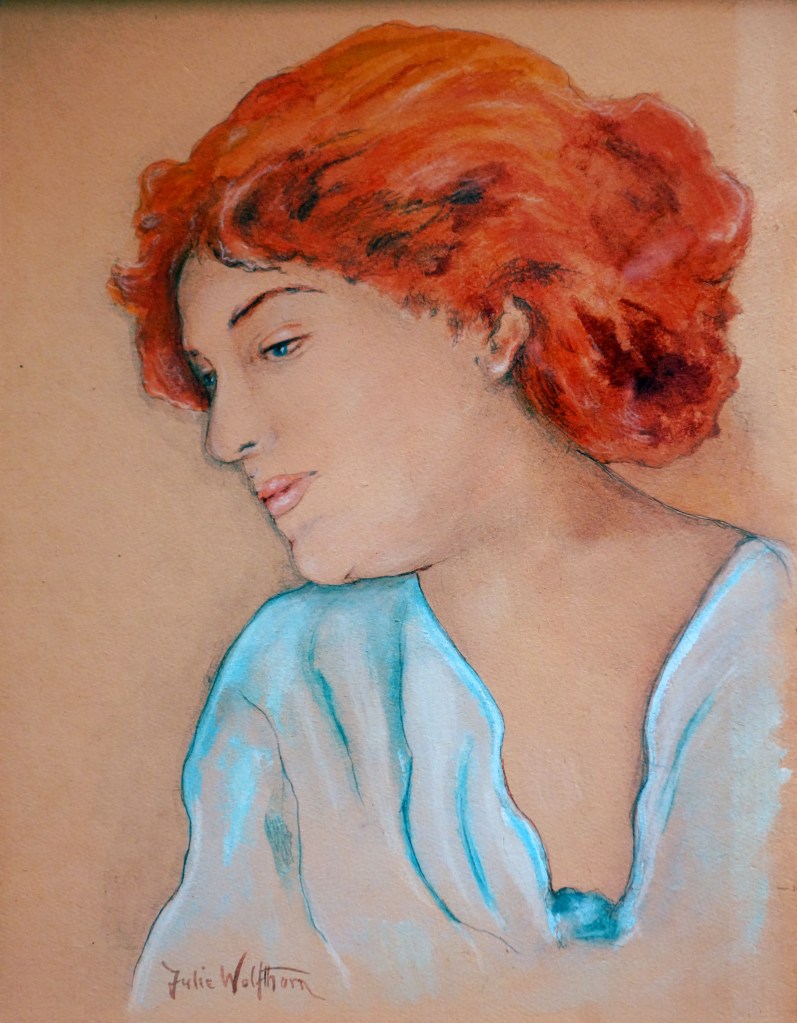
One of Arthur’s wives had red hair and, though not a Dracup by birth, I have used that fact to justify the inclusion of a few stunning paintings, intended as an homage to redheads everywhere.
Arthur’s Parents
Arthur was born on 31 January 1887, at 150 Willow Street, Horton, Bradford. His father was George Dracup (1856-1927); his mother was Mary Hannah Dracup (nee White) (1852-1916).
The line back to Nathaniel Dracup passes through: George’s father, John Dracup (1835-1876); his grandfather Joseph Dracup (1808-1866); his great-grandfather John Dracup (1778-1841); and his great-great grandfather, John Dracup (1752-1824), Nathaniel’s eldest son.
George had married Mary Hannah White on 6 March 1886 in St Andrew’s Church Bradford.
He was then aged 29, employed as a stuff finisher. He had previously worked as a worsted spinner (1871 Census) and a ‘dyer/wincey cloth finisher’ (1881 Census).
By this period, ‘stuff’ was typically used to refer to a variety of woven fabrics. ‘Wincey’ was an abbreviated term for linsey-woolsey, a coarse fabric combining a linen warp and a woollen weft. Because of its warmth it was frequently used for shirts and pyjamas.
A finisher was responsible for the range of processes that took place after dyeing, but before a product was considered complete and ready for distribution.
Depending on the fabric, several distinct chemical and/or mechanical operations might be undertaken to improve the look and feel of the finished article, typically by making it smoother or softer.
Mary Hannah was 32, already old for a first marriage, and employed as a rep worker.
Rep was a finely ribbed cloth, typically made of silk, though sometimes wool or cotton. She had previously worked as a worsted weaver (1871 Census) and a milliner (1881 Census).
Arthur was their first child, born on 31 January 1887, some 10 months after their marriage.

He was baptised at St Andrew’s Church on 18 September 1887, by which point the young family had moved to 10 St Leonard’s Road, a newish two-bedroomed rear terrace. George was still employed as a finisher.
Their second and final child, a daughter called Clara Dracup, was born on 28 September 1888.

The family had now transferred to 8 St Leonard’s Road, a front terrace, while George had become a ‘Commission Agent’: an unsalaried salesman whose income was derived exclusively from commission on sales.
The 1891 Census, which confirms that the family were still at 8 St Leonard’s Road, clarifies that he was working as an agent for water filters.
He was now 34, while Mary Hannah was 38.
Clara wasn’t baptised until three years after her birth, on 6 November 1892, in St James’s Church, Girlington. The family remained at 8 St Leonard’s Road, but George now described himself as a water filter manufacturer.
Rather than living off commission, he was now dependent on his profit margin: the difference between the sale price of the items he manufactured and the costs of producing them.
Until the mid-Nineteenth Century, contaminated water regularly caused outbreaks, sometimes even epidemics, of typhoid and cholera.
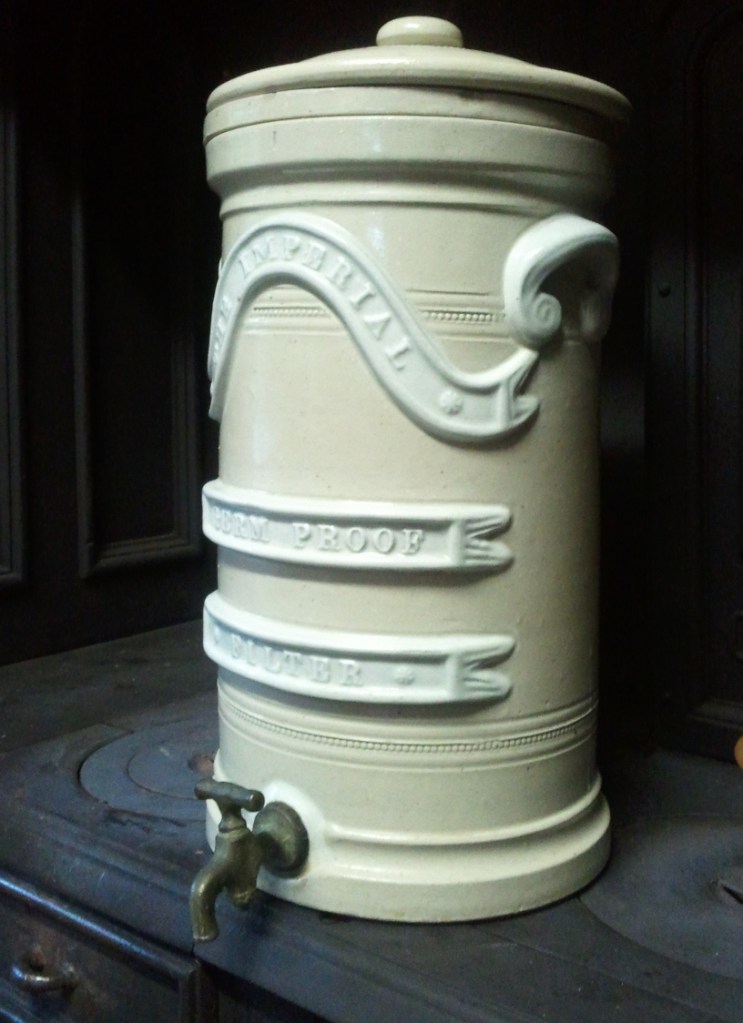
In 1884 a Frenchman, Charles Chamberland, invented a simple porcelain water filter and, in 1892, a German, Wilhelm Berkefeld, produced a highly successful variant. At the time George became a manufacturer, such filters were being heavily marketed in the UK.
A decade later, most water filters were still ceramic cylinders, typically equipped with a lid and a small metal tap at the bottom. Having removed the lid, the owner would pour water into the cylinder, which would pass through a charcoal filter before being drained off through the tap.
But, during the 1900s, once mass chlorination had been introduced to combat these dangerous waterborne diseases, water filter manufacturers began to concentrate instead on water softening devices, typically using sodium ions to replace calcium, lead and other heavy metal ions.
An Interlude in Morecambe
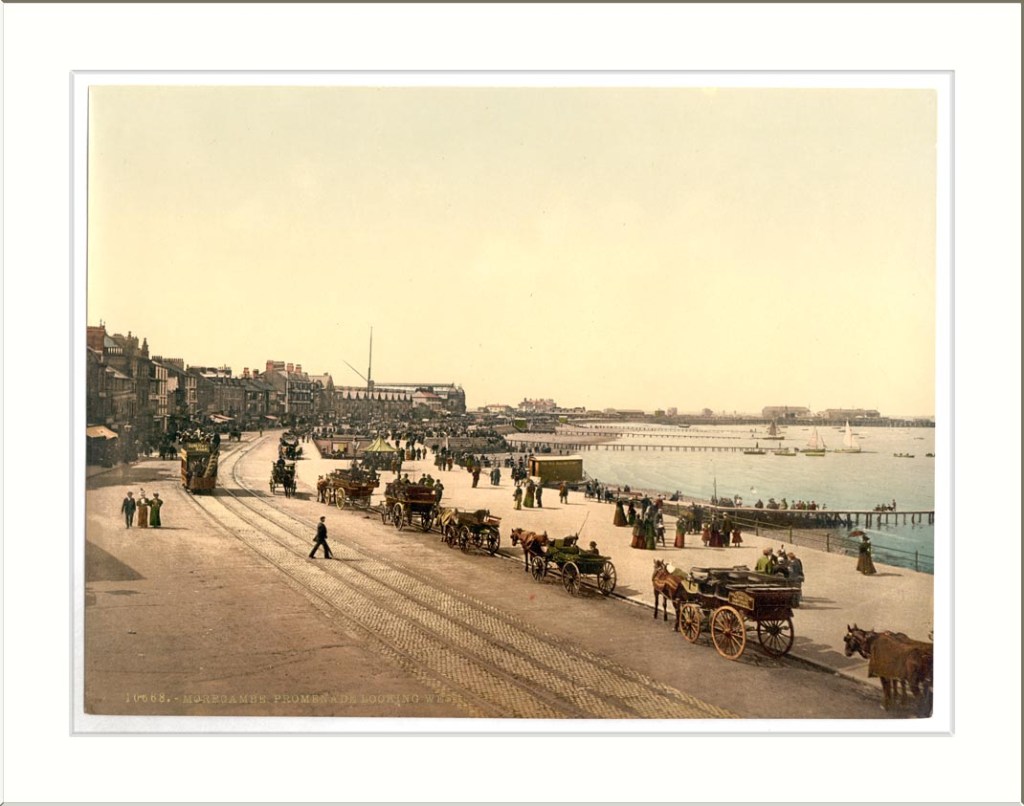
George was clearly extremely successful in this business since, by the time of the 1901 Census, he and his family had removed to 5 West View Terrace, a substantial property overlooking Morecambe’s promenade and beach.
This move had probably taken place in 1897 or 1898.
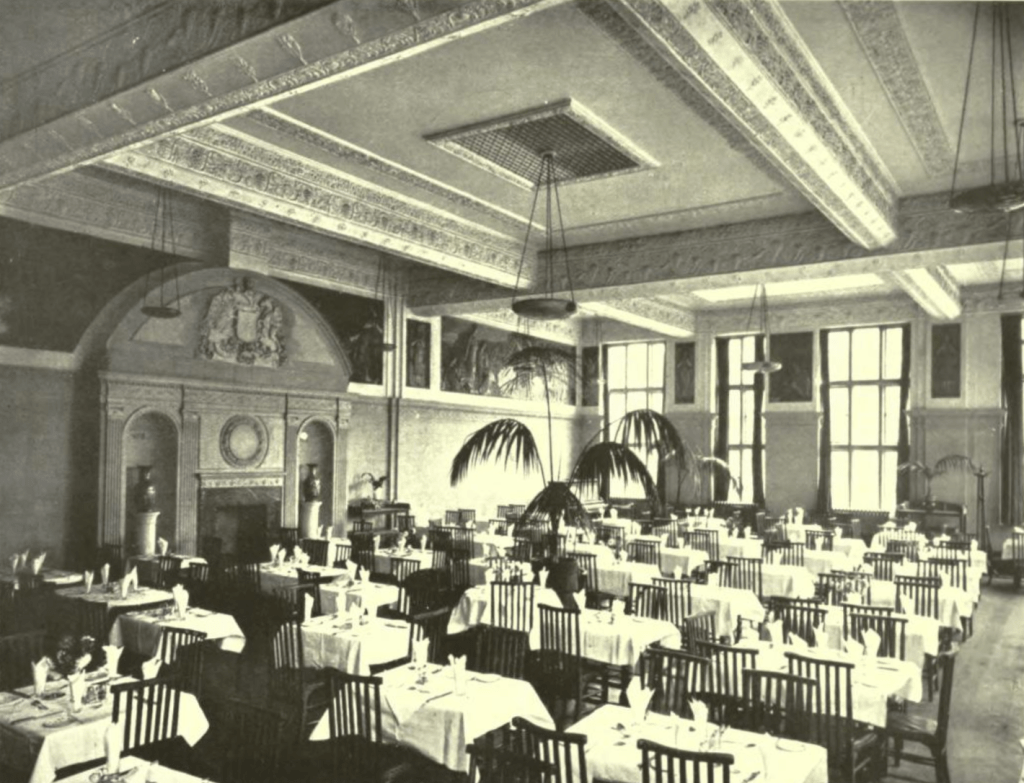
George had given up the water filter business entirely, since he was now described as: ‘Caterer: Coffee House’. He was working from home, so the ground floor of this property must have incorporated the café.
It was described as having 15 rooms (bedrooms as well as sitting rooms), kitchen, pantry, bathroom and W.C., plus a garden, yard and outbuildings.
George was now 44; Mary Hannah, 48. She had no occupation and both children, now aged 14 and 12 respectively, were at school.
The family employed two young female servants, both aged 18, Lancashire-born and resident at the same address. It is possible that they doubled as waitresses in the coffee house.
There was also one visitor, Charles William Hall, a 49 year-old Commercial Traveller. He was probably a paying guest.
The family began by renting their grand house in West View Terrace.
But it was offered for sale by auction in August 1898.
Following what is recorded as ‘rather spirited’ bidding, George finally managed to outbid his rivals, buying the property outright.
He paid £1,810, broadly equivalent to £300,000 today. It was a very large sum for one man to find, even with a sizeable loan, particularly a Bradford man from an artisan background.
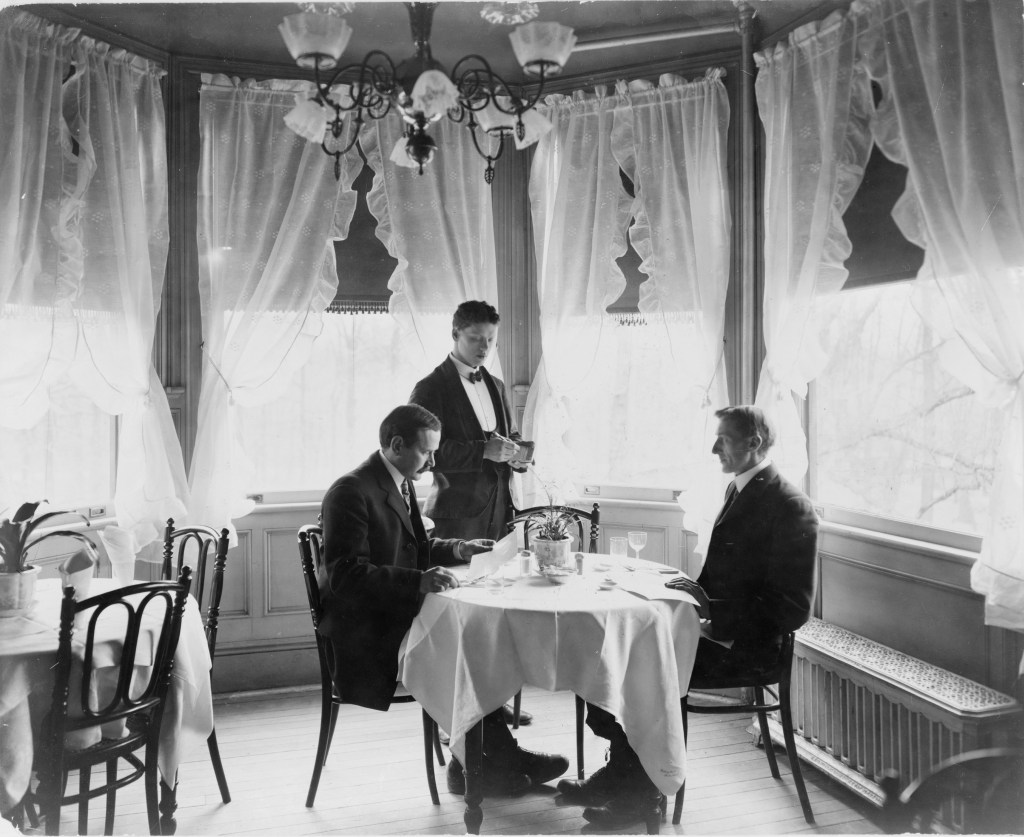
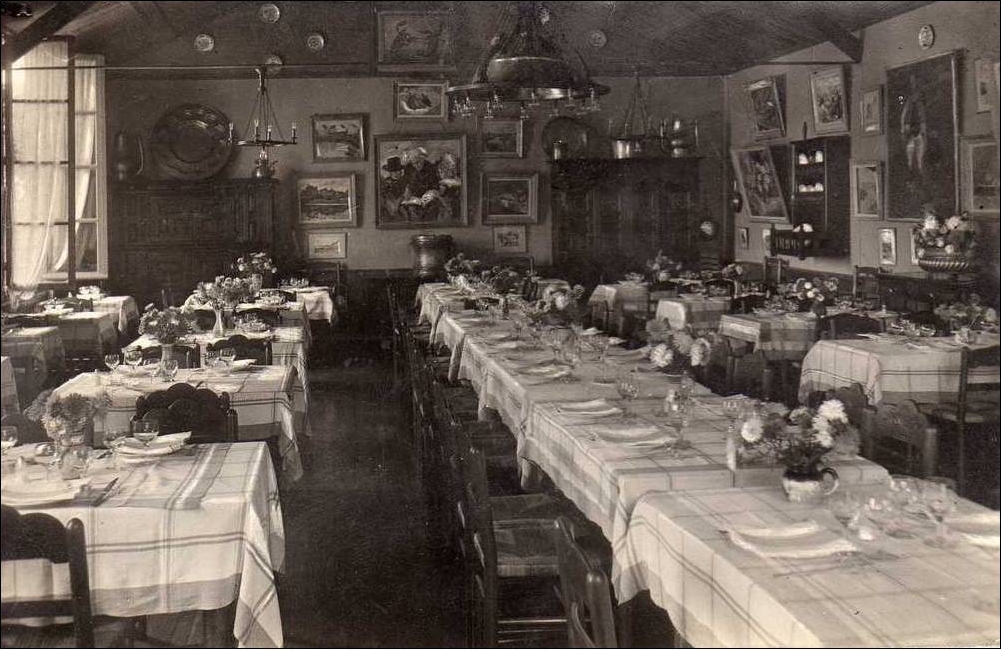
By June 1901 it seems that the coffee house had morphed into ‘The Empress Restaurant’. This must have been his long term plan, since George had been advertising for a restaurant cook or chef since April 1899.
By May 1901 he was also advertising his property to let in the Bradford papers (though presumably with his family still resident):
‘Morecambe – Splendidly furnished house near front, West End; 5 beds, bath, w.c, piano. Dracup, Empress Restaurant.’
Mass tourism arrived in and around Morecambe circa 1850, when the railway connected it with Leeds and Bradford. This brought it within easy reach of working class day trippers.
Morecambe was far less successful in this respect than Blackpool, a little further south, but the better rail connections often made it first choice for Bradford residents. Indeed, it was sometimes alluded to as ‘Bradford-by-the-Sea’.
Morecambe’s Central Pier opened in 1869, followed by Winter Gardens in 1878 and even Summer Gardens in 1879 (though they failed in 1890).
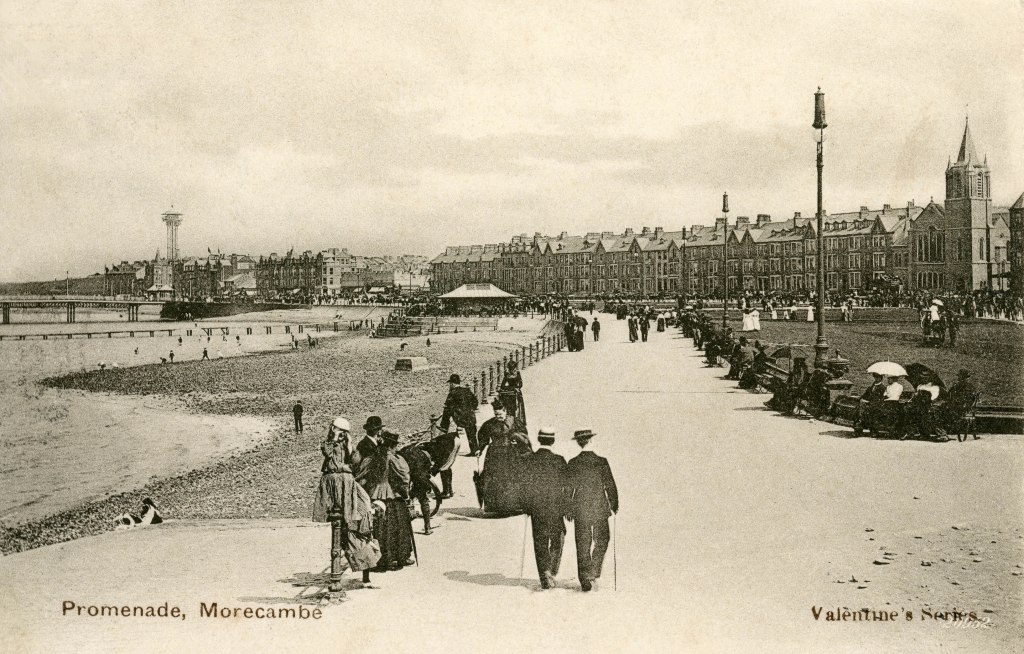
A second, West End Pier was added in 1896, close to West View Terrace. In 1897 the two pavilions newly added to the Central Pier were being described as ‘the Taj Mahal of the North’.
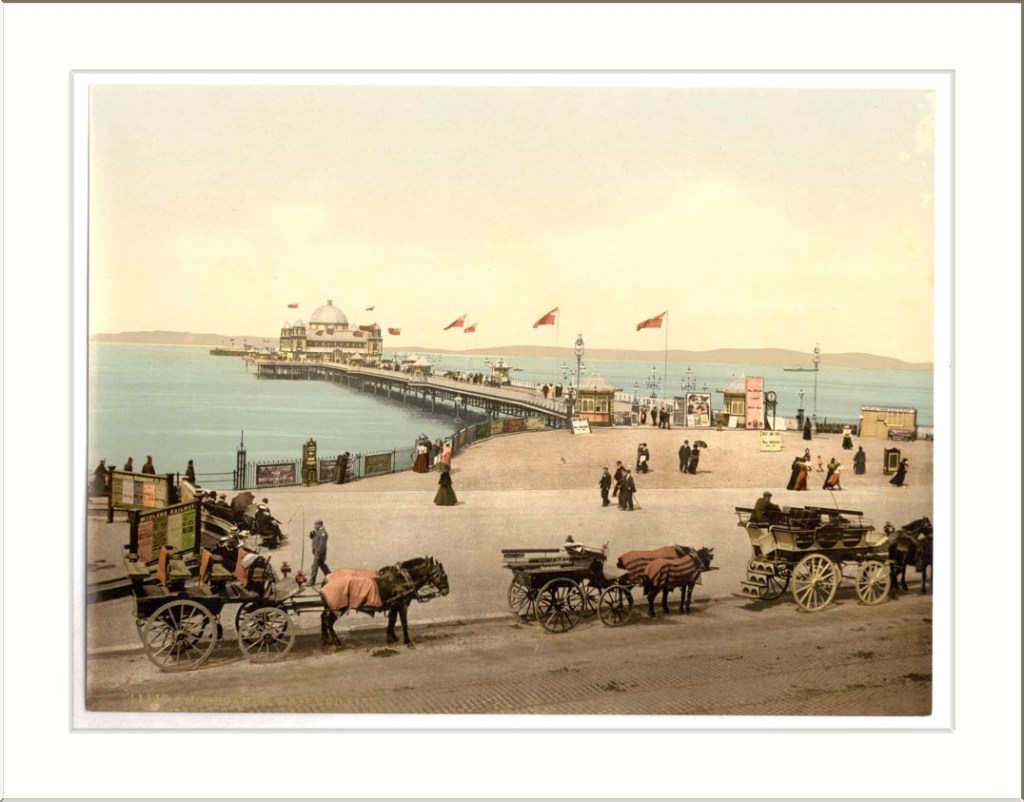
Holiday accommodation was increasingly in demand. It has been estimated that, during the final two decades of the Nineteenth Century, the number of guest houses in Morecambe tripled, climbing above 500 by 1899.
A tourist guide, published that same year, gushed:
‘And so Morecambe has gone and flourished, until it now boasts a multiplicity of first-rate lodging houses and shops, two markets, many handsome and commodious hotels, two pleasure piers, an excellent promenade nearly three miles in length, every convenience for sea-bathing, and above all possessing views which for breadth and beauty surpass those of any other watering places in the country.’
Unfortunately though, a slump was imminent, which reflected a parallel decline in Bradford’s fortunes.
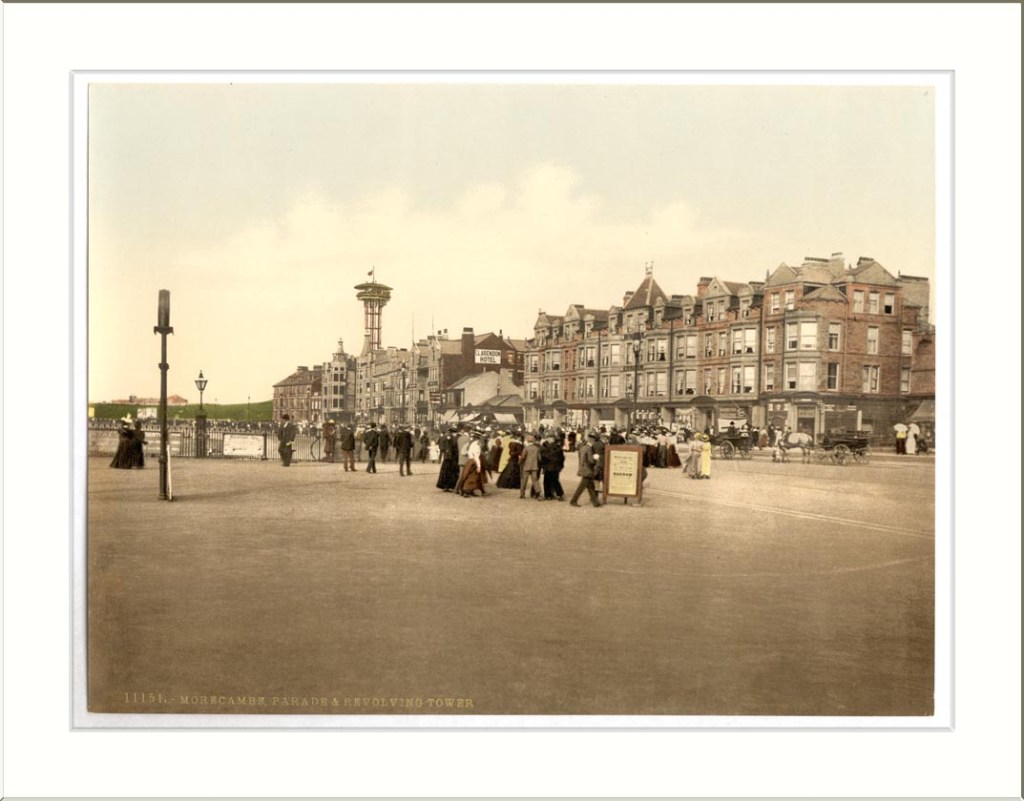
During 1898 a revolving tower was introduced in Morecambe, complete with ballroom and roller skating rink, but it did not survive beyond 1918. The Alhambra Theatre opened in 1901, but it struggled financially during its early years.
Even before the outbreak of the First World War, the total number of Morecambe guest houses had fallen by a third: there were 344 by 1913.
Local newspapers provide tantalising glimpses of Dracup family life in Morecambe during this period.
Clara was mentioned amongst pupils attending Miss Ramsden’s School, and subsequently the Misses Nelsons’ School in Victoria Street, Morecambe.
Meanwhile, Arthur took part in the musical programme for the 1900 Christmas Concert and Prize Giving at Furness College.
This had opened in 1893, described as ‘a new commercial and preparatory school’, initially under the control of one J Walter Nuttall. By 1900 it had passed on to ‘Mr S Palmer MA, Late Classical Scholar and Prizeman of Corpus Christ [sic] College Cambridge. Classical Honours 1878.’
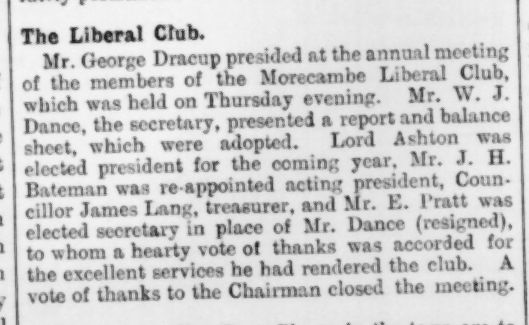
George tried to forge a role in local politics. In 1900 he spoke at the annual meeting of shareholders of the Morecambe Central Pier Company, and also presided at the annual meeting of Morecambe Liberal Club.
In 1901 he stood, unsuccessfully, for Morecambe District Council.
He also made representations before the County Council’s Lighting and Water Supply Committee. The proceedings are recorded in the Lancaster Standard and County Advertiser:
‘Read letter from Mr G Dracup, on behalf of the Morecambe caterers, asking for permission for a deputation from that body to appear before the Committee with reference to the supply of water through meter…
A deputation consisting of Messrs. Stone, F N Moore, G Dracup, Tetley, J Brackey, Mrs Richard Bond, and Mrs G Anderson, restaurant proprietors, attended the meeting…and desired that the Committee should recommend the Council to make some allowance to them for water used for WCs and lavatories.’
This campaign went on for some time but was apparently unsuccessful.
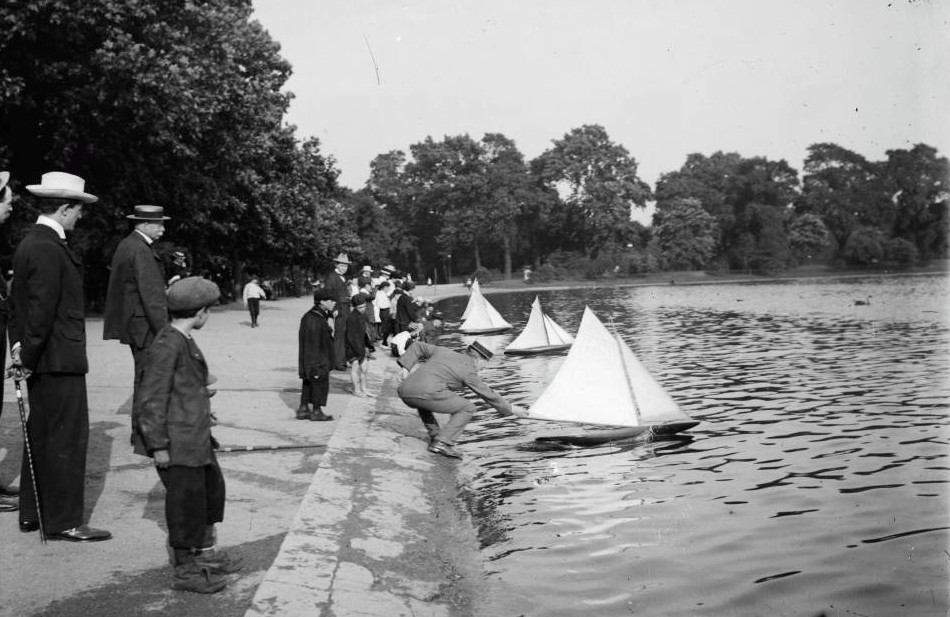
In March 1902 George took part in the model yacht trials at Glasson Dock, as owner of a yacht called ‘Shamrocks’, but there is no mention of how well or badly it performed.
In August 1904, the Empress Restaurant catered for the annual picnic of the Wesleyan and General Assurance Agents and their wives, which took place in Morecambe.
These were probably the Agents from the Bradford office, since the head office of the Wesleyan Assurance Society was located in Birmingham.
By 1905 George was advertising frequently:
‘MORECAMBE – DRACUPS, from Bradford, EMPRESS RESTAURANT, facing sea and Central Pier, large or small parties catered for. Special terms for weekend boarders, good beds.’
But, in February 1907, he was declared bankrupt.

Back in Bradford
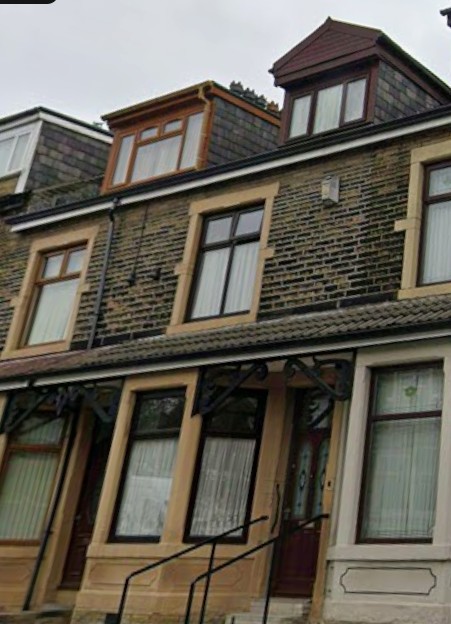
By the time a receiving order had been made, he and his family had already removed to a four-bedroom terraced property: 122 Jesmond Avenue, back in Bradford, midway between Girlington and Heaton.
This sudden decline in his fortunes must have hit George badly, though he clearly managed to survive the transition, becoming a clerical worker. He was now in his early fifties.
The 1909 and 1910 Bradford Voting Registers place George still at Jesmond Avenue, but the 1911 Census records George, Mary Hannah and Clara living at 157 Upper Woodlands Road, half a mile south and somewhat less salubrious then their previous residence.
It seems probable that this change became necessary when Arthur departed the family home, taking his income with him.
George, now 54, was working as a debt collector for a mercantile office, while Mary Hannah looked after the house and Clara, now 22, had become a worsted weaver.
Mary Hannah died only five years later, on 13 January 1916, in the Workhouse Hospital. She was 63. Two causes of death were cited: arterio-sclerosis (hardening of the arteries) and senility, with the added phrase ‘incontinence of urine’.

She was buried in Scholemoor Cemetery.
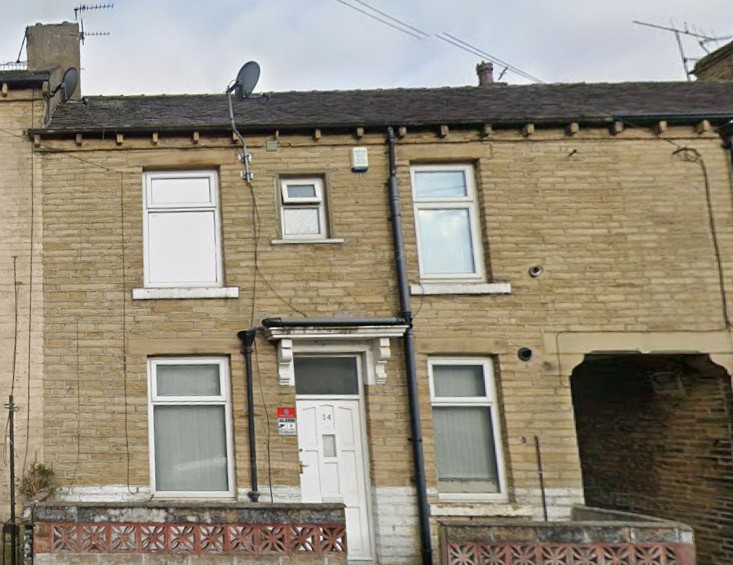
On her death certificate the family’s home address was given as 14 St Leonard’s Road, showing that they had returned to familiar old haunts. Indeed, the Voting Registers place George there from 1915.
It was George who reported his wife’s death, his employment described as ‘General Commercial Clerk’.
George, widowed, and Clara, still single, were still resident at 14 St Leonard’s Road by the time of the 1921 Census.
Although now aged 65, George was still working, most probably for the same employer as ten years previously. They are now named as Northern Mercantile, Debt Collectors, of 23 Bank Street, Bradford. George’s job was described as ‘Bailiff’s Clerk’.
There must have been a certain irony in this for George, given his personal history.
Clara, now aged 32, remained a worsted weaver. She was employed by John Priestman & Co, at Ashfield Mills, located on the Thornton Road.
George died on 6 April 1927, aged 70, his address still 14 St Leonard’s Road.
He was working up to his death, his employment here described as ‘Accountant’s Clerk’.
The cause of death was, first, senility, and second, cardiac asthenia (a weak heart). The death was reported by Arthur, and George was also interred in Scholemoor Cemetery.

Arthur’s First (Imaginary) Marriage
To follow Arthur’s marital history, we must begin almost two decades before George’s death, during the years immediately following his father’s bankruptcy.
We can only speculate what impact this had on Arthur.
In order to qualify as a compositor he is likely to have served a seven-year apprenticeship, earning a comparatively low wage meanwhile. He probably began the apprenticeship shortly after leaving Furness College, and had completed it by around 1910.
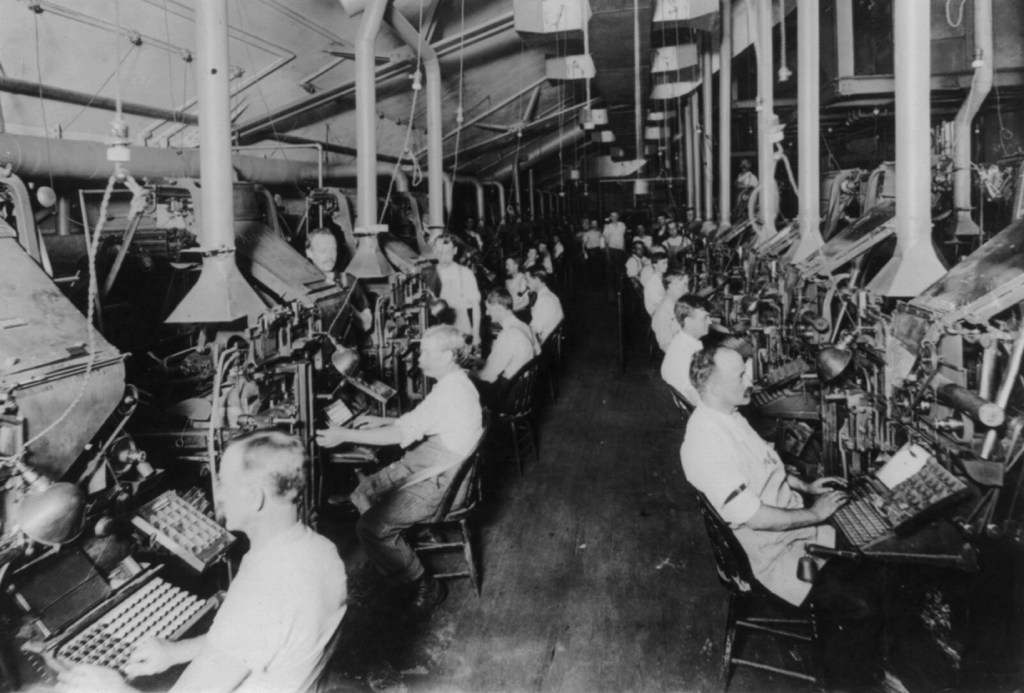
He might have served the apprenticeship in Morecambe, in nearby Lancaster, or even back in Bradford (though, in that case, he would probably have had to lodge with relatives).
During the early years of his apprenticeship George was probably able to subsidise him to some extent, ensuring that he had an allowance for clothing and entertainment perhaps. But all such financial assistance would have been withdrawn following the bankruptcy.
This would likely have damaged Arthur’s social status. He might even have been concerned that he would have to give up his apprenticeship, turning to more remunerative employment to help support his family.
But we know that he must have completed the apprenticeship because he would have needed the salary of a qualified compositor before he could afford to leave the family home and set up elsewhere, particularly if he was planning to support a wife.
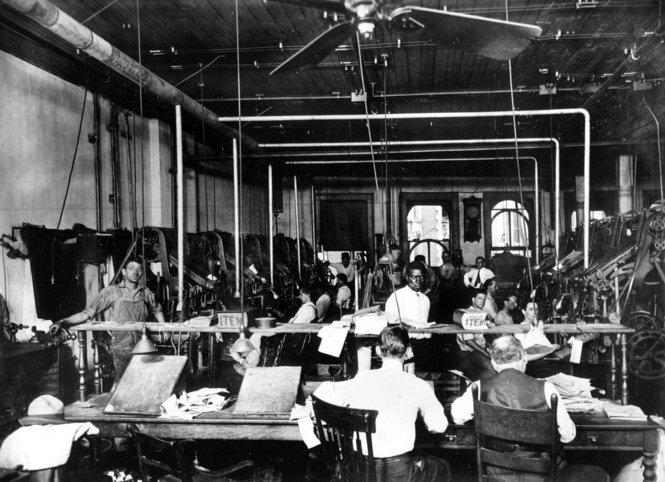
The 1911 Census records Arthur as a boarder in the house of George Kitchingman, a 52 year-old fish salesman. They were living at 9, William Street, a turning off Little Horton Lane, close to Bradford Town Centre.
George Kitchingman was operating his business out of this property, so the ground floor was probably a small fishmonger’s shop, unless he kept a horse and cart.
Kitchingman had married his wife, Florence, nee Morley, in 1888, when she was 16 and he was 31. Florence was now 39.
They had two daughters: Miranda, born in 1889, and Lily, born in 1894. Miranda was living elsewhere, while Lily remained at home with her parents. She was 17.
Aside from George, Florence and Lily, the remainder of the household were boarders:
- Susan Wright, nee Hollingsworth, a 76 year-old widow, born in Nottingham. Although the Census entry does not say so, she was Florence Kitchingman’s mother, but she must have been paying rent to her son-in-law.
- Florence Platt, a 29 year-old comb minder, also born in Nottingham.
- Arthur Dracup, aged 24, living with his 22 year-old wife, Emmie.
According to the Census entry, Arthur was employed as a ‘general printer’, while Emmie had no occupation other than housewife. They had been married for less than a year and Emmie had been born in Dublin, Ireland.
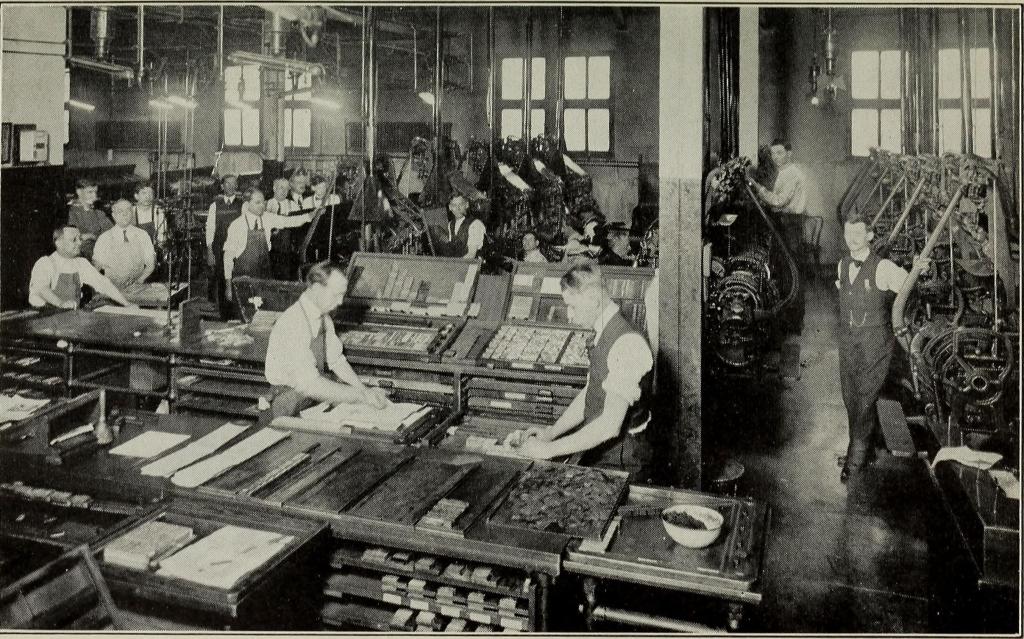
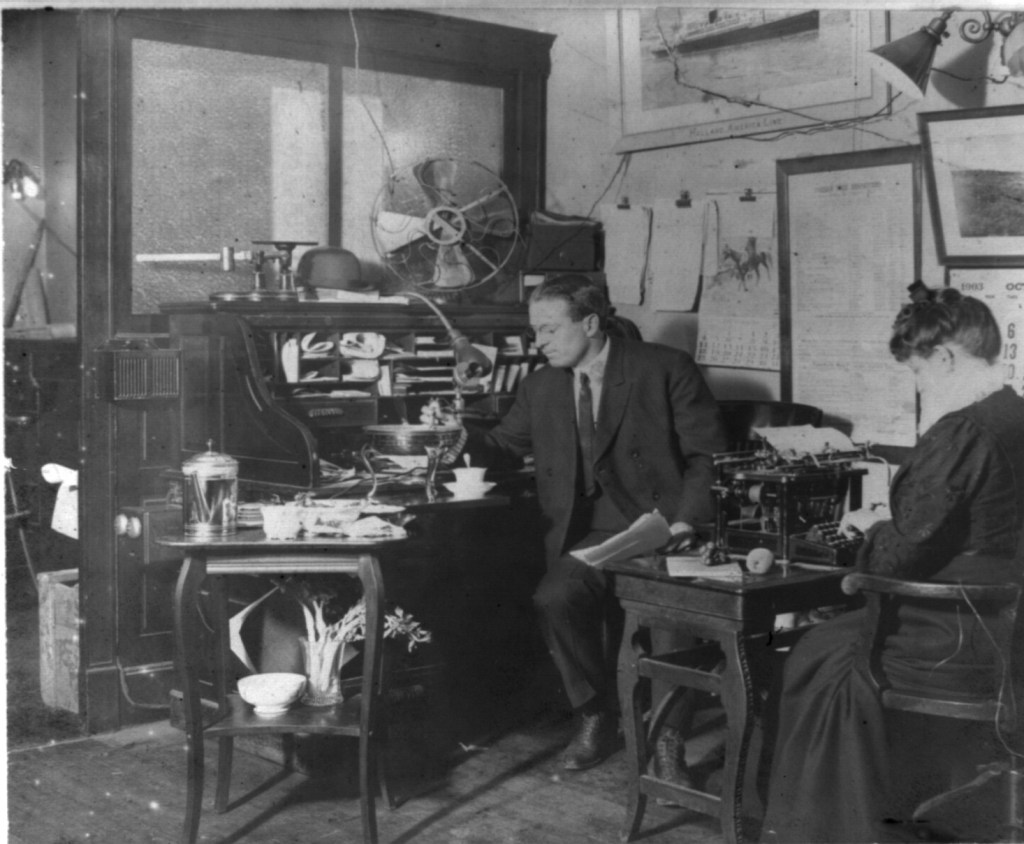
‘General printer’ implies a jobbing printer, undertaking a variety of commercial work for local businesses, as well as small commissions from private individuals. This is likely to have been Arthur’s first role as a fully qualified printer-compositor.
The fact that Emmie was ‘keeping home’ implies that Arthur was earning enough to support them both.
This seems an odd, unusual arrangement, since the young couple were almost certainly living together in a single room, sharing kitchen and bathroom with the other residents. Emmie would have had very little to do, beyond preparing an evening meal.
Perhaps Arthur was still in straitened circumstances but pretending otherwise.
Maybe that is what prevented him from actually contracting the marriage – for there is no record of any Arthur Dracup marrying, either in 1910 or 1911, whether in England or Ireland.
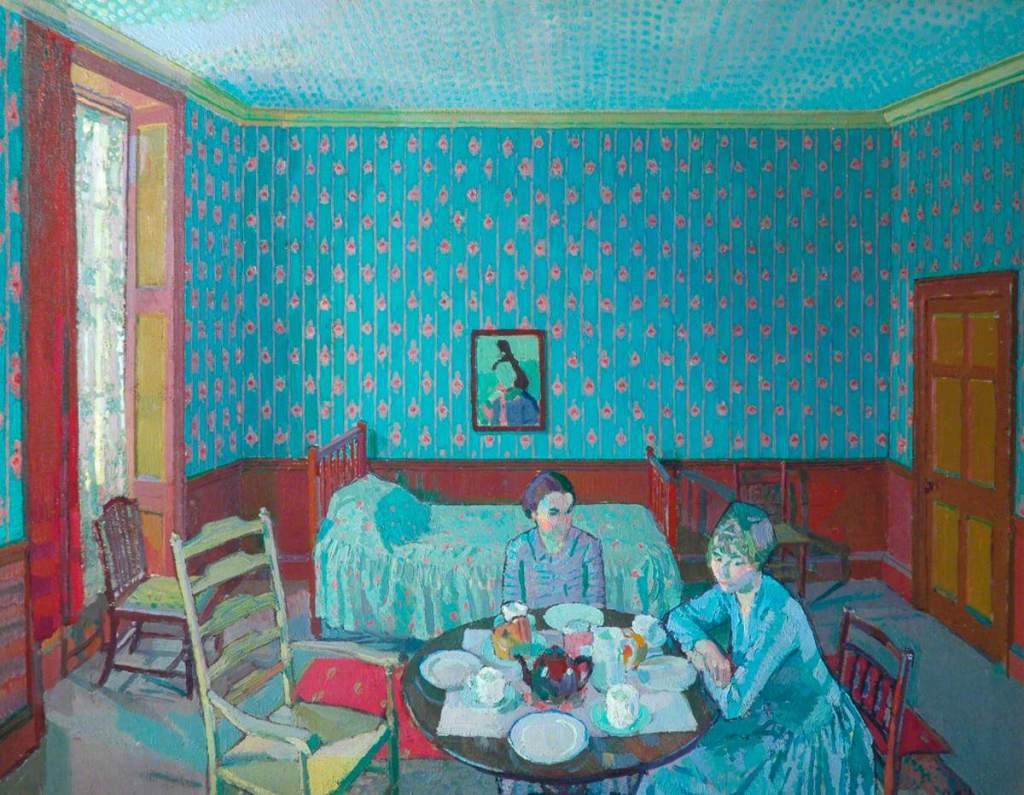
Emmie and Arthur were ‘living in sin’.
Where had me met her? It is conceivable that she was already resident in Bradford when they met, working in the mills, in service or in hospitality.
By the time of the 1911 Census there were 308 Dublin-born residents of Bradford, although Emmie Dracup was one of only six who had been born in 1889.
Few families with young adult children had been resident for 10 years or more: there were only 106 Dublin-born residents of Bradford in the 1901 Census, none with Emmie’s name or birth-date.
Moreover, across the 1901 Census as a whole, there were only three females called Emma or Emily (and none called Emmie) living in England who had been born in Dublin in 1889. I have ruled out all three.
It may be more likely that she had left Ireland to work in service or hospitality in Morecambe, possibly even in George’s Empress Restaurant.
One possibility is that she was related to the Kitchingman family in some way. It was common for people to lodge with other members of their extended family, as we have seen with Susan Wright.
One obvious candidate is the absent daughter, Miranda May Kitchingman, whose name might reasonably have been shortened to ‘Emmie’.
Miranda had been born in November 1889, which would make her almost exactly the right age, but in Bradford rather than Dublin.
Moreover, there is a separate entry for her in the 1911 Census, under the stage name ‘Miranda Wright’, for she was a youthful actress.
She was living at 16 Greek Street, Liverpool, with married couple Russell Norrie (41) and Jean Dorothy Norrie (42), also both actors. Miranda Wright, aged 21, was described on the return as an actress and also the elder couple’s ‘assistant’.
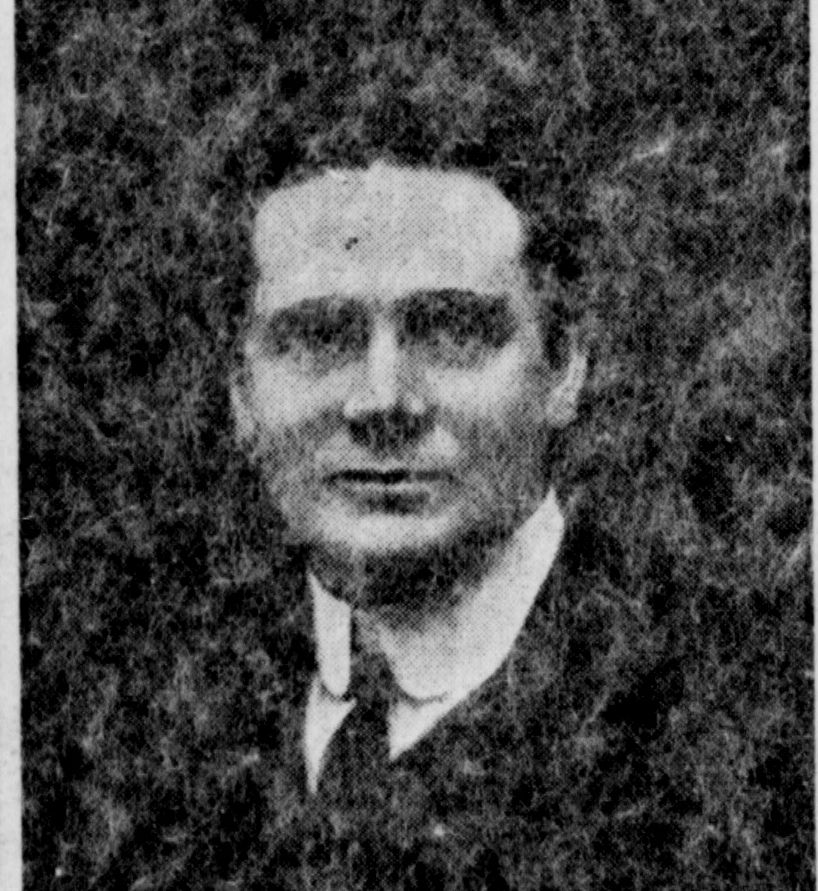
William Russell Norrie (1870-1954) had been born in Birmingham but raised in Dundee, Scotland, while Jean Dorothy (1868-1925) was born Jane Deuchars Charles in Dundee, and performed under the sobriquet ‘Dorothy Charles’.
There is a brief announcement in ‘The Era’ of 27 August 1910 that Miss Miranda Wright had been engaged by Mr Russell Norrie for ‘special parts’.

The only record I can find of Miranda in action with the Norries is a short review of the premiere of ‘Her King of Men’, performed at the Alexandra Theatre, Widnes, in October 1910:
‘After the exceptionally attractive engagement – “Sherlock Holmes” – of last week, the Alexandra Theatre, Widnes, reopened on Monday evening with the first performance of “Her King of Men”, a play which introduces the well-known actor-playwright, Mr Russell Norrie, in the capacity of dramatist, and which brings him before a Widnes audience in a characteristically gallant part. The audience was a large one, and the seal of approval was unmistakeably affixed to Mr Norrie’s efforts. The swift action of the drama and the rapidity with which one situation succeeds another, keeps the interest fully sustained from start to finish.
The piece went off with great smoothness and precision. Chief honours, of course, fell to Mr Russell Norrie, in the dual role of Alphonse Radinoff and Jack Playfair, his rendition being marked by power and dash throughout…Miss Dorothy Charles gave a convincing portrayal of Laura Bermontoff, a passionate and jealous woman in love with Alphonse…Other parts were well and capably filled by…Miss Miranda Wright. The piece is handsomely dressed and mounted and should have a long and prosperous career.’
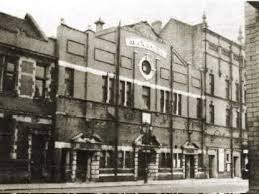
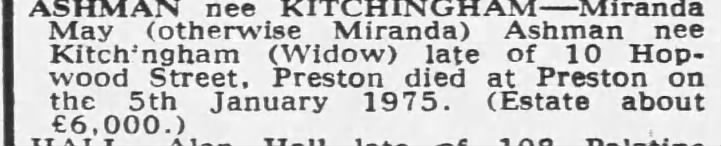
Miranda went on to become a music hall artist (she is referred to as such in the 1939 Register) and, in 1951, married musical director Charles Ashman (1878-1961). She died in 1975.
It seems too much of a stretch to imagine that Miranda also played the part of Arthur’s wife, for she could not be in two places at one time!
And, sadly, I have been unable to find any alternative female relative of the Kitchingmans who might better fit the bill.
Emmie is the first missing piece of this jigsaw. Her identity remains a mystery; so does her fate.
There is no death certificate for anyone called Emmie Dracup in the period from 1911 to 1913. Although a handful of Emmies and Emmas with different surnames did die in West Yorkshire during this period, I can trace none born in Dublin in 1889 or thereabouts.
Perhaps she resented the fact that Arthur had not married her and walked out on him, making a life elsewhere, or possibly returning to Ireland.
There are approximately 11 candidates in the 1921 UK Census, who were born in Dublin in 1889, but none that I can reliably trace to Bradford. Nor can I identify a suitable Emmie in the Ireland Censuses for 1901, 1911 or 1926 while, on the other hand, there are far too many potential candidates called Emma or Emily.
One curious postscript.
We know that, shortly after Arthur left the Kitchingman household, Florence’s younger brother Albert Ernest Morley (1876-1953) moved in. But it was not a happy reunion.
A newspaper article appeared in the Bradford Daily Argus of August 15 1914:
‘Because his sister refused to lend him two shillings, Albert E Morley (38), hawker, of 9 William Street, Bradford, picked up a knife and cut six inches off the cat’s tail. He thereupon threw the severed portion into a drawer in front of his sister, and left the house.
At the Bradford City Police Court this morning, Morley was charged at the instigation of the NSPCA with cruelty to a cat…
…In committing Morley to two months’ imprisonment with hard labour, the Chairman, (Mr S P Unwin), characterised it as a disgusting act of gross cruelty.’
Arthur’s First True Marriage
Meanwhile, Arthur had officially married, at the Bradford Register Office, on 19th July 1913.
The marriage certificate described him as a 28 year-old bachelor, rather than a widower or divorcee.
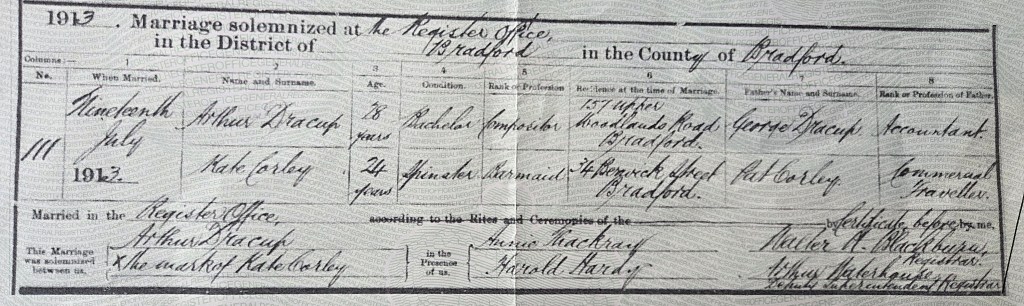
If this information is correct, then Arthur’s apparent first marriage, to ‘Emmie’ was officially a figment of their imaginations.
He was employed as a compositor and resident at 157 Upper Woodlands Road, Bradford. His father was optimistically described as an ‘Accountant’.
Arthur was now a specialist compositor rather than a general printer, though his employer at this point is unknown. His new address was the family home in the Girlington district of Bradford, to which he had clearly returned after the demise of his relationship with Emmie.
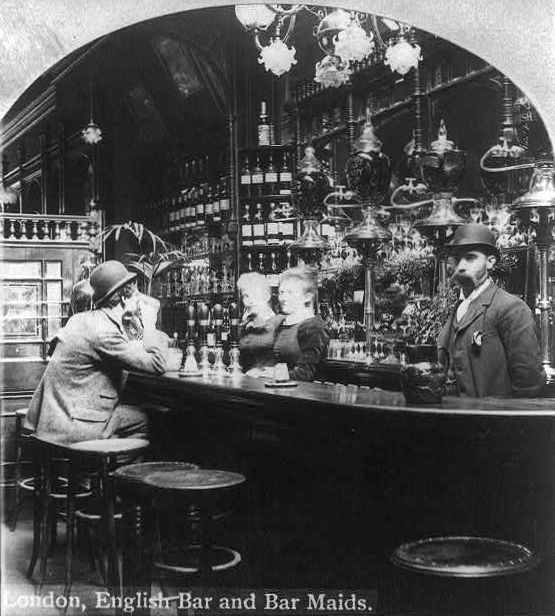
His first true wife was Kate Corley, 24 years of age, a spinster, employed as a barmaid and resident at 34 Berwick Street, Bradford. Her father is named Pat Corley, and described as a Commercial Traveller.
In the 1911 Census, 34 Berwick Street was the home of Edward Lynch, a 41 year-old plasterers’ labourer, his wife Mary and one year-old son Thomas. There was also a boarder called Thomas Hart, a dyers’ labourer. So Kate had arrived there within the last two years or so.
Berwick Street was in the Little Horton area, sandwiched between Park Road and the Manchester Road, close to the Workhouse.
There were two pubs nearby, one of which was the Station Hotel, on the corner of Clayton Lane and the Manchester Road. It has already made an appearance in an earlier Dracup family history post.
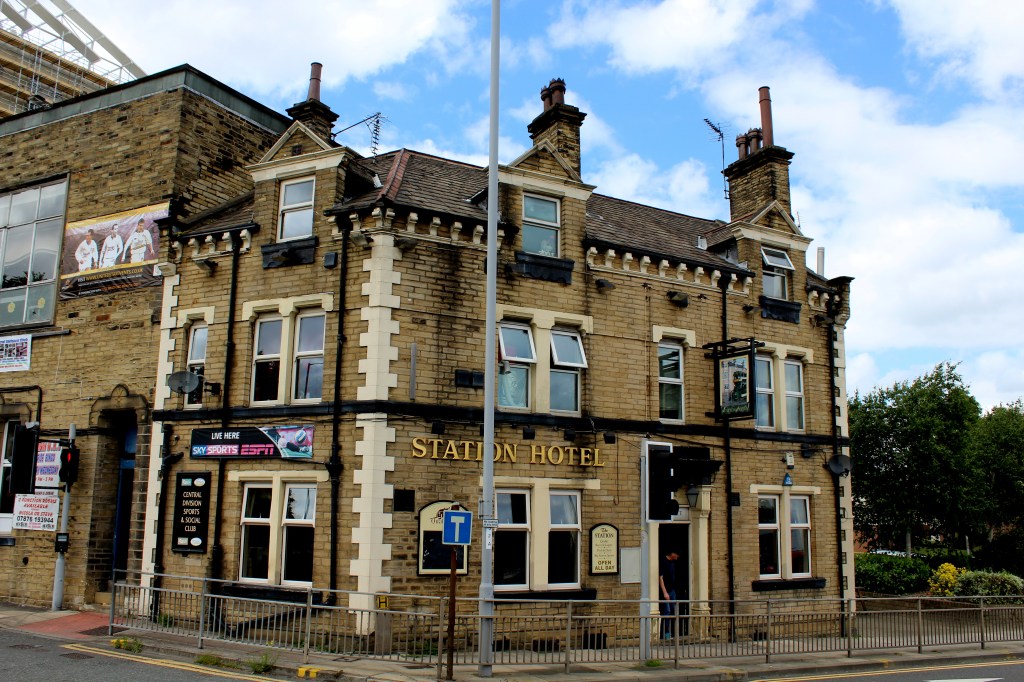
The other was the Horse and Jockey Inn on Bramley Street.
Kate Corley marked her entry on the register with an x, so she was unable to write her own name. That was relatively unusual in a young, urban adult by 1913, though illiteracy was far more prevalent in rural Ireland, from whence Kate had probably come.
There were two witnesses to the ceremony: Annie Thackray and Harold Hardy.
The latter was most probably Harold Gathorne Hardy, a 27 year-old finisher in a dyeworks from Wyke, or else Harold Hardy, a 28 year-old tailor’s assistant from Listerhills. This must have been a friend of Arthur’s.
The former was probably the 38 year-old boarding house keeper whose premises were at 13 Hallfield Place, off Trafalgar Street. Perhaps Kate had lived there prior to moving to Berwick Road, though she wasn’t resident there at the time of the 1911 Census.
All the evidence suggests that Kate had arrived in Bradford comparatively recently.
As for her parentage, there are several potential candidates, especially if one factors in alternative spellings of the surname, but hardly any with a daughter called Kate.
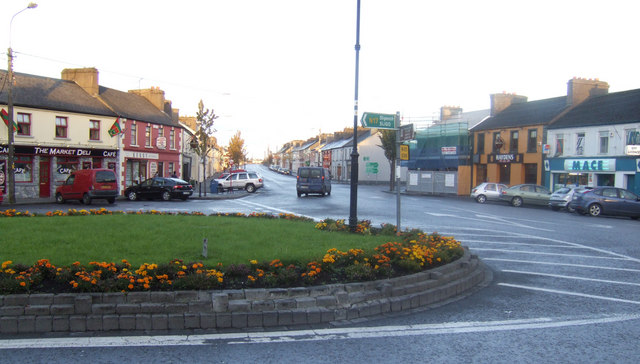
We have evidence from subsequent media coverage that Kate was of Irish extraction.
The best fit, and so the leading contender, married Mary, nee Conlon (1865-1934) in March 1886. He was already a widower, described as a farmer, resident in Cloonlara, just east of Swinford in County Mayo, Ireland.
There is a birth record for a daughter, Catherine Corley, born on 11 February 1889 in Cloonlara. At the time of her birth, Pat Corley was a ‘land holder’.

By the time of the 1901 Census, he was a ‘labourer’ living with his wife and four children in a one-roomed property in Charlestown, County Mayo. The eldest child, called Kate Corley, was then 12.
According to the 1911 Census, Pat Corley was still a farm labourer, living with his wife, six younger children and a grandchild. They were now resident in a three-roomed property in Charlestown. There had been eight children all told, all of them still alive. So two of the children – one being Kate – were no longer living with the family.
This Patrick Corley was certainly not a commercial traveller. He died on 31 December 1937, outliving his wife by three years.
I cannot find his daughter Kate Corley anywhere in the Irish, Scottish or England and Wales Censuses for 1911.
Did Arthur Serve in the First World War?
There is a dearth of information about whether Arthur served in the Great War and, if so, in what capacity. He would have been 27 at the outbreak of hostilities.
I have been unable to find a service record.
There were three Arthur Dracups who were definitely in the age bracket for conscription and there are two records of war medals awarded to men called Arthur Dracup.
One served in the Mercantile Marine Reserve, as a Deck Hand aboard the ‘Oriana’; the other as a Private with the 9th Battalion Duke of Wellington’s West Riding Regiment (30654) and subsequently the 6th Battalion, York and Lancaster Regiment (33236).

The SS Oriana was a mixed passenger/cargo ship of 8,000 tons, launched in 1906. She operated as a troop ship in the Mediterranean during the War.
The 9th Battalion West Riding Regiment completed training in June 1915 and shipped to France, moving into the front line at Ypres. Over the next few years they saw action at the Somme, Passchendaele and Cambrai, amongst others.
The 6th Battalion York and Lancaster Regiment served at Gallipoli and in Egypt before arriving at the Somme. They were later at the Battle of Messines and the Battle of Arras amongst other engagements.
If this Arthur Dracup was ‘our’ Arthur Dracup, then he might have served alongside and possibly even knew the first husband of his next wife…
As noted in my post about Edmund Dracup, there was an Army Printing and Stationery Service attached to the Royal Army Service Corps, but it seems that, if this Arthur Dracup did see service, he did not find his way into that outfit.
Arthur probably resided with his parents until 1915. It seems likely that, if he moved elsewhere with his young wife, it would have been when the rest of his family moved from Woodlands Road back to St Leonard’s Road.
Unfortunately, voting registers are not available for the period 1915-1919, so we do not know whether he and Kate established themselves separately during this period. And it remains a distinct possibility that Arthur went away to war, leaving his wife living with his parents.
I have been unable to evidence exactly when Kate first went off the rails.
But it was probably after only a few years of marriage.
There is some suggestion (see below) that she had left the marital home permanently by 1918. It seems likely that she would have made temporary excursions beforehand, especially if Arthur was away on war service.
His absence could have been a significant factor. There would have been very little money, and life alone in the family household would have been a joyless existence for the exuberant young barmaid.
Finally, there were no children to keep her at home. Perhaps that was also a factor influencing her subsequent behaviour.
We know from the surviving records that the Arthur Dracup who served with the Sixth Battalion Yorkshire and Lancashire Regiment was demobbed to ‘Reserve Z’ on 4 February 1919.
By Spring 1920, almost all men had returned from the War and the voting registers had resumed. Arthur was now resident at 2 William Street, not too far from the Kitchingmans, who were still at Number 9.
I strongly suspect that he was living alone.
The house belonged to Edith Bagley. a 35 year-old widow born in Penrith. Her husband, John Bagley, had been killed in action at Ypres on 28 February 1916, leaving six orphaned children aged from two to nine.
A second boarder called David Gill was also resident.
By the time of the 1921 Census, Edith Bagley was accommodating ten lodgers in her property, as well as five of her six children, but Arthur had moved on.
In Autumn 1920 the voting register records him living at 4 Bridge Road, in a property owned by Mary Ann Hardy, the 65 year-old widow of James Hardy, an insurance agent. But, as we shall see, he was to move on again just months later.
One wonders if these frequent changes of address were prompted by the behaviour of his wife. Perhaps he wanted to keep her from discovering his whereabouts.
Even if he was welcoming, which is doubtful, her occasional reappearances might have caused difficulties with his landladies.
Kitty’s Early Criminal Career
Kate typically went by the forename ‘Kitty’, but seemingly swapped between ‘Corley’ and ‘Dracup’ as it suited. I shall call her Kitty for the remainder of this post.
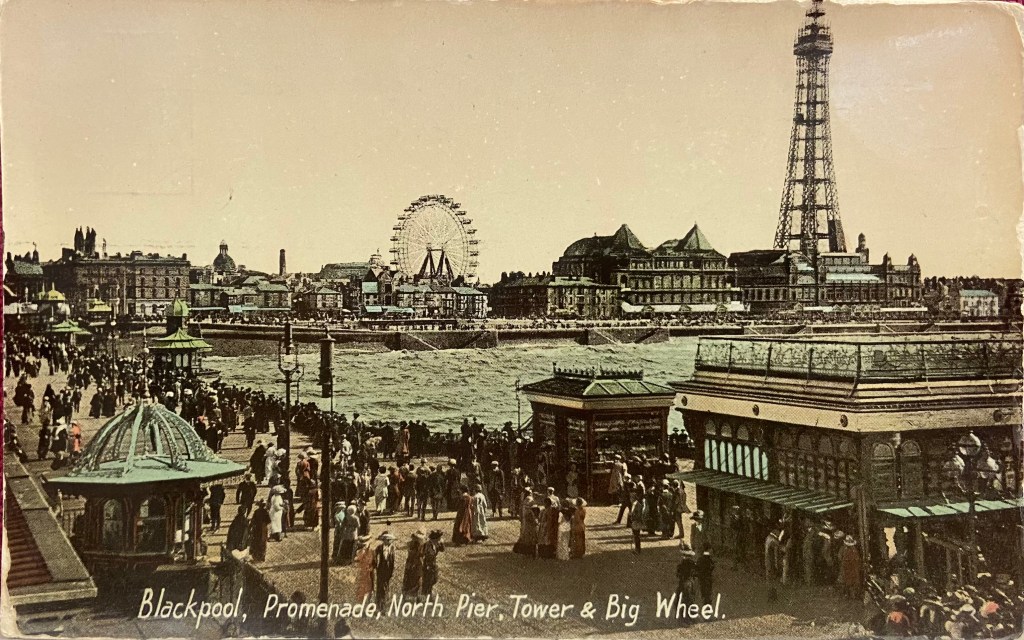
There is a likely reference to her in the 1921 Census, on a poorly completed form relating to the occupants of 3 Dickson Road, Blackpool.
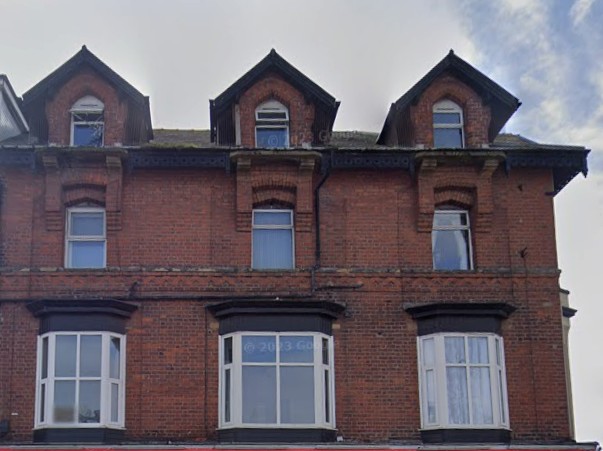
The head of the household was a 45 year-old widow, Lydia Wilson, but the bulk of the 14 occupants were ‘visitors’, indicating that this must have been a guest house.
Amongst them were Frank and Kitty Corley, both married, presumably to each other.
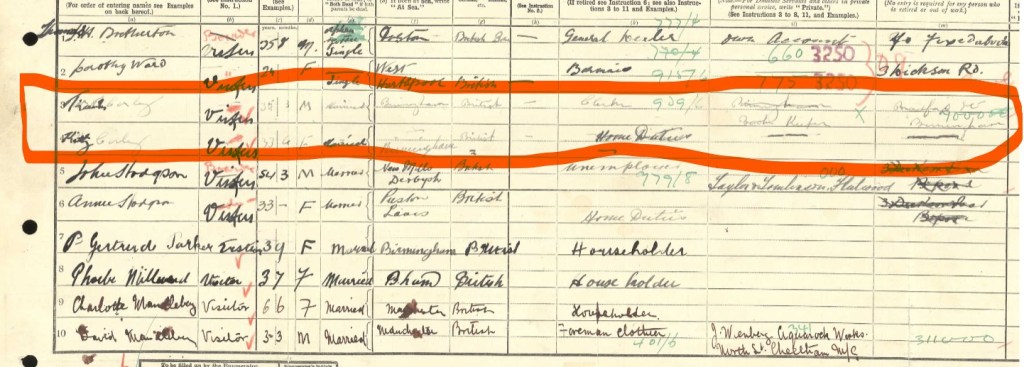
He was 35 and 3 months, placing his birthday in March 1886, and she was 33 and 4 months, placing her birthday in February 1888. Both state that they were born in Birmingham.
Frank Corley stated that he was employed as a clerk for a book-keeper in Bradford Street, Birmingham. I have been unable to identify him.
The earliest newspaper reports of Kitty’s criminal career relate to activity in Blackpool in the early 1920s.
A short item in the Blackpool Times of 19 May 1922 says:
‘Kitty Corley, described as having lived in Blackpool for about four years, was taken into custody on Wednesday evening for being disorderly and using bad language while under the influence of drink on Central Beach, at ten minutes past ten. She admitted this to the Blackpool Magistrates (Ald. H Brown, Chairman) on Thursday morning, and was fined 12s.’
Ten days later, on 29 May, Kitty Corley (29) and Mary Bradley (27) of Dickson Road were remanded in custody charged with stealing a man’s cigar case containing six one pound notes.
So it appears that Kitty had been living in Blackpool since 1918, so was permanently separated from Arthur by that point. A connection has been established with an address in Dickson Road, increasing the likelihood that the 1921 Census entry refers to her.
The victim in this second incident was John Lever, aged 76, a widowed publican residing at the Black Bull in Longton, near Preston.
A detailed report of the case appeared in the same newspaper on 9 June.
Lever met the two women in the Fleece Hotel and they bought each other drinks. He paid with a pound note taken from seven he had stored in a cigar case.
Eventually they left and were talking outside when Kitty pushed against him, asking if he would like to take them for a drive. In doing so, she stole the cigar case. The women ran into a ladies’ toilet in Talbot Square, hiding the case in a cistern.
When they emerged, a police officer having been called, he asked a taxi driver to ferry the two women to a police station. While there, the taxi driver was requested to examine the inside of his cab and found three hidden pound notes.
The policeman added that the women had offered him a pound if he would let them get away. Both were said to have previous convictions already for minor offences, and:
‘The prisoner Corley was a married woman, but she was living away from her husband.’
Both women were sentenced to two months’ hard labour.
On her release in September 1922, Kitty was convicted of importuning men in Bank Hey Street, Blackpool, and was fined 40 shillings or, if she did not pay, 28 days’ imprisonment.
Then there is a break of two years. Perhaps Kitty was more financially secure, living with the Frank who is identified as her partner in the 1921 Census.
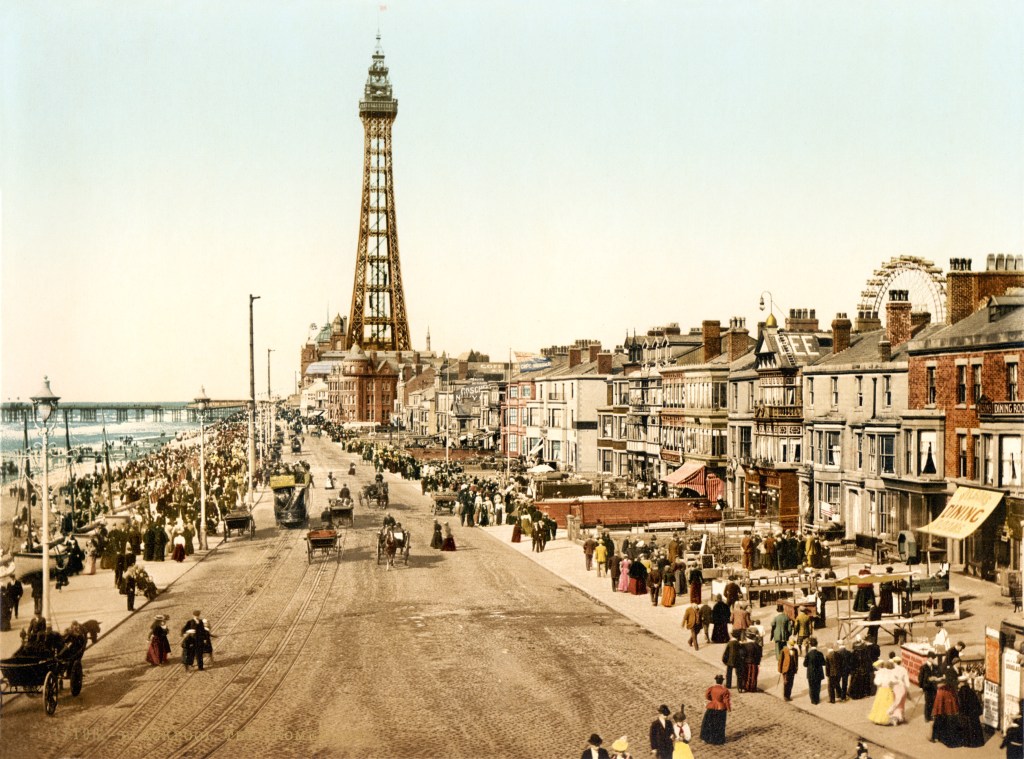
But, in June 1924, she was charged once more, again in Blackpool. Her crime was loitering with intent to commit a felony:
‘It was stated by the Chief Constable that the accused was well known to the police as a pickpocket. “She belongs to that class of woman,” said Mr Derham, “who come into town for what they can get at this time of year. She was seen to approach a man and knock his pocket, and then do the same thing with four other men. She has a peculiar way of working, and when she looks for a victim – she chooses simpletons of course – she will help herself to what they have. She selects married men as a rule so that they will not report cases to the police for domestic reasons.”’
The implication here is that Kitty was no longer permanently resident in Blackpool, but visited during the summer season.
In another report of this case, the Chief Constable is reported to have remarked that ‘she looks very angelic, but she is one of the worst type of women’.
The journalist himself added that she was Irish, ‘a well-dressed and good-looking girl’. A different journalist described her as ‘smartly dressed, with a wealth of golden hair’.
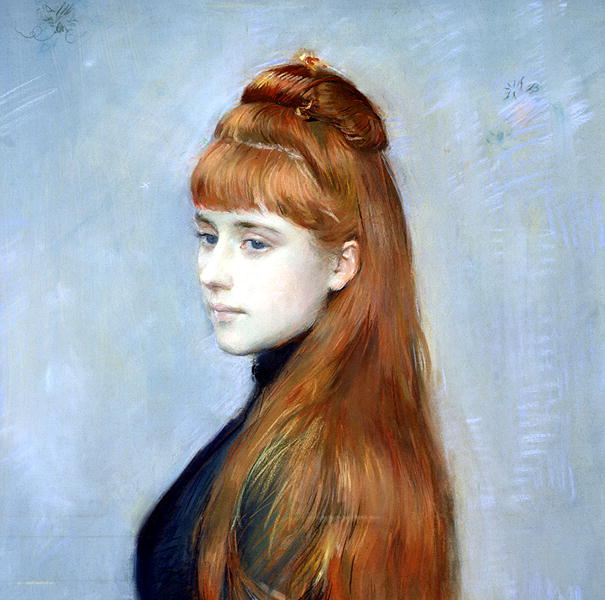
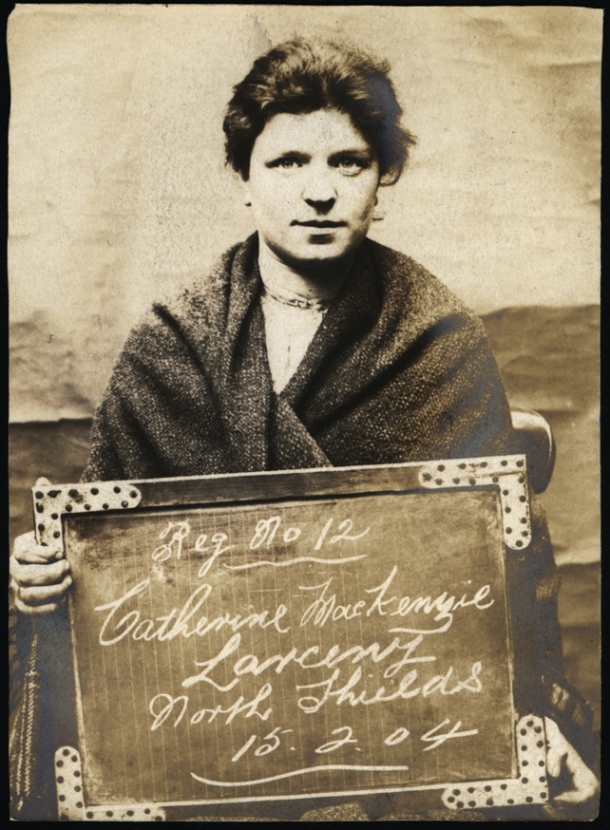
This gives us a picture of Kitty, now in her early 30s. She was attractive, with abundant red hair, well-dressed and probably spoke with an Irish lilt.
She was imprisoned for three months with hard labour.
In December 1924, Sarah Crossam (32), known as ‘Sadi’, a kitchenmaid of 22 Roseville Road, Leeds, and Kitty Dracup (35) no occupation, of 4 Sheepscar Terrace, Leeds, were charged with stealing £110 from a man called Harry Hutton, a corn miller’s manager from Haworth.
The alleged robbery occurred in Bradford.
The modus operandi was very similar. Hutton met the women in a pub and they drank in several more before they parted company. The women ‘hustled him’ and ‘left rather hurriedly’. He subsequently found his wallet missing.
According to a newspaper report:
‘William Blair, Manager for Smith’s Executors, pawnbrokers, Cambridge Street, Manchester, said he knew Dracup as “Mrs Jones”. On 19 December she went to his shop, accompanied by a man, and she redeemed some gold rings, for which she paid £4 15s 10d, tendering five £1 Treasury notes.’
This shows that Kitty wasn’t averse to using an assumed name, which adds to the difficulty of tracing her subsequent movements.
The women pleaded not guilty and, following a lengthy trial, they were ultimately acquitted. This seems almost impossible to believe given Kitty’s criminal history, but it shows that justice is not infallible.
After which, Kitty failed to appear in any newspaper articles for the next five years.
Perhaps she returned to Ireland. If so, she is not visible in the 1926 Irish Census. There is no person called Dracup in that Census and none of the Kate Corleys is her.
There was a Kate Corley aboard the SS Samaria, which sailed from Cobh (Queenstown), Ireland on 25 January 1925, heading for New York.
She stated that she was single, aged 39, born in Foxford, County Mayo, which was also her last known residence. She was working as a domestic and able to read and write.
She was heading for Brooklyn, New York, intending to remain permanently in the United States. She was travelling with Nora Sullivan, aged 30, also from Foxford, and both gave as their Irish contact a sister, Mrs M Flanagan, of Ballyvary, Foxford. Their contact in Brooklyn was their brother, Martin Corley.
This Kate Corley was described as 5 feet 8 inches tall, with a fresh complexion, red hair and hazel eyes.
She was repeating a journey she had first made in January 1911, 14 years previously. On that occasion, she gave her age as 24, her birthplace as Balyvary. Her contact in Ireland was her father, Martin Corley, of Laghtavarry, Balyvary, County Mayo and she was visiting Mick Flanagan, a cousin, in the United States.
On that occasion she was described as 5 feet 4 inches tall, with a fair complexion, red hair and brown eyes.
But this Kate Corley was a completely different woman, born to Martin and Mary Corley in Ballyvary, County Mayo, circa 1885.
I can find no evidence that Kitty spent any time abroad during this period.
Female Pickpocketing in the 1920s and 1930s
There is an interesting literature about female criminality during the Nineteenth and early Twentieth Centuries.
By 1900, women made up some 17% of the prison population, so roughly one in six.
This declined to 12% by 1910, before increasing significantly, to around 18% by the end of the First World War.
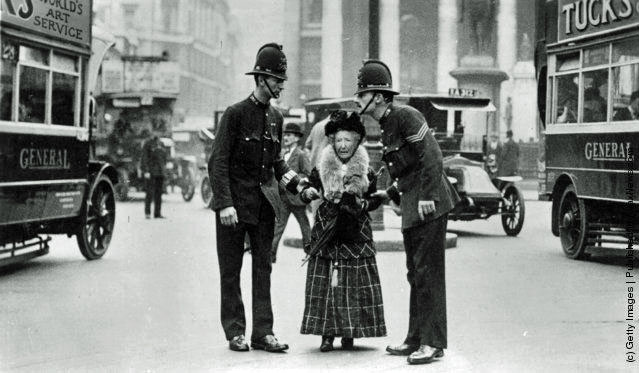
It is interesting to speculate about the correlation between these figures and the rise of the suffragettes, followed by the impact of the War on male criminality and of War-related poverty on female criminality.
One must also factor in changes in Government policy on imprisonment and, more specifically, on female imprisonment.
Thereafter, and despite the extensive poverty of the 1920s, the female proportion of the prison population declined rapidly to nearer 6% by 1930, remaining at that level through until 1940.
If we look at the issue through the lens of raw numbers, the female prison population numbered some 3,000 women in 1900, rising by a few hundred in 1905, before declining steadily to less than 1,000 by 1920, remaining at broadly that level until 1940.
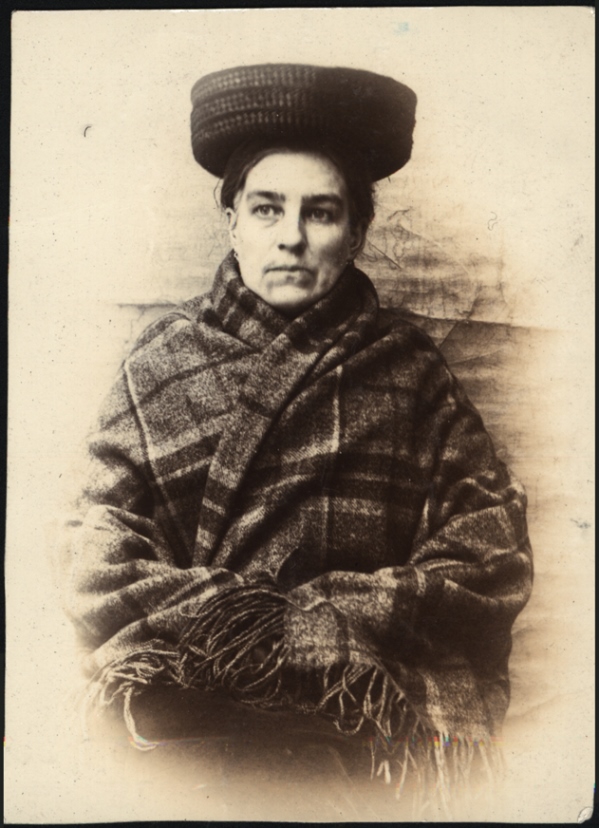
In 1900, more than 25 out of every 100,000 women were imprisoned, falling rapidly to 5 out of every 100,000 women by 1930, then increasing only very slightly over the subsequent decade.
If we focus specifically on offences against property and forgery, excluding burglary and extortion, women made up almost 20% of the offenders found guilty of such crimes in 1900.
This declined to about 13% by 1910, before increasing again to some 16% by 1920, then falling back to 13% by 1930 and remaining at that level until 1940.
The discussion of female crime in England during this period is dominated by the notorious Forty Elephants, a female London crime syndicate which specialised in shoplifting and pickpocketing.
They first emerged in the mid-Nineteenth Century but were at their peak from 1918 to 1939, under the leadership of Alice Diamond (1896-1952).
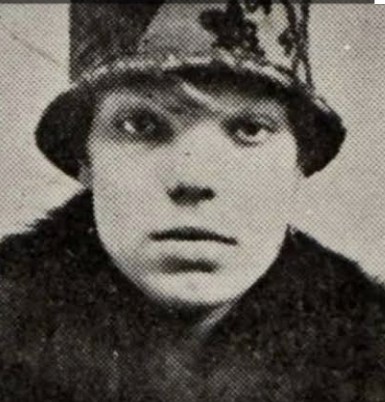
The core gang members probably numbered around 15 at any one time. In total, more than 70 women were involved during these interwar years.
One strategy the Elephants adopted was accosting wealthy-looking males in the street, usually asking for directions. While the man was offering assistance, female accomplices would approach, typically accusing him of sexual assault.
They would demand money or valuables from the man to secure their silence, or else they would steal items from his person. Seduction followed by blackmail was another favourite ploy. Their ill-gotten gains were disposed of through an extensive network of fences and pawnbrokers.
Crime in seaside towns invariably peaked during the summer months, when the number of visiting tourists presented rich pickings. It became much more common for criminals to migrate regularly from town to town, taking advantage of such opportunities.
In response, the police developed means of sharing information between different forces, Including registers of habitual criminals with names and aliases, photographs and details of previous convictions.
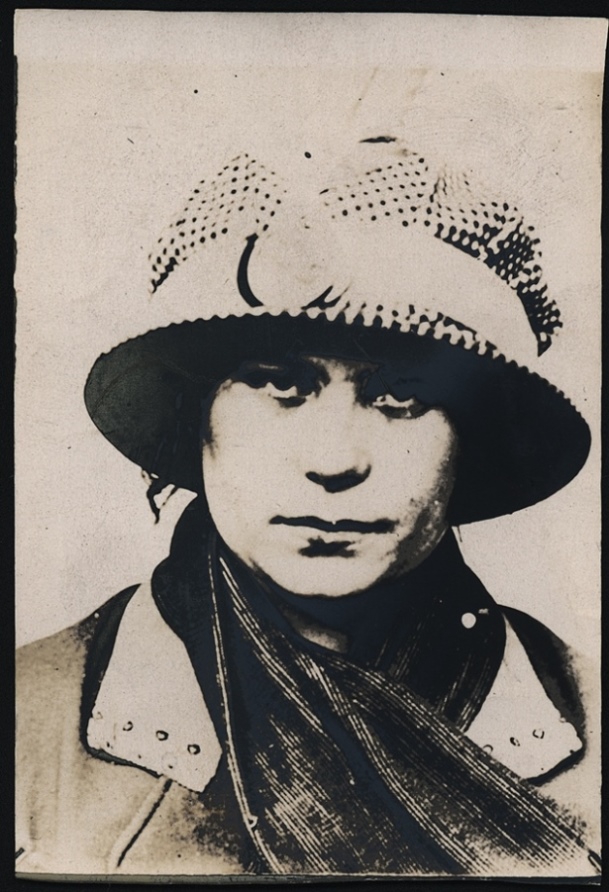
Most female criminals in seaside towns were convicted of stealing, either from a shop or a person. That said, pickpocketing was a comparative rarity, far more infrequent than shoplifting. Imprisonment was generally reserved for repeat offenders.
But in the larger cities pickpocketing could be rife. London’s Petticoat Lane had a particularly bad reputation: it was said that, if you walked along the street, your watch might be taken at one end and you might find it being offered for sale at the other.
In October 1919 several Irish newpapers carried an article headed ‘Light-Fingered Rogues. Pickpockets and their methods.’
It argued:
‘Most people are agreed that women make the most patient, as well as the most dangerous, pickpockets. Picking pockets, in fact, might naturally, from the delicacy of the female touch, be looked on a specially feminine occupation of the criminal. For various reasons the female pickpocket has immense advantages over the male practitioner.’
It is clear from the press reports that some female pickpockets, like Kitty, specialised in robbing men, while others made a living from robbing their fellow women. Few seem to have attempted both.
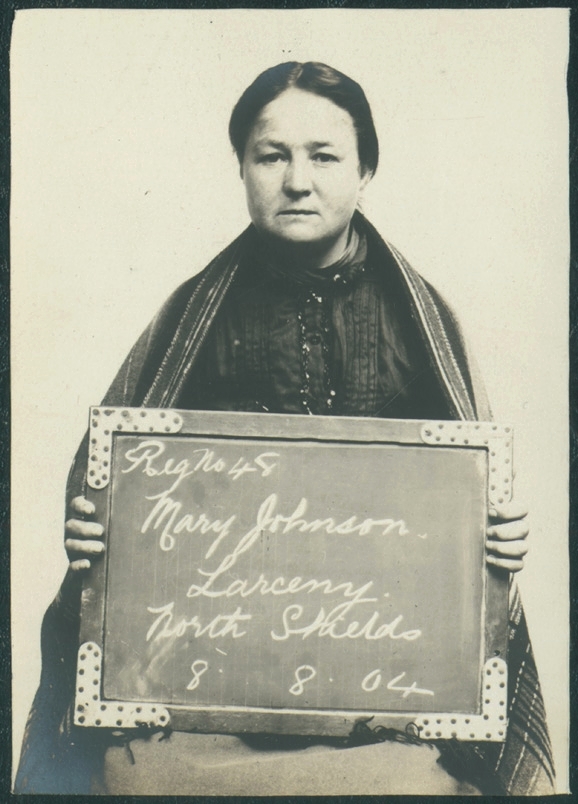
A report in the Bradford Daily Telegraph of 21 October 1926 deals with the trial of another female pickpocket, Margaret Murphy (aged 36). She is described as ‘one of the cleverest female pickpockets in the City’, indicating that several others must have been active at this point.
Murphy had convictions stretching back to 1915. She also had seven children, the youngest only 18 months old, was allegedly an alcoholic herself and was also ‘in the habit of accosting men while the latter were under the influence of drink’.
On this occasion, she wanted to take her toddler to prison with her, since there was no-one else to care for her. The magistrate decided that the matter was for determination by the prison authorities, sentencing her to eight months’ hard labour, an unusually harsh penalty at this time.
Kitty had no children and, though she might have been an alcoholic, her principal motivation for stealing seems to have been to support herself, as well as paying for the expensive outfits she favoured.
The pickpocket-vamp was an accepted stereotype of the period, appearing in novels and plays as well as silent films.
Examples of the latter include ‘The Unholy Three’ (1925), starring Lon Chaney, in which the pickpocket, Rosie O’Grady, played by Mae Busch, is rescued from her life of crime through love for an honest man, and ‘The Third Eye’ (1929), starring Dorothy Seacombe and John Hamilton, in which the pickpocket is a double of the leading lady.
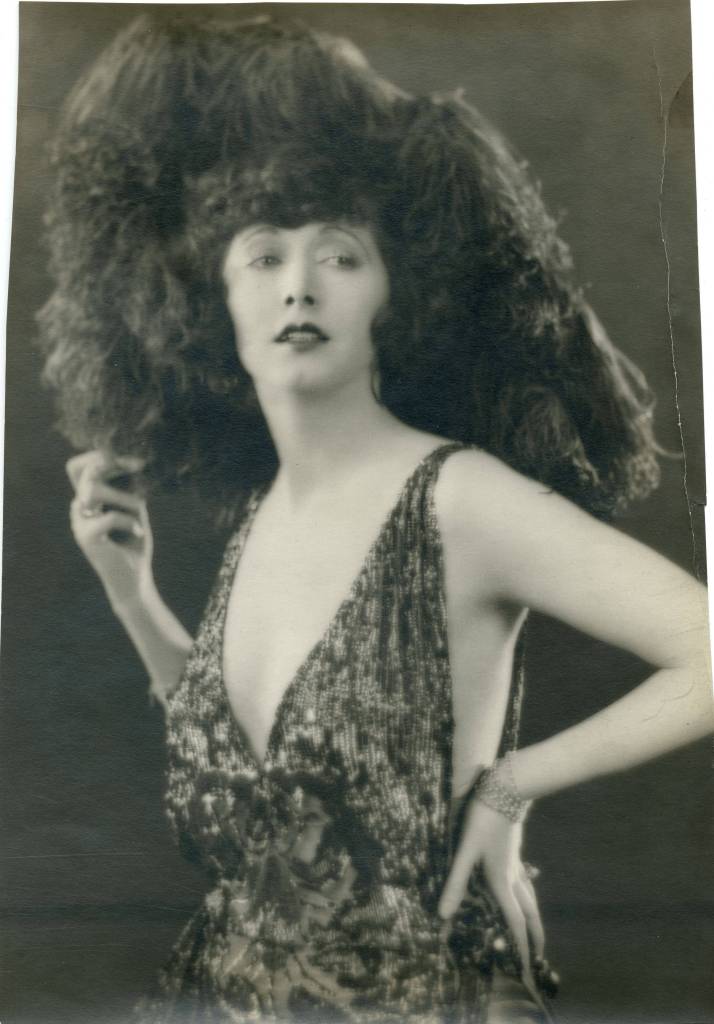
Arthur Dracup in 1921
There is now a hiatus in Kitty Dracup’s story. Having escaped imprisonment in the first days of 1925, she disappears from view until 1930.
I have reviewed many press reports of pickpocketing between 1925 and 1929, but can find no further reference to her under either name.
To trace the story of Arthur’s next relationship, it is necessary to go back to the 1921 Census.
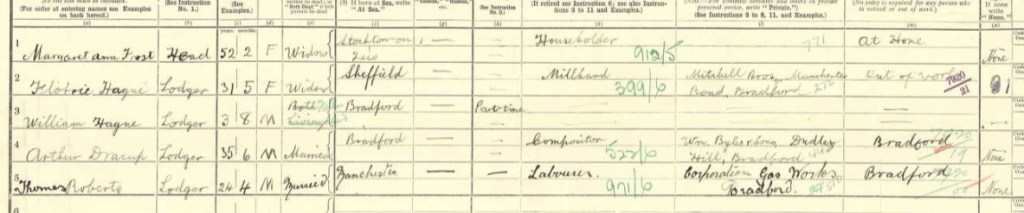
While Kitty was apparently in Blackpool, living in a guest house with another man, Arthur was still in Bradford but had moved on once again.
The Census places him at 8 Iddlesleigh Street, in the Laisterdyke area of Bradford.
The head of the household was Margaret Ann Frost, aged 52, a widow, born in Stockton-on-Tees. Her husband, Robert Frost, a gas stoker, born in Suffolk, had died only recently, on 11 May 1920.
A brief report in the Bradford Daily Argus describes his demise:
‘While Robert Frost of 8, Iddlesleigh Street Laisterdyke, was sitting on a wall in Planetrees Road this morning he overbalanced and fell into the Great Northern Goods Yard, a distance of 28 feet.
On being taken to the Infirmary, he was found to be in a critical condition.’
At the inquest, a verdict of accidental death was returned.
Arthur was one of three adult lodgers in the house. He was described as 35, married, employed as a compositor by William Byles and Sons, Dudley Hill, Bradford.
Byles & Son had printed and published the Bradford Observer since its inception in 1834, becoming its proprietors in 1847. By the 1870s, the Observer had developed into a four-page daily newspaper.
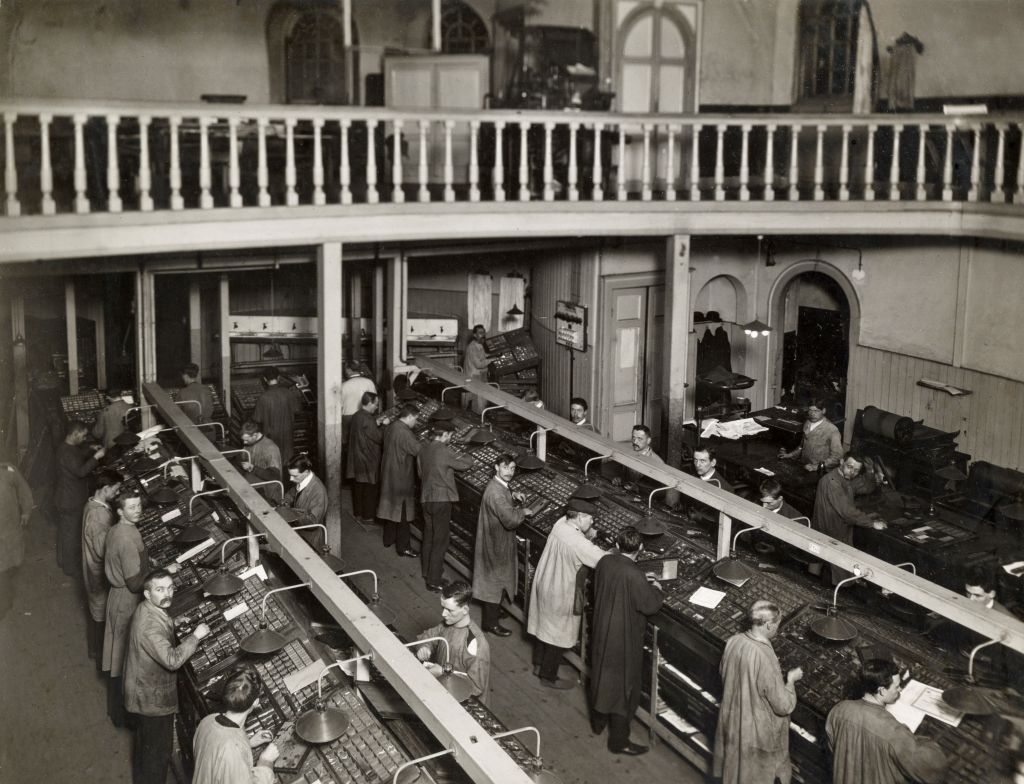
When William Byles died in 1891, his son, William Pollard Byles took over the Company. He was to become MP for Shipley and was knighted in 1911.
The paper changed its name to the Yorkshire Daily Observer in 1901, shortening that further to The Yorkshire Observer in 1909. It survived until 1956.
The other male lodger was Thomas Roberts, a 24 year-old married man from Manchester, now working as a labourer at the Bradford Corporation Gas Works.
And finally, Florrie Hague, a 31 year-old widow, born in Sheffield. She had been employed as a mill hand by Mitchell Brothers of Manchester Road, Bradford, but was presently out of work.
She had with her a three year-old son, William.
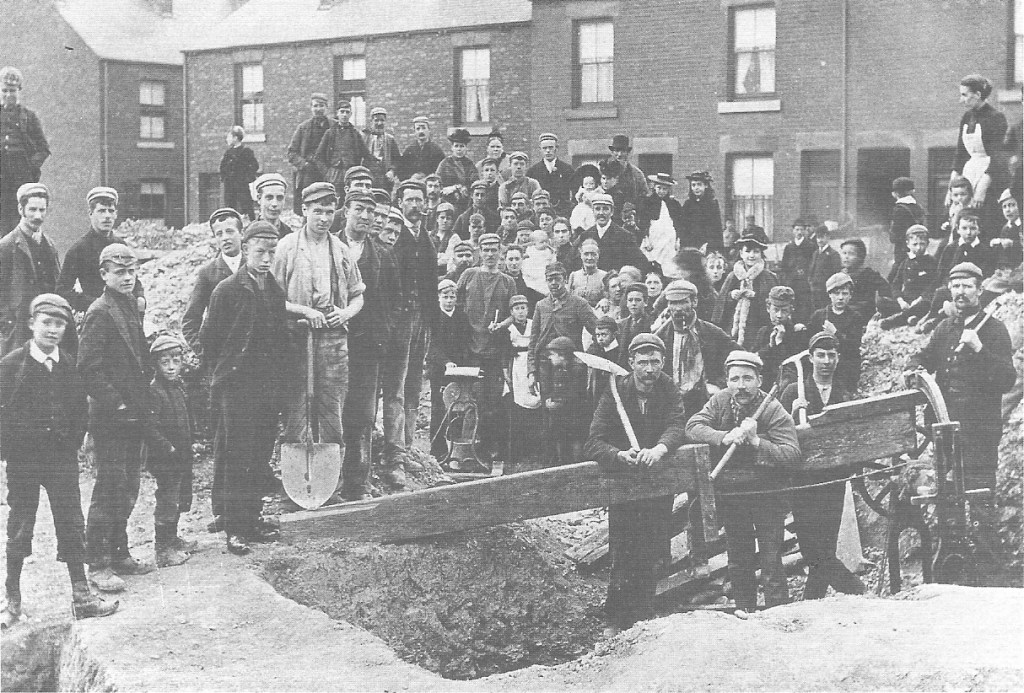
The Backstory of Florence Hague
Florrie Hague had been born Florence Archer on 28 February 1890 in Brightside, Sheffield, to Mark Archer, a labourer, and Mary Anne Beatrice Archer, nee Wall.
But she was adopted as a baby by Charles Whitham (1864-1931), a miner, and Hannah or Annie Percival (1868-1949).
She had married Horace Edgar Hague, another miner, on 31 March 1908, in Rotherham Register Office. Florence was just 18, while Horace Edgar was 23. They settled in the coal mining village of Thorpe Hesley.
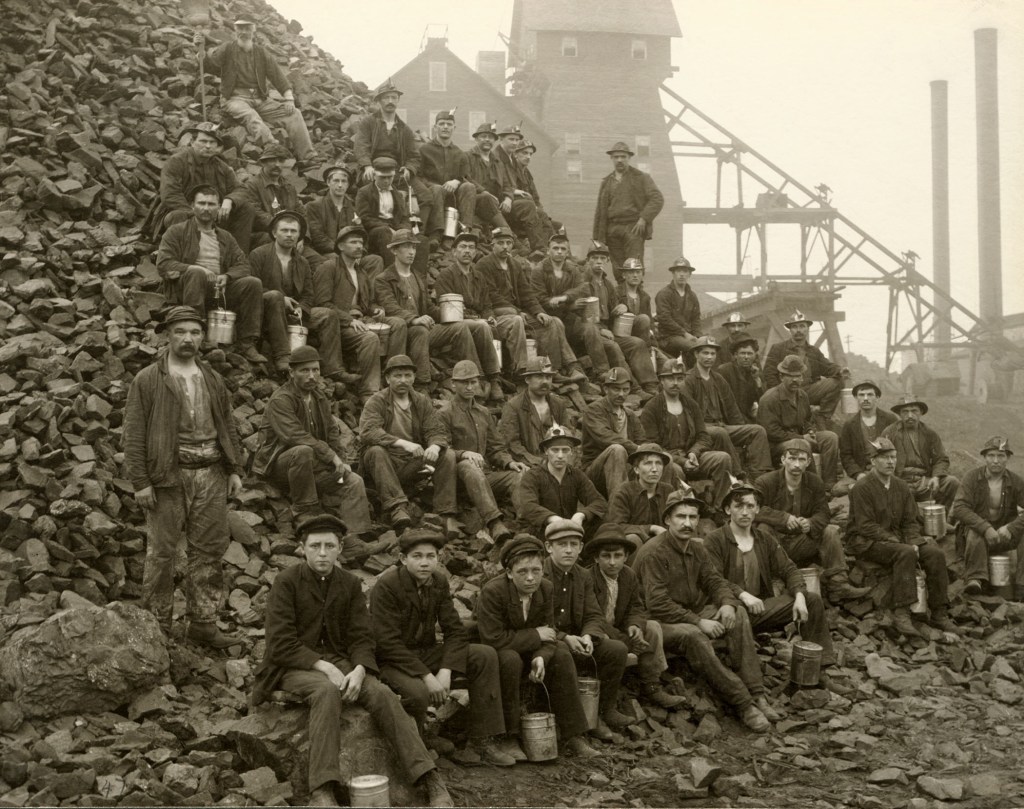
A son, Edgar Archer, had been born prior to the marriage, on 20 December 1907.
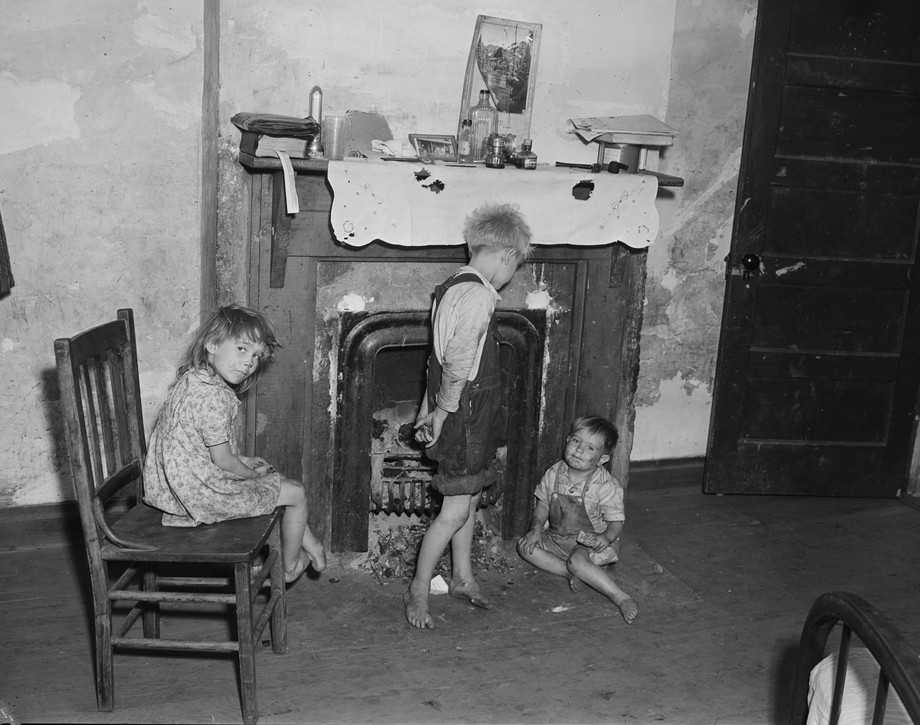
A second son, Arthur Hague, was born in wedlock in 1910, but died in January 1913. The death certificate records that an inquest had been held, and that Arthur had died from shock, consequential on burns he had received while lighting paper on the kitchen fire.

The Penistone, Stocksbridge and Hoyland Express had details from the inquest:
‘A sad case of burning, from which Arthur Hague, aged two years and nine months, son of Mr and Mrs Edgar Hague, 36 Baker’s Yard, Wentworth Street, Thorpe Hesley, lost his life, occurred on Saturday morning.
Deceased, along with his brother Edgar, aged five years, came downstairs about 8.30am, and the former, getting a chair, reached over the fireguard and lit some paper, with the result that he was immediately enveloped in flames, his clothing becoming ignited.
The mother, who was upstairs, hearing screams, at once came down, and extinguished the flames by rolling deceased in the hearth-rug, but not before he was seriously burnt.
Dr Barr was sent for, and ordered his removal to the infirmary, whither he was taken in Messrs Newton Chambers and Co’s Ltd ambulance, but, in spite of all that could be done, death took place about six pm.’
Sadly, this was not an unusual cause of death, particularly during the winter when children would huddle close to the fire to keep warm. Fireguards helped to reduce the risk of fatality, but they could not remove it entirely.
There is no reference to Horace Edgar Hague in this account, so we do not know whether he was also upstairs with his wife, or at work.
One is tempted to wonder whether the couple might have been trying to create another little Hague and had sent the children downstairs to be out of the way.
But he might have been underground. Although the 1908 Coal Mines Regulation Act had restricted shifts to a maximum of eight hours per day, it had not eliminated Saturday shifts, so many miners still worked a six-day week.
In the event, a third son, Charles Hague, was born, but not until December 1914.
Less than a year later, Horace Edgar Hague was also dead.
His service record shows that he had joined the army on 15 January 1915, his 30th Birthday, and was initially posted to the 11th (Service) Battalion, York and Lancaster Regiment.
He was sent to Pontefract before transferring to Harrogate for training, eventually arriving at Farnley Park Camp on 24 May.
He is described as five feet six-and-three-quarters of an inch tall, with a 37-inch chest, robust development and perfect vision.
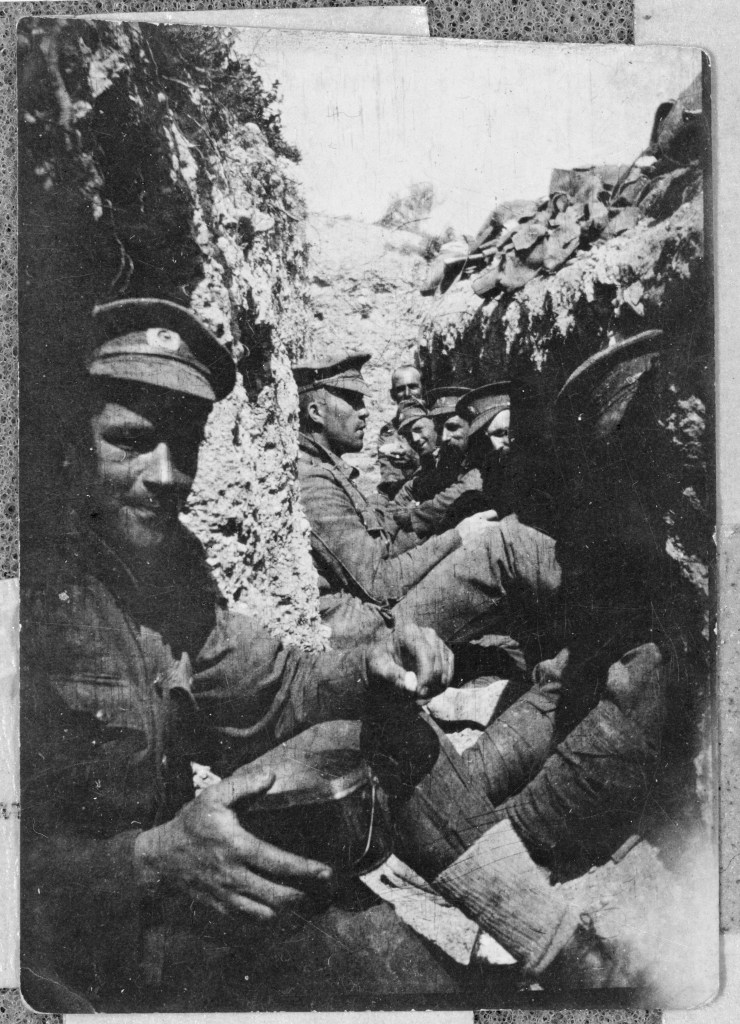
In September 1915 he seems to have transferred to the 6th (Service) Battalion, which had already shipped to Gallipoli, arriving at Suvla Bay on 6 and 7 August as part of a major amphibious landing.
Two companies from the 6th Battalion had been in the vanguard. They eventually took the small hillock of Lala Baba, which overlooked the beach, but suffered heavy casualties in the process. All but two officers and one third of other ranks were either killed or wounded.
Horace Edgar Hague apparently arrived in Gallipoli on 18 September, almost a month after the principal battle, at Scimitar Hill on 21 August, which caused a further 5,300 British casualties.
Given these losses, it is not surprising that the Battalion called for reinforcements.
However, between Scimitar Hill and the British withdrawal from Gallipoli in December 1915, fighting was limited and sporadic.
The overwhelming heat and endless flies of summertime soon gave way to torrential rain, including on the night of 26/27 November, when the trenches were flooded to a depth of four feet.
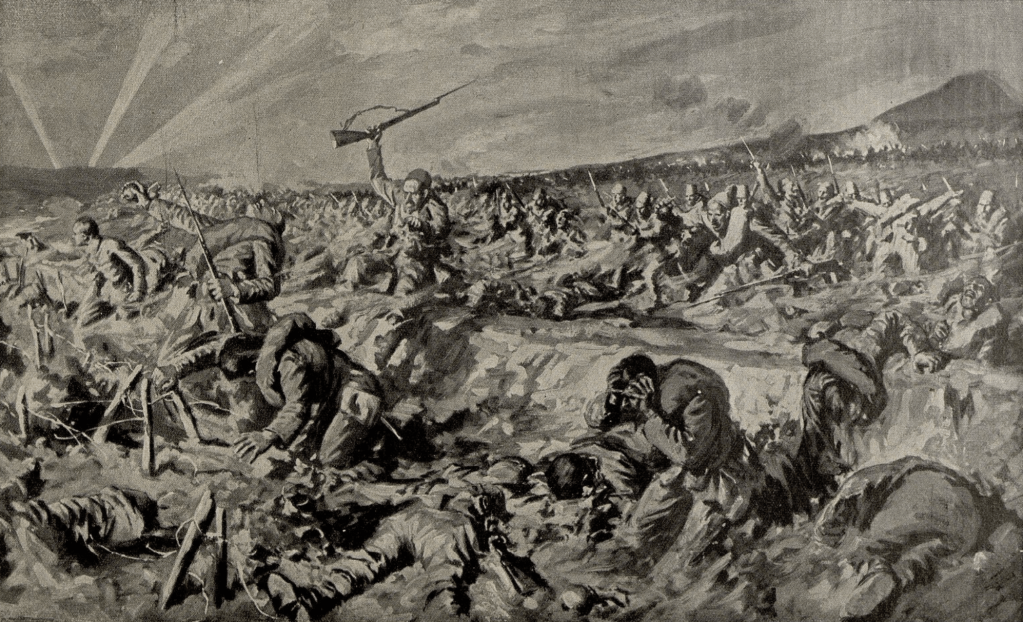
Hague must have been wounded in a minor skirmish that took place in pouring rain. He was injured in the abdomen, so might have been bayoneted at close quarters. He was buried in the Hill 10 Cemetery at Suvla.
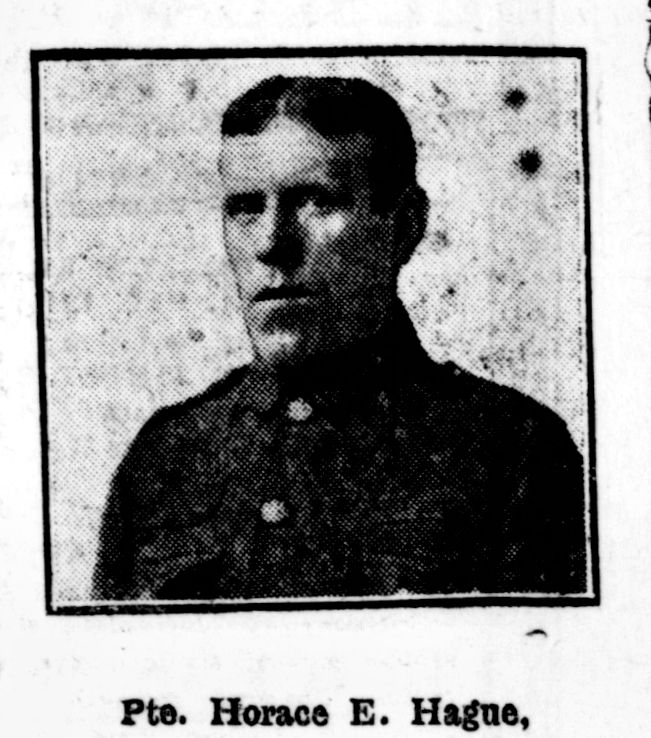
According to the local newpaper, which supplied his photograph:
‘In a letter that Mrs Hague received a few days before the fatal news, Private Hague stated that he was alright, and that he had met Wm. Coy and Friend Cooney, two more from Thorpe Hesley. He also expressed a wish that that [sic] the war was over and they were safe home again. Private Hague and Private T Sylvester, whose death we recorded last week, were neighbours when at home living next-door to each other. Private Hague is the seventh from Thorpe Hesley who has given their lives for their country.’
His personal effects were sent to Florence in Thorpe Hesley on 28 April 1916.
As noted above, we know that an Arthur Dracup also served in the 6th Battalion, having transferred from the West Riding Regiment. Unfortunately, that service record is not available. The surviving records relate only to the award of the Victory Medal and British War Medal.
It is certainly conceivable that Hague and Arthur Dracup knew each other before he encountered Hague’s widow, but I have no firm evidence. Moreover, I cannot definitively state that this was the ‘right’ Arthur Dracup.
Florence received a widow’s pension, plus payments in respect of her sons Edgar and Charles until they were aged 16 (in 1923 and 1930 respectively), the total being 18s 6d a week.
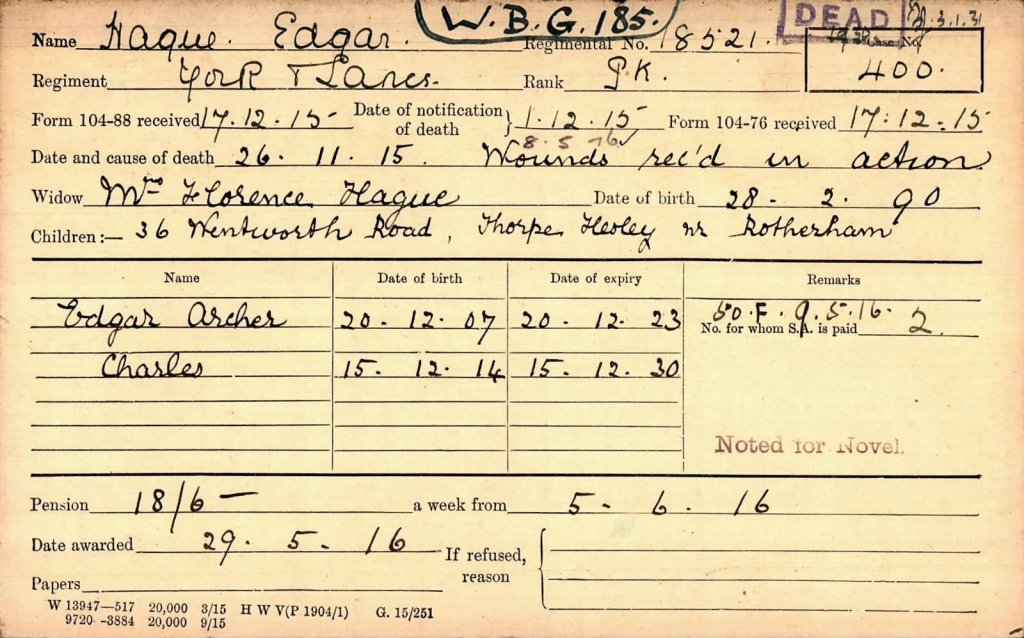
The award was made on 29 May 1916, at which point her address remained 36, Wentworth Road, Thorpe Hesley, near Rotherham.
The Ministry of Pensions had only just been created to award and administer pensions to war widows and their families. A Special Grants Committee assessed each case and, according to the National Army Museum:
‘This assessment took into account their moral character, any relationships with men other than close family who could potentially be expected to provide for them, the quality of their housekeeping and, where relevant, the quality of their parenting. Pensions would be revoked should any evidence come to light that these standards were not being maintained.’
The Committee could take account of ‘neighbourhood gossip’ when deciding whether or not to revoke such pensions. They were always revoked on remarriage, sometimes even when a widow formed a new relationship.
This might help to explain Florence’s departure from Thorpe Hesley, as well as providing a further reason for subterfuge in her subsequent relationship with Arthur Dracup.
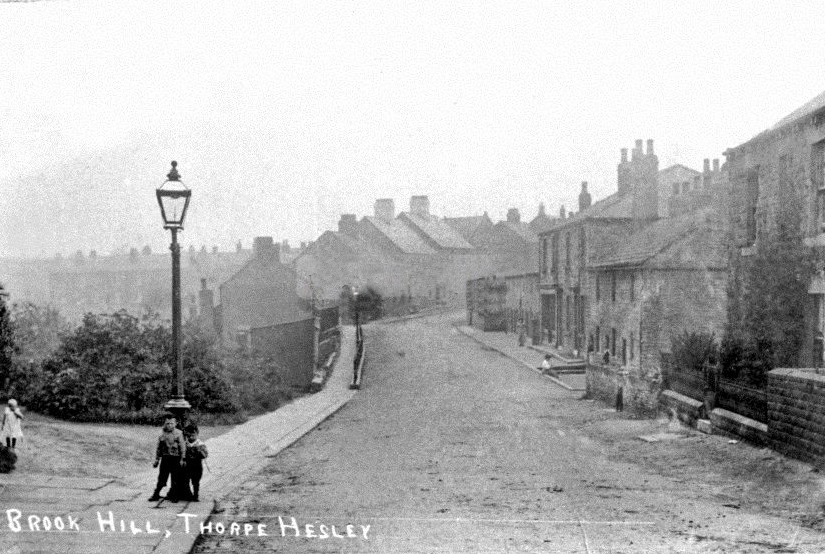
William Hague, then Florence’s youngest child, was born on 8 November 1917, at 33 Calcutta Street Bradford. This was the address of her stepmother, Annie Whitham, though her stepfather Charles remained in Thorpe Hesley, living with a married son.
We know that Annie Whitham was resident at 33 Calcutta Street as early as 1915, because another son, Colin William Whitham, is mentioned as living at that address upon his death from gas poisoning on 5 May 1915, aged only 19.
William Hague’s birth certificate gives his surname as ‘Haigh’.
It states that his father was ‘Horace Edgar Haigh [sic] (deceased)’, and his mother ‘Florence Haigh, formerly Archer’. Florence herself reported the birth.

This misspelling must have been deliberate, designed to put inquisitive busybodies (and the war pensions administrators) off the scent.
It was, of course, impossible for Horace Edgar Hague to have fathered William, since the latter must have been conceived around January or February 1917, more than a year after Horace’s death.
Florence must have moved to Bradford at some point between 29 May 1916, when the war pension was awarded, and 8 November 1917, when William was born.
It is quite possible that William was conceived in Thorpe Hesley, and that Florence left to hide her pregnancy. Equally, she might have moved to Bradford before William was conceived.
Might Arthur Dracup have been the true father? This seems unlikely, since Kitty Dracup could still have been on the scene when William was conceived. If Arthur was serving in the War, he would have had to have been on leave at the time.
One possible clue to the father’s identity arises later in this narrative. For it turns out that Florrie Hague was not quite who she claimed to be!
By 1921, as we have seen, she and Arthur Dracup were fellow lodgers at 8 Iddlesleigh Street, and William Hague was living with his mother.
Meanwhile, William’s elder brothers Edgar and Charles Hague, now aged 13 and 6 respectively, were residing with their maternal grandmother and her own children at 33 Calcutta Street, in part of West Bowling known as ‘Little India’.
Providing False Information on Birth Certificates
The General Register Office for England and Wales was established in 1836, following the passage of the Births and Deaths Registration Act. The civil registration of births began the following year.
England and Wales were subdivided into more than 600 registration districts, each of those then divided into sub-districts, each with its own superintendent registrar.
Until 1874 each registrar was responsible for establishing which births had taken place in his sub-district, which resulted in omissions. From 1874 the Births and Deaths Registration Act placed a legal responsibility upon the parents to report a birth, other than a stillbirth, within 42 days.
Under the terms of the 1836 legislation it was unnecessary to name the father of an illegitimate child but, from 1875, a father could have his name recorded on the birth certificate of an illegitimate child, provided that he attended the register office in person, alongside the mother.
Otherwise, illegitimate children were usually registered exclusively under the mother’s maiden name. Sometimes, though, the paternal surname would be revealed because the parents followed the practice of using it as the child’s middle name.
The 1911 Perjury Act made it a criminal offence, punishable by imprisonment, to deliberately provide incorrect information for a birth certificate. The maximum sentence was seven years with hard labour. Anyone aiding or abetting the provision incorrect information could be liable for a similar punishment.
But there were no checks and no requirement for the submission of supporting evidence. The word of the person recording the birth was accepted.
In the case of an honest mistake, over paternity for example, the record could be changed on production of evidence, or else a court order.
In 1926 the Illegitimacy Act provided that an illegitimate child became legitimate if the parents subsequently married, but only if neither parent was married to someone else at the time of the child’s birth.
It wasn’t until 1959 that the Legitimacy Act rendered legitimate the children of parents who had married a third party by the time of their birth. It also provided for circumstances where the parents thought they were legally married but turned out not to be so.
Back in 1915, media coverage had prompted something of a moral panic over the incidence of so-called ‘war babies’, born out of wedlock and typically fathered by a soldier stationed in a local army camp.
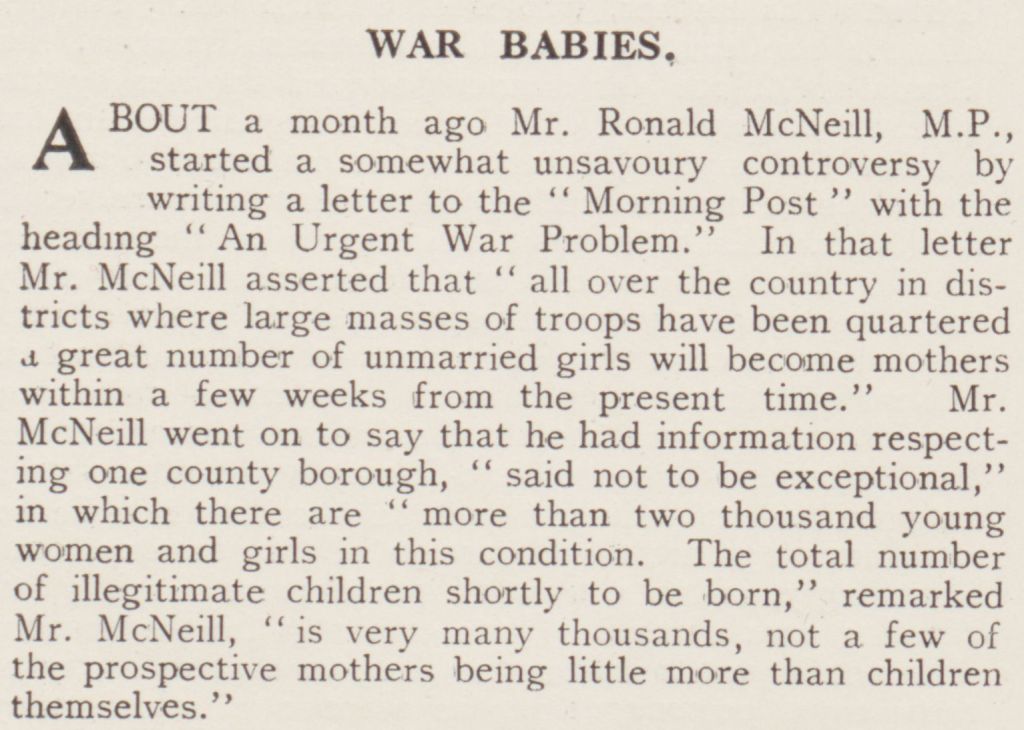
It was held, without strong evidence, that lax moral conditions during wartime were responsible for the birth of thousands of additional illegitimate children. But, when efforts were made to establish the facts, these claims proved to be vastly exaggerated.
In England, the number of illegitimate births was only 5% higher than it had been in 1902. In Scotland, the annual number of illegitimate births was significantly higher between1912 and 1914 than it was between 1915 and 1918.
According to the 1920 Annual Report of the Registrar General, in England and Wales, the proportion of births that were illegitimate reached 6.26% in 1918.
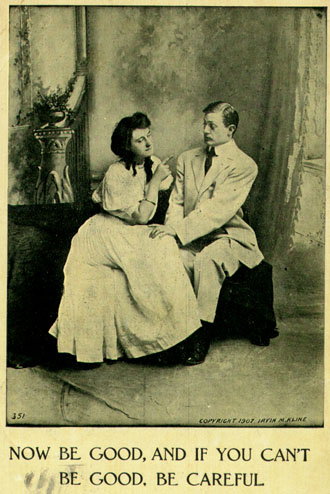
By 1920 there were almost 45,000 illegitimate births, an increase of 3,000 compared with 1919 but, expressed as a proportion of all births, the percentage had fallen to 4.69%.
But these statistics were compiled from the birth details submitted by parents. If they had falsely claimed that an illegitimate child was legitimate, that child would be counted as such.
A number of different factors influenced the illegitimacy rate, during wartime and in the subsequent post-war period.
While the incidence of extra-marital sexual intercourse might have been increasing, both contraception and abortion were more readily available.
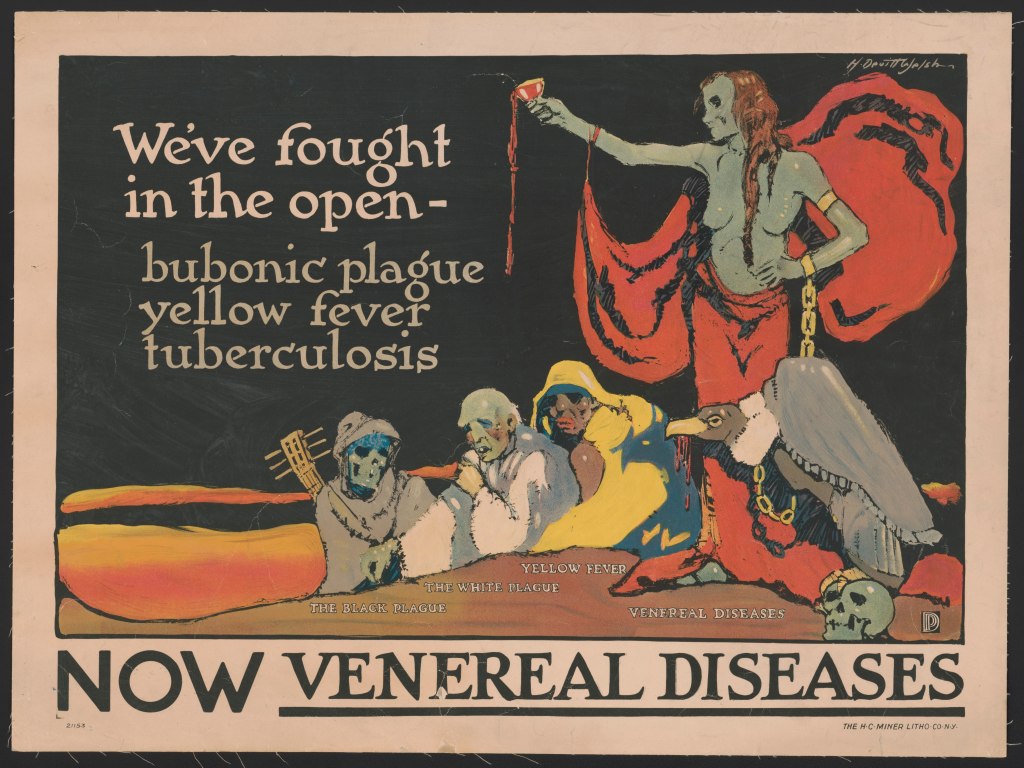
Though condoms were still relatively expensive, they were increasingly distributed to servicemen, to help reduce the spread of venereal disease.
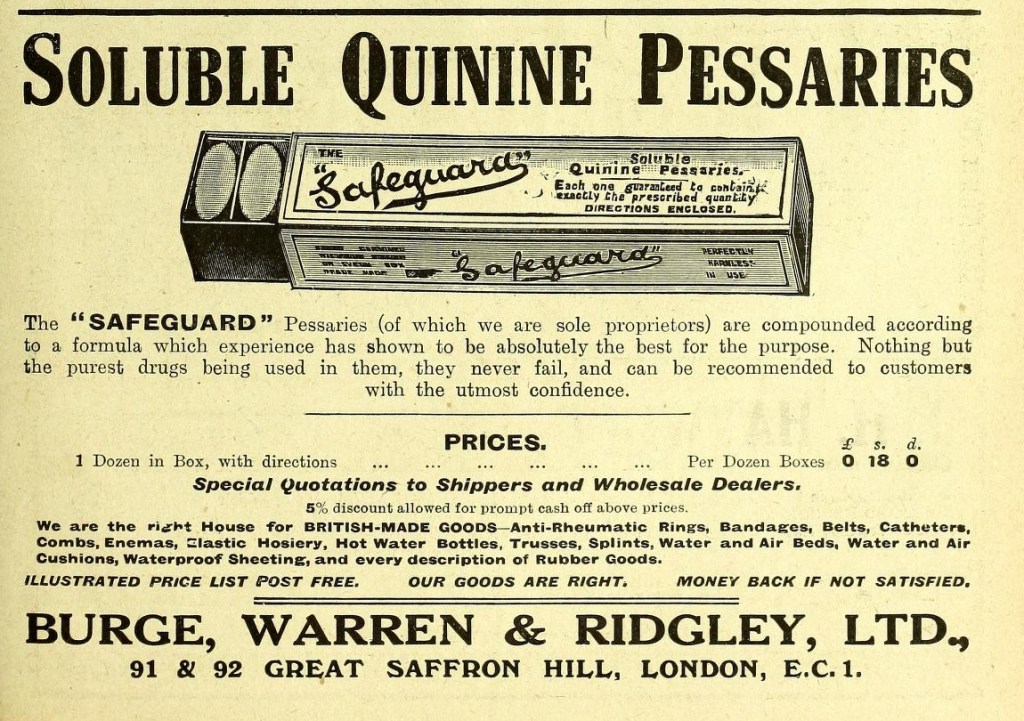
Although abortion remained illegal, many believed, falsely, that self-termination early in the pregnancy was a legitimate form of birth control.
A variety of chemical and folk remedies was deployed, many of them extremely dangerous. Two of the most popular were a combination of gin, hot baths and vigorous exercise; or else the consumption of quinine.
Considerable stigma still attached to illegitimacy.
Under the terms of the 1913 Mental Deficiency Act, unmarried mothers were amongst those who could be confined to a lunatic asylum.
Unmarried war widows who fell pregnant relatively soon after their husband’s death could expect a degree of moral opprobrium and possibly even ostracism, much more so than if they had quickly remarried. The late husband’s relatives might be only too ready to notify the War Pensions Office.
At the same time, despite the maximum sentences set out under the Perjury Act, very few parents were prosecuted.
According to the Registrar General’s Annual Report for 1920, only 18 people were convicted under the Perjury Act for registration offences and, of those, three were for registering illegitimate births as legitimate, and just one was for giving false information as to relationship when registering a birth.
Arthur and Florrie’s Marital Sleight of Hand
According to the Bradford voting registers, by 1923, Arthur Dracup and ‘Florrie Dracup’ were living together at 76 Beck Street, to the east of Bradford, close to the railway, in an area surrounded by mills.
On 28 June 1923 a son, George Arthur Dracup, was born at 76 Beck Street. The father was Arthur Dracup; the mother was named as ‘Kathleen Florence Dracup, formerly Corley’.

There was no such person as Kathleen Florence Dracup, nee Corley.
Arthur and Florrie were unmarried, but living together as a married couple, not least to justify Florrie’s pregnancy. Arthur was presumably still married to Kitty Dracup, nee Corley, but it was not she who had given birth. The names ‘Kathleen Florence’ give a nod to both women,
This was clearly a false registration, the second by Florence, who had obviously learned from her experience while registering the birth of William Hague.
The same ‘facts’ were supplied when a daughter, Joan Dracup, was born on 9 October 1925, making three false registrations in all.
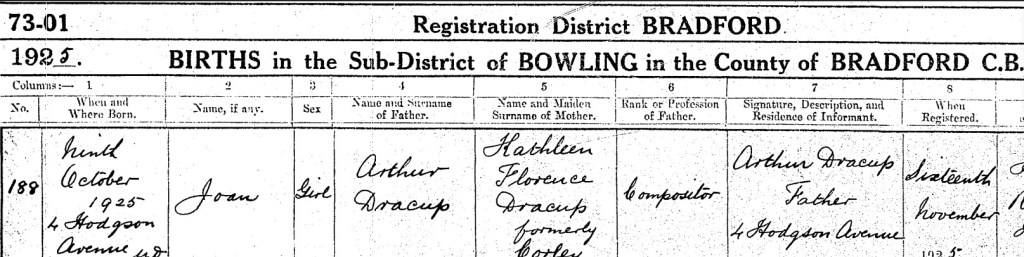
By the time of Joan’s birth, the family had moved to what was to become their long term address. Number 4 Hodgson Avenue was a small three-bedroomed terraced house on a tree-lined road just west of Bradford Moor Park.
I believe that William Hague was also resident at this address, completing a family of five.
Arthur Dracup is confirmed at 4 Hodgson Avenue in the Autumn 1925 and 1926 voting registers but, otherwise, both he and his young family were inconspicuous during the remainder of the 1920s.
They had good reason to keep a low profile, since Florrie was masquerading as Arthur’s wife while Kitty, his actual wife, was developing her criminal career, had returned to live in Leeds by late 1924, and was known to visit old haunts in Bradford.
Would she have been tempted to blackmail her husband, had she discovered what he was about?
And there must have been residents of Bradford, friends and relatives, who knew about Kittie. Did Arthur pretend that she was dead, or that he had divorced her and subsequently married Florrie?
Arthur’s Sister, Clara Dracup
When her father George died in April 1927, Clara, now 38, was finally free to marry.
Her choice fell upon Harry Smith, a weaving overlooker for dress goods at the Ashfield Mills, where Clara was also working. He had been born, in June 1892, to Albert Smith (1872-1942), also a weaving overlooker, and Emma nee Lightowler (b.1872)
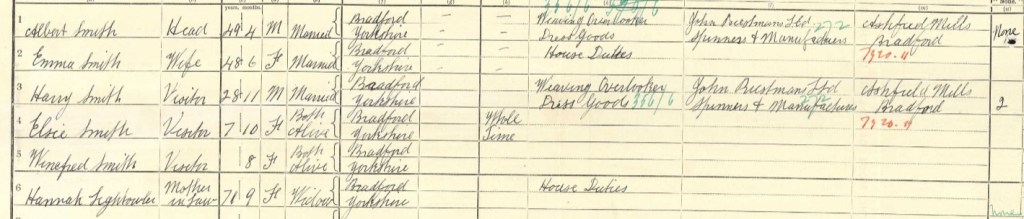
By the time of the 1921 Census, Harry Smith was living with his parents and maternal grandmother at 46 Montague Street, Bradford, some three miles south-east of St Leonard’s Road.
Harry, who was almost 29, described himself as married, and he had with him two children, both born in Bradford: Elsie Smith, 7, and Winifred Smith, only eight months old.
Harry had married Ada, nee Wilman in May 1913, at St Matthew’s Church in the Parish of Bankfoot. She was then 22, the daughter of Hustler Wilman (1860-1922), described in the 1911 Census as an ‘Engine Man’, and Hannah, nee Spurr (1860-1924).
Ada had given birth to Elsie Smith on 22 July 1913 and to Winifred Smith on 20 October 1920. But, by the time of the 1921 Census, she seems to have been an in-patient at the Bierley Hall Consumptive Sanatorium.

Bierley Hall, originally a manor house built in 1690 for the Richardson family, was acquired by Bradford Corporation in 1895 as a local centre for the treatment of tuberculosis in women and girls.
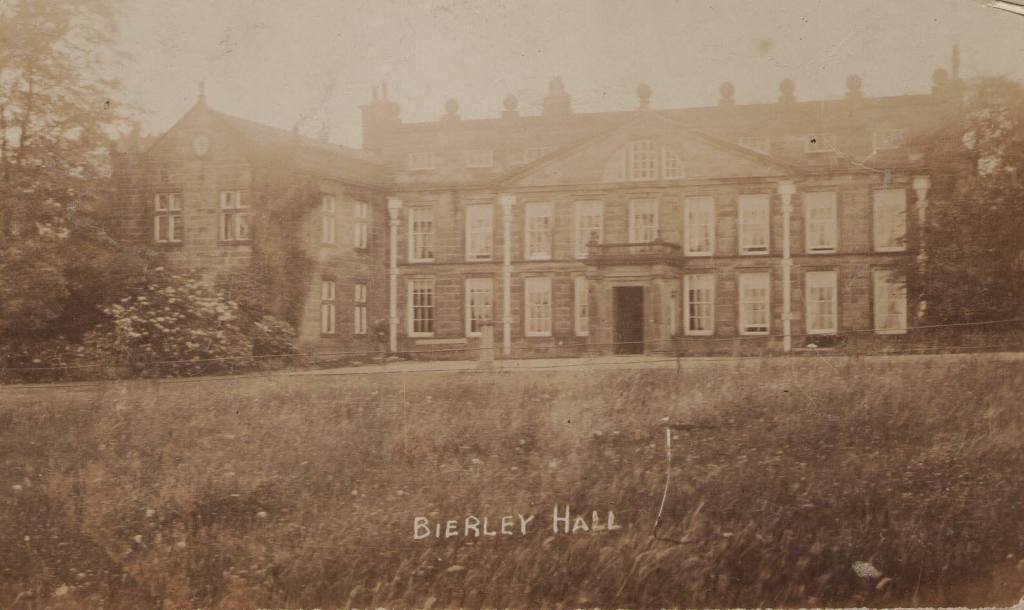
There were some 66 beds at this time, normally reserved for more advanced cases of the disease. Strangely, the grounds incorporated Bradford’s Municipal Poultry Farm!
Contrary to the few family trees I have discovered, Ada was alive into the 1940s.
On 10 July 1927 she gave birth to an illegitimate son in Bradford. The birth was registered under dual names: Jack Smith and Jack Atkinson, though the birth certificate is only listed under the latter name.
The father was almost certainly John Thomas Atkinson (1872-1947) since Ada married him the following summer. I have not established that she and Harry had obtained a divorce. The birth of Jack Atkinson suggests that the relationship dated back to late 1926 at least.
The 1939 Register shows all three Atkinsons living together at 495 Ransdale Road, Bradford. John Thomas was employed as a wool warehouseman.
Manwhile, Harry Smith and Clara Dracup had married in the final quarter of 1931. By the time of the 1939 Register they were living at 14 St Leonard’s Road.

Were both marriages bigamous?
The 1930 voting registers record Clara as living at Number 14 with one Muriel Wilson. Then, from 1931, someone called Jack Crossley took over the property. Clara and Harry Smith were not recorded there until the 1934 Voting Register.
There is much disagreement amongst published family trees as to the subsequent lives of Clara and Harry Smith.
Some suggest that Smith divorced Clara in favour of a Mary Agnes Cawood, who he married in 1953, siring two children. But I believe it likely that Mary Agnes married a different Harry Smith.
Some claim that Clara died in 1935, but she was definitely alive in 1939, and I believe that she survived until 1969.
Kitty Resumes Her Crime Spree
By 1930, Kitty Dracup had apparently relocated to Manchester where, as we have seen, she already had well-established relationships with the local pawnbrokers.
It is interesting to speculate whether she had really avoided criminal convictions over the previous few years, or whether she had continued her criminal career under an alias, or without attracting the notice of the press.
In October 1930 the Manchester Evening News carried a report showing that she still stuck to her old methods:
‘Kitty Dracup (39) and Annie Murphy (40), of no fixed abode, were sentenced to three months’ imprisonment at Manchester City Police Court today for stealing a gold sovereign from the watch-chain of William Henry Wills, of Broad Street, Gorton.
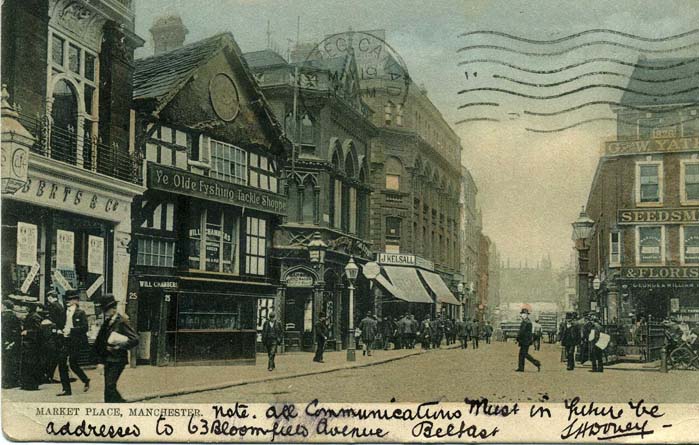
Wills said he was sheltering in a doorway of Market Place, Manchester, last night when the two women tried to get into conversation with him.
He felt a tug at his watch-chain, and grabbing hold of both the women he called the police and gave them into custody.
Both prisoners denied all knowledge of each other and of the sovereign.’
William Henry Wills was a 47 year-old engine driver working with the Grand Central Railway.
Thanks to The Guardian, we know that Kitty was convicted again, less than two years later, in April 1932. But now she had an address and she had switched from pickpocketing to shoplifting:
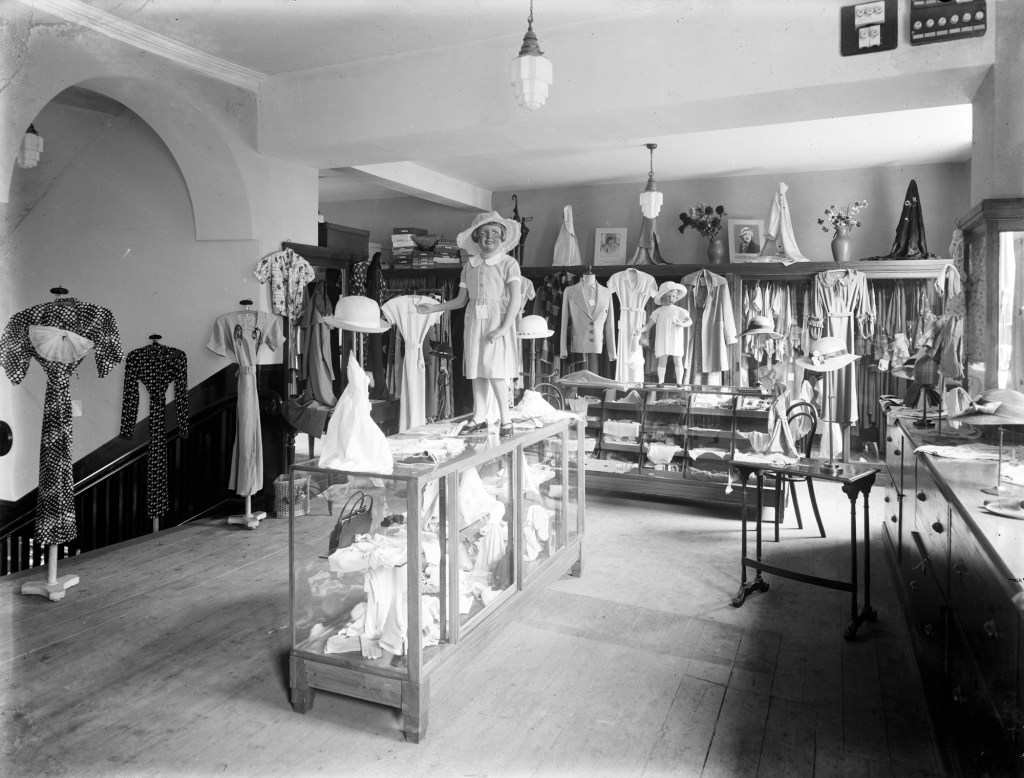
‘Kitty Dracup (40) of Mark Lane, Chorlton-on-Medlock, and Madge Travers (28), of Brunswick Street, Chorlton-on-Medlock, were charged at the Manchester City Police Court with being concerned together in stealing goods to the value of 18s 5d from Messrs Marks & Spencer’s shop, Oldham Street, on Saturday afternoon.
Dracup pleaded not guilty and Travers guilty. After hearing the evidence, however, the Stipendiary Magistrate (Mr J Wellesley Orr) said that he was satisfied that Dracup was the inciting party in the case. There were previous convictions against her, and she was now sentenced to six months’ imprisonment. Travers was fined 40s.’
Madge Travers may have been the woman of that name identified in the 1939 Register as living at 50 Percival Street Manchester, a person ‘of private means’. Her date of birth is 11 September 1903, which fits, and her name has been revised to ‘Madge Heaps’.
Mark Lane was a small L-shaped alley between Withy Grove and Corporation Street, where Printworks now sits, just south of Victoria Station. It once contained the Publishing Offices of the Mark Lane Express, Sporting Chronicle, Sunday Chronicle and several other publications.
During the 1920s, local Manchester papers carried a few reports about the activities of criminals based in Mark Lane.
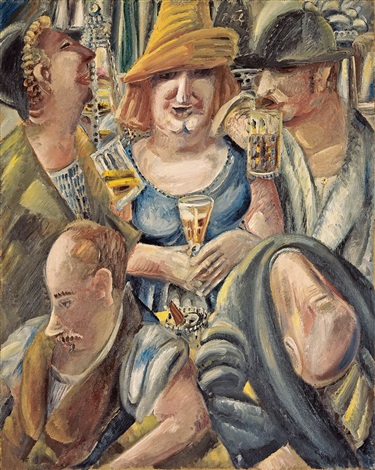
In November 1921, for example, a Kathleen Kearns (24) of Mark Lane was imprisoned for two months after attempting to pickpocket a semi-drunken man. She was caught by two police officers in disguise.
This case has such similarities with Kitty’s pickpocketing technique that one wonders whether it was her under an assumed name:
‘Disguised as loafers, two detectives went into the back streets, there to investigate complaints of drunken men having been robbed. While sitting in a doorway pretending to be the worse for drink they saw Kathleen Kearns, 24, put her hand into the pocket of a man whom she pushed against a wall. Another woman, Lily May, 28, acted as a “cover” for Kearns. When the detectives emerged the women recognised them and fled, but were caught. Kearns was sent to gaol for two months and May placed on probation.’
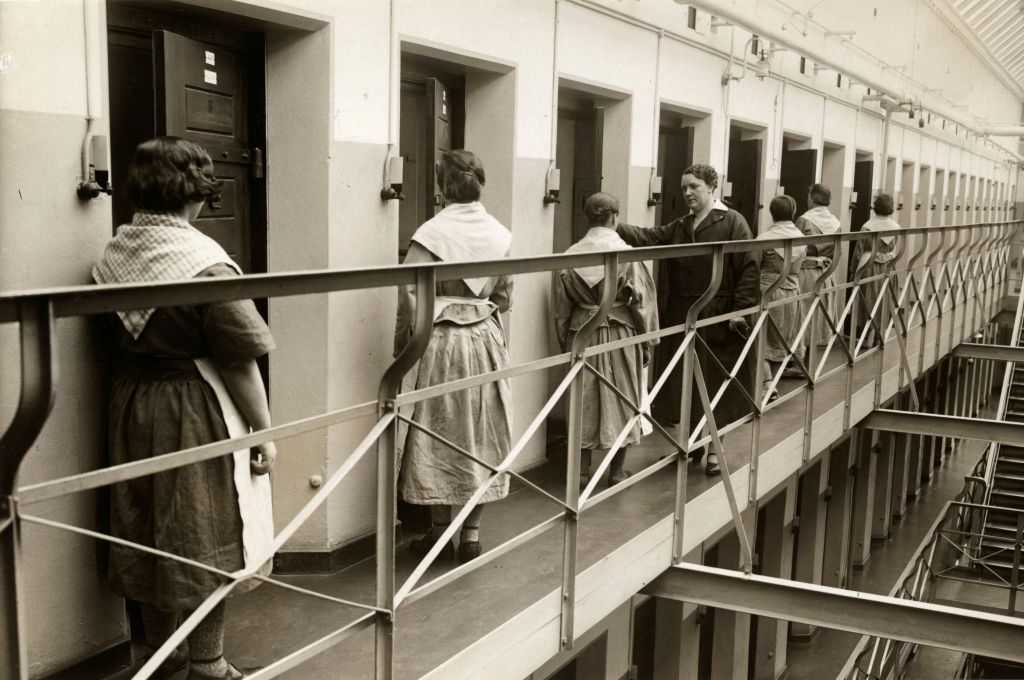
Shoplifting has a long and dishonourable history and, rightly or wrongly, has often been regarded as predominantly a female occupation. Up to 1832, women could be executed for shoplifting, and occasionally were.
During the Victorian era the emergence of large shops selling a range of items – precursors of the modern department store – prompted public debate about the temptation this offered the poverty-stricken shopper.
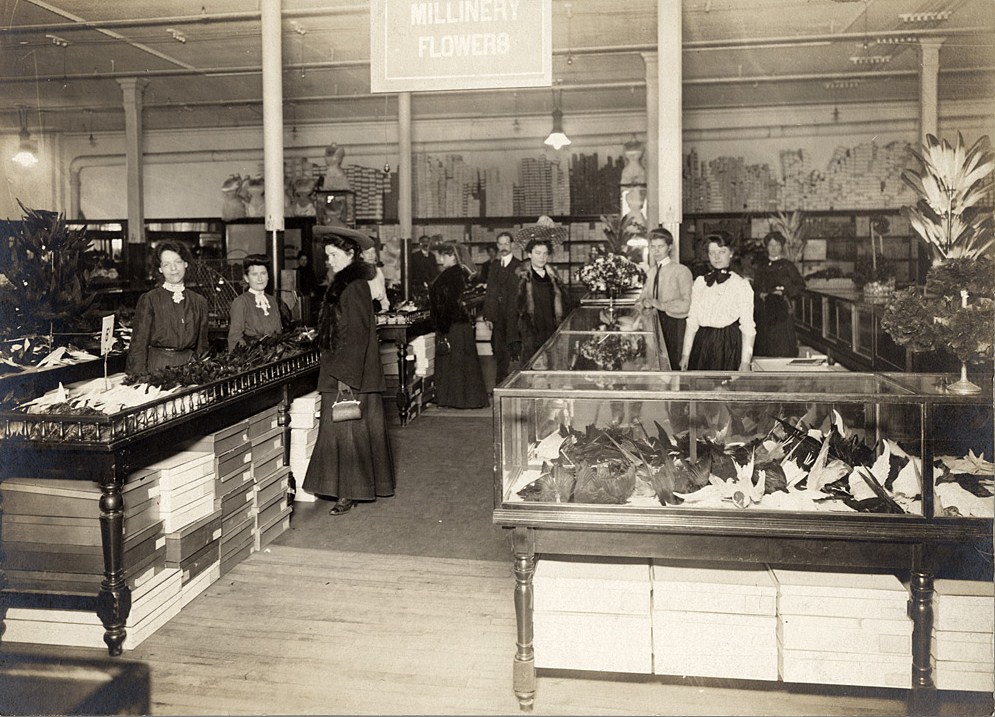
It was suggested that the sheer quantity of items on open display made shoplifting much easier. There was also some feeling that the owners of department stores were partly to blame, often failing to employ sufficient assistants to protect their stock.
Meanwhile middle class women who were caught shoplifting were more often ‘excused’ by means of the new concept of kleptomania.
At the turn of the Twentieth Century, the Forty Elephants syndicate (see above) became synonymous with shoplifting on London streets.
Shortly after the First World War ended, news media began to connect this female criminal underworld with the ‘flapper’. She was a ‘new woman’ independently-minded, and with notoriously lax morals!
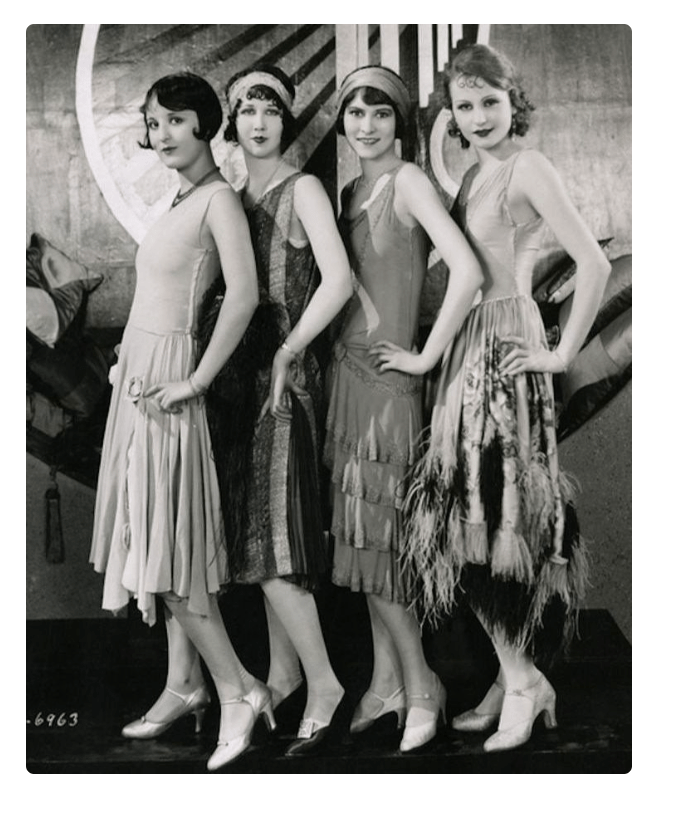
By this stage, though, female shoplifters were often let off with a fine, risking imprisonment only if they were repeat offenders.
It was only in 1934 that the Government began to collect separate statistics on the incidence of shoplifting. There were 12,976 offences that year and, for the next half-decade the number hovered around the 15,000 mark.
But Kitty reverted once more to pickpocketing.
In March 1938, the Manchester Evening News reported:
‘Declaring that it was “a deliberate frame-up”, Kitty Dracup (47) of no settled address, pleaded not guilty at Manchester City Police Court today to stealing £2 10s in notes.
It was alleged that she took the notes from a pocket of a man whom she met last night. She was said to have had 25 previous convictions.
The magistrates sent her to prison for six months.’
Thereafter, the name ‘Kitty Dracup’ seemingly disappears from the record.
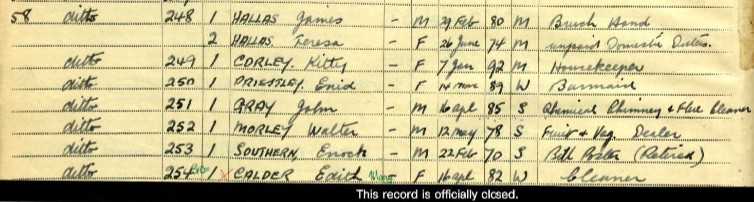
But the 1939 Register includes an entry for a ‘Kitty Corley’, giving a date of birth of 7 January 1892. She was living at 58 Grafton Street, Manchester, alongside several other boarders, and gave her employment as ‘Housekeeper’.
Grafton Street was a turning off Oxford Road, close to Manchester Royal Infirmary. The houses no longer exist, but number 56, next door, was advertised for sale in 1949. It was described as a four-bedroomed terraced house, with sitting room, dining room, kitchen, scullery, a large bathroom and a separate lavatory.
Arthur Finally Marries Florrie
We left Arthur and Florrie at 4 Hodgson Avenue, where they were resident in 1925, and where they were to remain for at least the next 25 years.
The Bradford Voting Registers confirm them at this address from 1930 to 1937. Florrie gave that address in 1937 when she had her recipe for caramel custard published in the Bradford Observer.
The 1939 Register recorded a family of four still resident at 4 Hodgson Avenue.
Arthur, aged 52, was still employed as a compositor, the entry showing that he now worked exclusively on newspapers. Florrie, aged 49, was engaged with ‘unpaid domestic duties’, George Arthur, 16, was a hairdresser’s apprentice and Joan, 14, was still at school.
We know from a wartime newspaper article that, by September 1943, William Hague was a Sergeant in the Coldstream Guards, serving in North Africa. He gave his home address as 4 Hodgson Avenue, indicating that he had lived there prior to service.
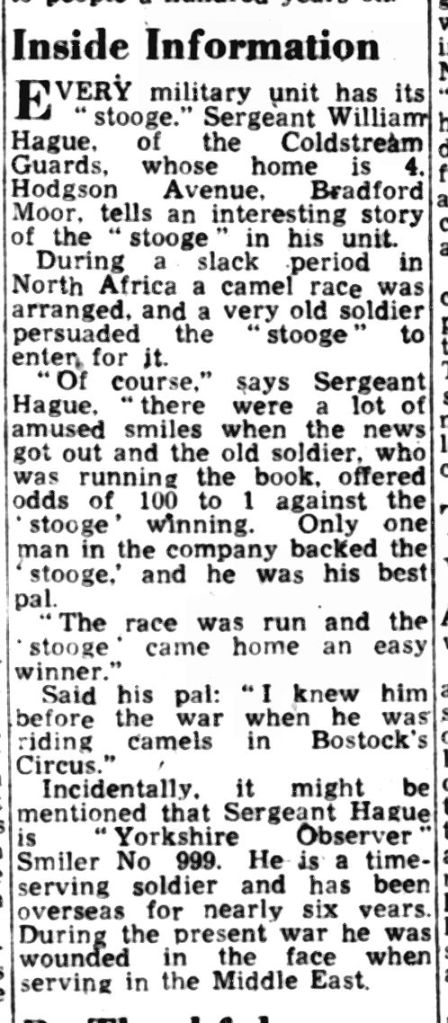
The article states that he had joined up well before the War, having undertaken service abroad ‘for nearly six years’. This would suggest that he had enlisted in 1937 or early in 1938,
There are records relating to a W Hague of the Coldstream Guards, service number 2657168. He was a Guardsman, serving in Palestine in 1939, and subsequently a Lance Corporal in the 3rd Battalion, serving in Egypt, where he was wounded in 1941 or thereabouts.
We know from the newspaper story that he had been wounded in the face.
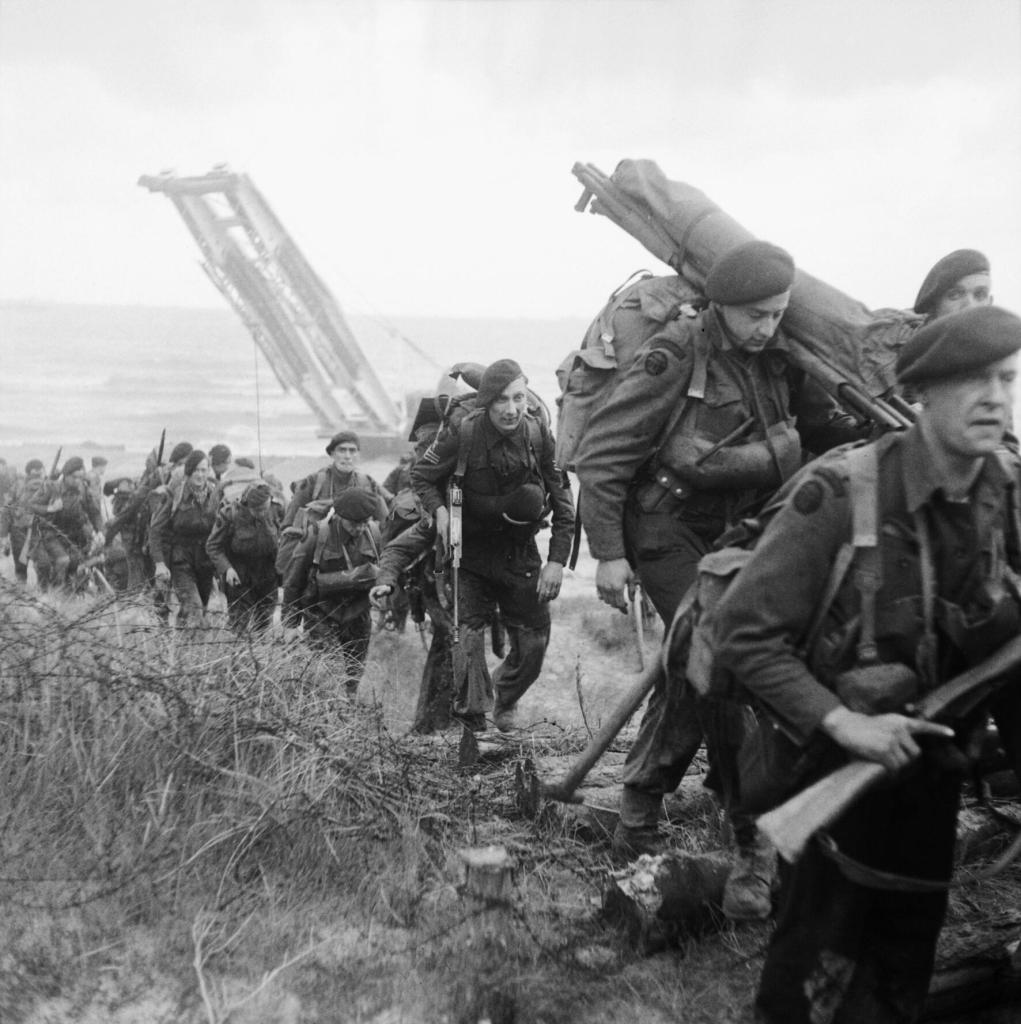
Another local newspaper story reveals that, later in the War, George Arthur Dracup became a sapper with 940 Inland Water Transport Unit, Royal Engineers, and was present on Sword Beach during the Normandy Landings.
His role was engineer on a Rhino Ferry, landing tanks and lorries on the beach.
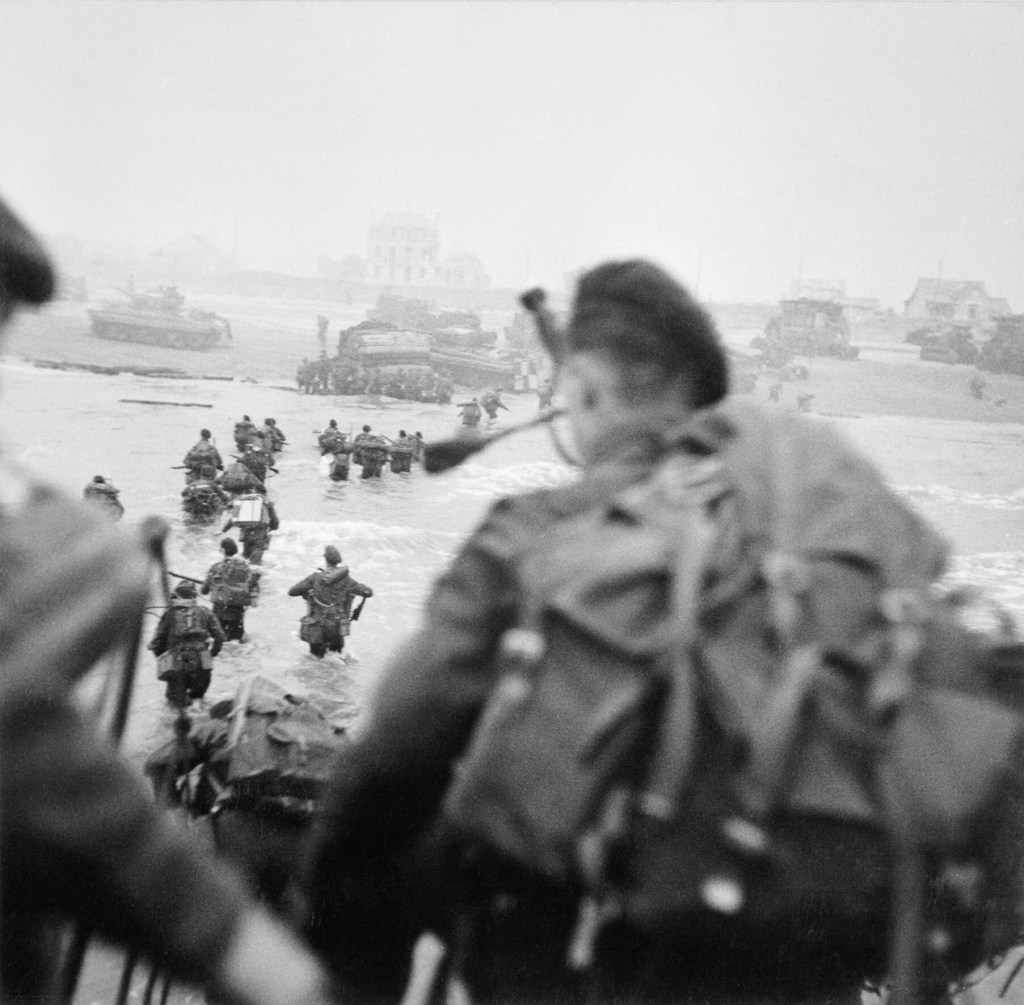
He reminisced:
‘I was an engineer on a Rhino ferry operating off Lion-sur-Mer on the extreme left of Sword Beach. We were responsible for landing tanks and lorries and started operating in the early hours of June 6.
On one occasion we had engine trouble when the water filter beneath the ferry, which was 80ft long by 30ft wide, clogged up with sand.
We had lost our tug on the way over and were drifting towards Le Havre and could see Germans running about on the beach.
Fortunately, we got mobile again and got away.
One of the jobs we got while ashore was burying casualties and one day I pulled a sergeant from where he was sitting on a mine. The mines were where the grass content in the sand was not growing.’
A flurry of marriages took place between 1944 and 1948:
- William Hague married Winifred Whitham in Bradford in October 1944. She was a grand-daughter of Charles Whitham and Annie, nee Percival, the couple who had adopted his mother;
- Joan Dracup married Jack Jones in October 1947;
- Arthur and Florrie finally married in the second quarter of 1948;
- George Arthur Dracup married Margaret E Bland in Bradford in the third quarter of 1948. She was the daughter of John Ellis Bland (1883-1954), a shuttle maker, and Mary Louisa, nee Shepherd (1885-1965).
Arthur and Florrie married on 25 June 1948 at Bradford Registry Office. Arthur stated that he was a widower, aged 61, a compositor.
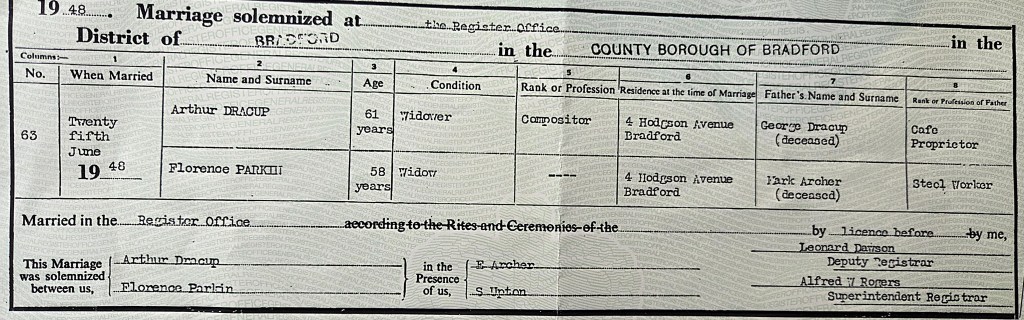
If this is correct, then Arthur must have had information that Kitty had died before the marriage took place. I have been unable to find a record of her death, either in the UK or in Ireland.
The long delay in this marriage might suggest that Arthur had been waiting for the demise of his previous wife.
Alternatively, he too had embarked upon a bigamous marriage. It is worth noting that, if Kitty was a Roman Catholic, divorce might not have been an option for her.
Arthur recorded that his father, George Dracup, now deceased, had been ‘a cafe proprietor’. He confirmed that he was resident at 4 Hodgson Avenue.
Florence stated that she was a 58 year-old widow, her father, Mark Archer, deceased, was formerly a steel worker, and she was also resident at 4 Hodgson Avenue.
But she entered her name as as ‘Florence Parkin’.
This must mean that, at some point between Horace Edgar Hague’s death in November 1915 and the beginning of her relationship with Arthur, early in the 1920s, she had married again.
And there is a certificate recording the marriage of Florence Hague and Thomas Parkin, on 1 September 1920. It took place at the Wesleyan Methodist Chapel, College Road, Mexborough, Rotherham.
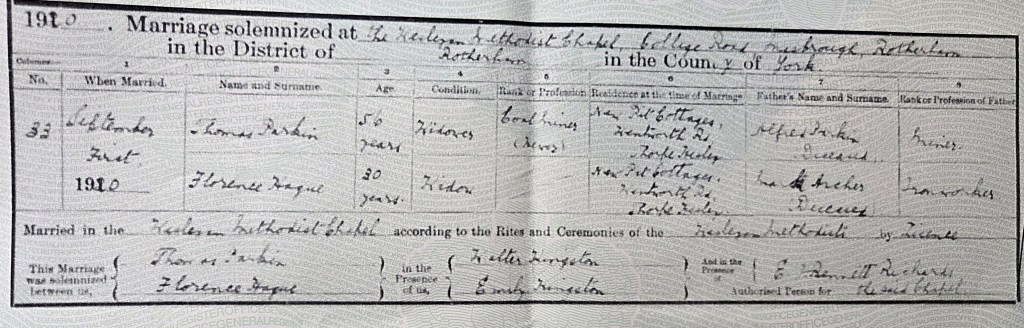
The history of the religious establishments in this area seems rather convoluted. As far as I can make out, the building in College Road was actually a Free Christian Church, founded in 1912 following a congregational schism. But perhaps it led a double life as a Wesleyan chapel.
Edwin James Bennett Richards (1879-1952), who conducted the service, was a Truro-born Wesleyan Minister now resident in Rotherham.
According to the certificate, Thomas Parkin was a 56 year-old coal miner (hewer), a widower, living at New Pit Cottages, Wentworth Road, Thorpe Hesley. His father was Alfred Parkin (deceased), also a miner.
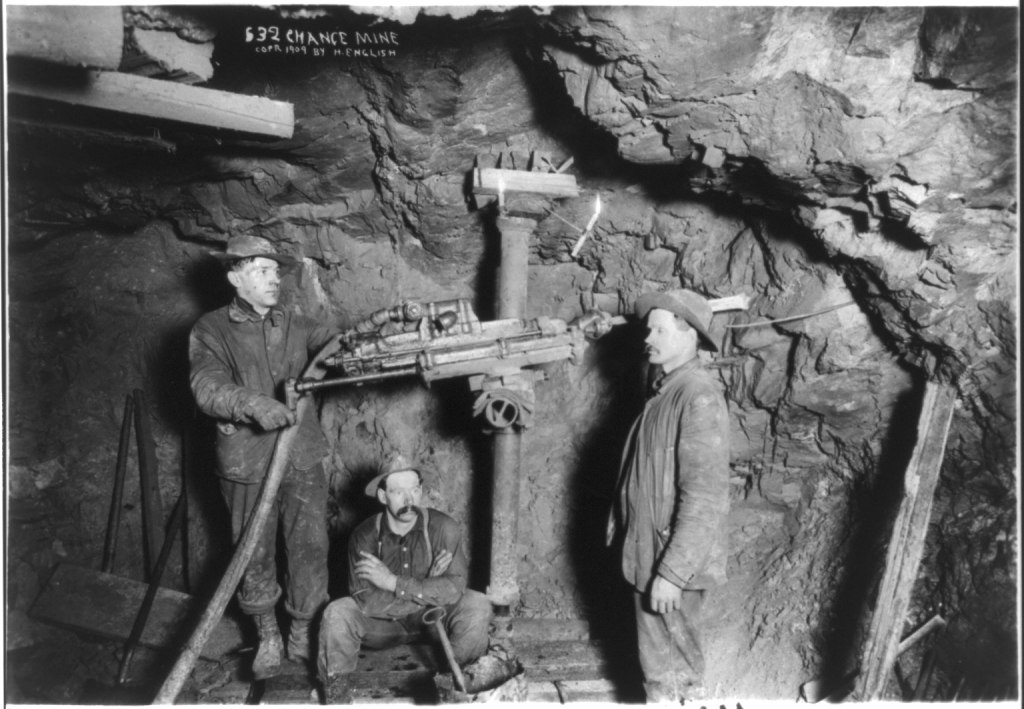
He married Florence Hague, a 30 year-old widow, also of New Pit Cottages. Her father was confirmed as Mark Archer (deceased), an iron worker.
The witnesses were Walter and Emily Kingston.
Thomas Parkin was, in fact, 59 years old, having been born in Thorpe Hesley in 1861. In 1883 he had married 16 year-old Mary Hattersley (she claimed to be 18) also born in Thorpe Hesley, where they lived all their married lives.
The 1911 Census indicates that, during their 28 years of marriage to that point, a total of 15 children were born alive, 11 of them still alive.
Unsurprisingly, Mary died on 30 December 1914, aged just 48. The causes of death were given as 1. Gastroenteritis and 2. Asthenia (or general physical weakness).
There seems a fairly strong probability that Thomas Parkin, a near neighbour in Thorpe Hesley, was the true father of William Hague, conceived in the early months of 1917.
But William was born in Bradford, suggesting that Florence went to live in her stepmother’s house, no doubt to avoid the scandal of giving birth in Thorpe Hesley.
She must have returned to Thorpe Hesley some three years later, either with or without William, to marry Thomas Parkin.
But they cannot have lived together for long. Nine months later, when the 1921 Census was taken in June 1921, she had returned once more to her stepmother’s house in Bradford.
Moreover, when she completed the 1921 Census she was living in Bradford under her previous surname, Hague, and stated that she was widowed.
Meanwhile, Thomas Parkin was still resident in Thorpe Hesley, with four of his unmarried children, three sons and a daughter. The house was shared by the witnesses to the marriage, Walter and Emily Kingston, and their four small children.

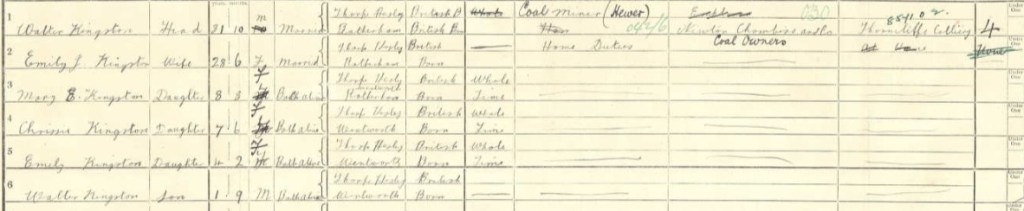
Though the Census doesn’t state it explicitly, this was very probably New Pit Cottages.
With seven adults and four children aged under eight living there, it must have been a crowded and busy household, even before Florrie and William arrived to take up residence.
Thomas, claiming to be 58, stated on his census return that he was married rather than a widower. His employment remained coal miner (hewer) and he worked in the Thorncliffe Colliery for Newton, Chambers & Co.
All three sons were employed at the same colliery, as was Walter Kingston.
Newton, Chambers & Co. had been founded by George Newton and Thomas Chambers, both from Sheffield’s Phoenix Foundry, in 1793. They initially developed an iron works, but soon incorporated ironstone mining, which had begun in the vicinity a few decades earlier.
From the 1840s onwards they sank deeper mines to extract ironstone, while intensive coal mining was also extended throughout the area.
By the 1890s the Company was extracting a million tons of coal annually and, by the 1900s, the iron works employed 8000 men.
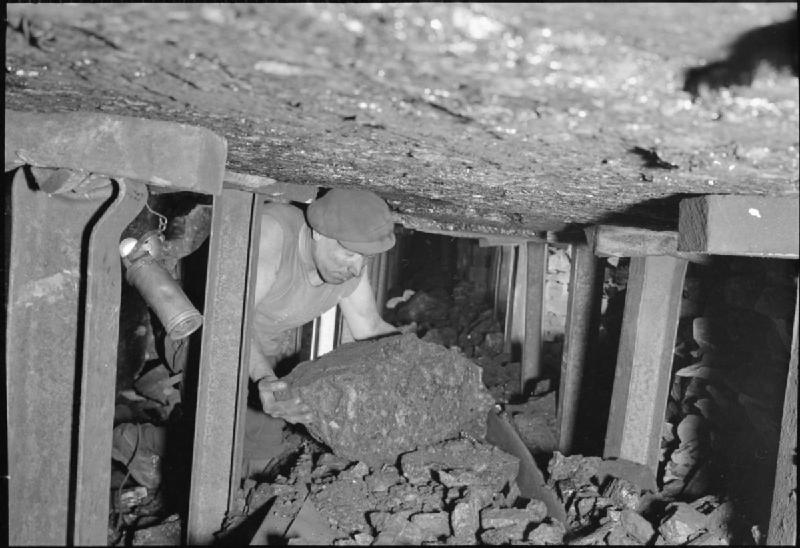
The Thorncliffe Colliery is infamous for a riot that occurred back in 1870. The previous March, Newton, Chambers & Co. had sacked all their miners, immediately offering to re-employ the same men on significantly lower wages.
But the men refused to co-operate and, with support from the fledgling Miners’ Union as well as other miners in the locality, they were able to keep their families from starving.
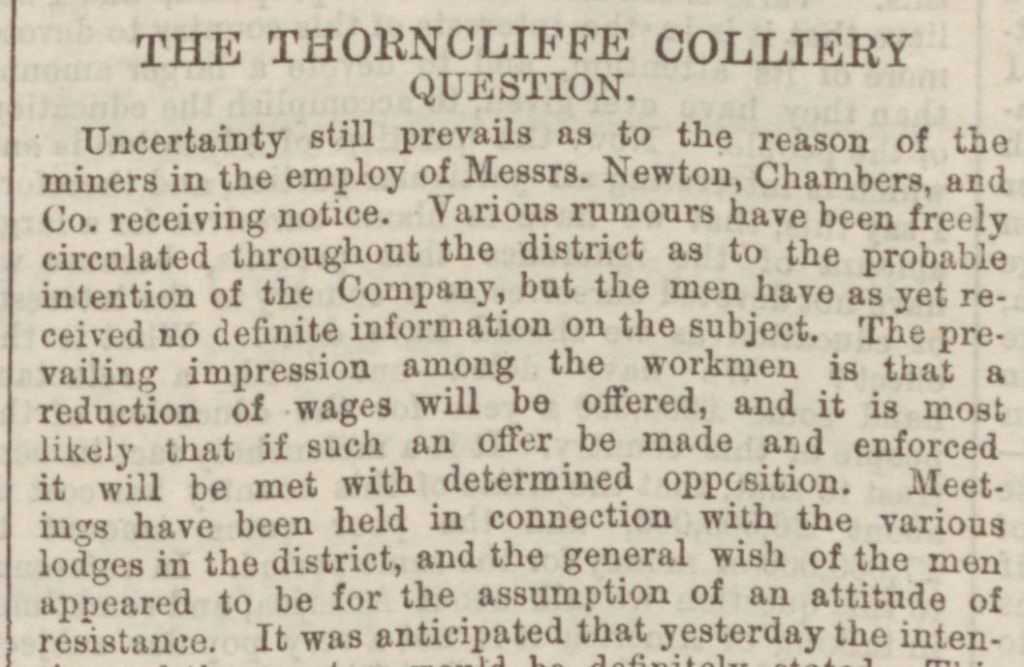
Meanwhile, Newton, Chambers & Co. hired men to replace them, quickly building a row of miners’ cottages to accommodate those who were prepared to move from other towns to work for them. Might these have been New Pit Cottages?
On 21 January 1870, a mob of miners, thought to be between 600 and 1,000 strong arrived at Thorncliffe. Police had been stationed on the approaches to the mine and they managed to prevent damage to the machinery, but they were unable to stop one group from attacking the cottages where the replacement miners lived.
Though there was little or no physical violence, money was stolen and property was damaged.
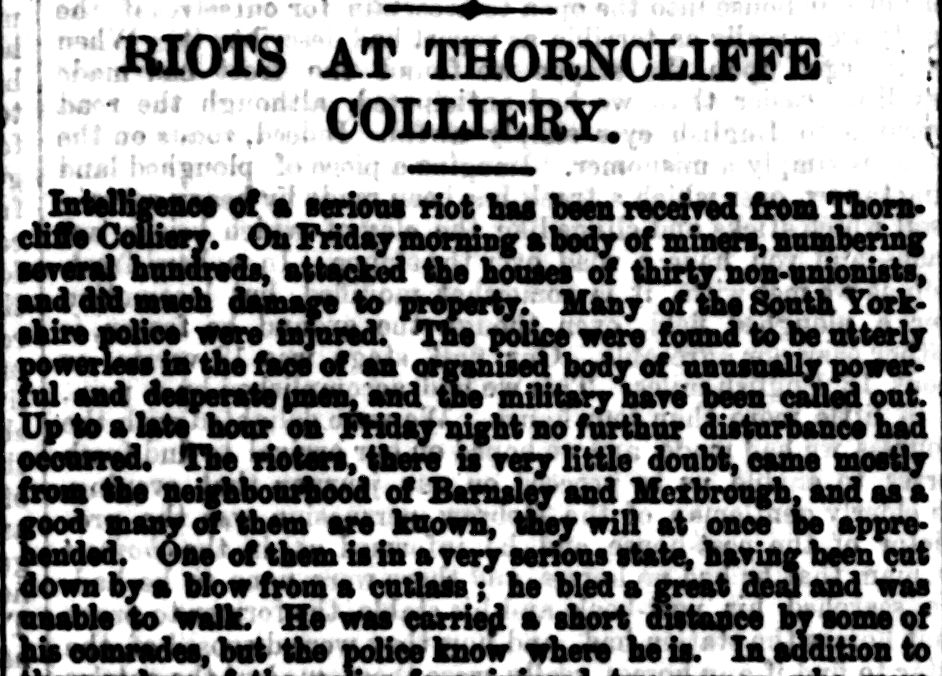
Following the riot, there was a campaign, led by newspaper editors and businessmen, calling for the ringleaders to be punished severely, to dissuade others from following their example.
Eventually, 23 miners were sent to York for trial. Eleven were convicted and sentenced, the three ‘ringleaders’ gaoled for five years with hard labour.
But, in April 1872, these men were released as a sign of goodwill, following a 7,000-signature petition addressed to Queen Victoria asking her to free them.
By the early 1930s, Thorncliffe was still going strong, employing over 1200 miners, 900 working underground and the remainder on the surface.
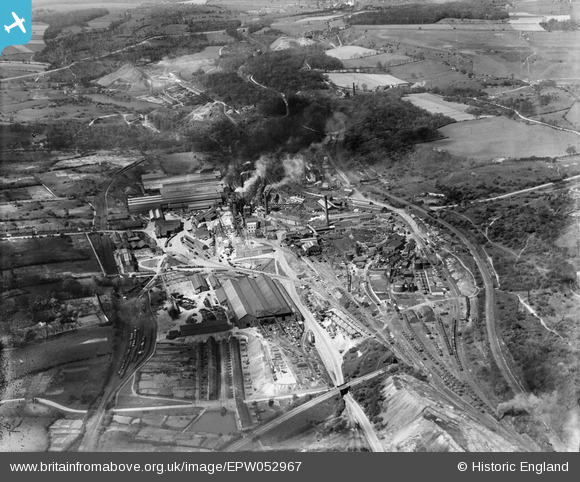
But the coal mines were nationalised in 1947, Thorncliffe Colliery closed in 1955 and Newton, Chambers & Co. was taken over in 1973.
Thomas Parkin died in 1927, clearing the way for Florrie to marry Arthur. But whether Arthur was equally free is another matter.
One wonders why Florrie waited so long to marry Thomas Parkin, assuming that he was William Hague’s father?
Why did she leave her second husband so promptly, returning to live in Bradford?
And why did she refuse to go by the name ‘Florrie Parkin’ rather than ‘Florrie Hague’, prior to assuming the name ‘Florrie Dracup’, circa 1923?
This is another missing piece of the puzzle.
Arthur’s Final Marriage
Florence Dracup died, aged 73, in Bradford during the third quarter of 1963.
Two years later, in October 1965, now aged 78, Arthur married for the final time.
His last wife was Maria Elizabeth, nee Allen, 71, the daughter of Edwin Allen (1864-1911), a tailor and tailor’s cutter, and Evelyn Mary Eleanor, nee Lund (1867-1925).
Maria Allen had been born on 9 October 1894 in Leeds. According to the 1911 Census, she was the second of four surviving children, though four more siblings had died.
Her father also died, just ten days after the Census was taken, leaving his widow to look after three younger children.
Maria was now 16, employed as a tailoress (coat hand) in the wholesale trade.
According to her recollections, published in the local paper on the occasion of her centenary in 1994, she had left school at 13 and her first job had been working in a shop selling baby clothes, earning half-a-crown a week.
During the First World War, while in her early 20s, she was a conductress on the Leeds trams, working out of Headingley. Her recollection was that she had served in that capacity throughout the War, but she is unlikely to have begun before the second half of 1915.
According to the Yorkshire Evening Post of July 29 1915:
‘A good deal has been heard during the last day or two about the different spheres of emergency employment open to women in Leeds while the war lasts. The Corporation has been urged to find work for a number of women as conductors on the municipal tramcars as has been done, with some success, elsewhere. Cold water, however, was thrown on the proposal at yesterday’s City Council meeting and, from inquiries which a Yorkshire Evening Post representative has made today, it may be taken for granted that no women tram conductors will be seen in Leeds.’
The reason given was that all female labour would be needed in the local munitions factories.
However, the Tramways Committee had changed its position by October and, by December 1915, it was reported that female conductors were working on almost all the routes in Leeds.
By May 1916, Leeds Tramways Department was employing over 400 female conductors.
That same month, at the annual meeting of the Amalgamated Association of Tramway and Vehicle Workers, the Leeds Branch moved a resolution complaining that Leeds Corporation was failing to pay the same rate to women as to men, offering only fivepence halfpenny an hour.
The Corporation responded that women conductors were paid from 27s 6d to 30s per week and were content with their wages. Their hourly rate was the same basic rate paid to men, though men were paid a farthing more after six months’ service and, in addition, argued that:
‘…they were only being temporarily employed, that they were not so readily trained as men, and that the cost of their equipment with suitable clothing was almost double that of the men.’
Despite this sexism, by the end of the War, the papers were discussing whether the female staff would readily give up their posts to men returning from war service.
In November 1918, the Leeds Mercury reported:
‘The tramway services administration believe they will have considerable difficulty in inducing car conductresses to give up their work… Only a small proportion of them are married women and, of course, in time it is expected they will readily submit to the changed force of circumstances in the labour market. But with single women it is observed that tram and bus fare service has proved congenial work. Healthy and not very exacting, it is also more remunerative than many of the professions. Most of them are of the domestic servant class, and it is foreseen that they will be very loth to give up their wartime vocation.’
Maria mentioned being awarded a special brooch. According to the Yorkshire Evening Post of October 25 1919:
‘In recognition of the services which the women conductors on the Leeds trams rendered during the war, a present is to be made to each of them on Monday afternoon. There are 80 or 90 conductresses who served three years or more, and to these the Tramways Committee will present, through the Chairman of the Traffic Sub-Committee (Mr Stringer Hinchcliffe), brooches of silver and enamel bearing the Leeds coat of arms and the words: “The Great War 1914-1919.” They will serve as mementoes of a trying period, and will be a lasting recognition of the way in which the women “made good” while the men achieved victory on the fields of battle.’
By the time of the 1921 Census, now aged 26, Maria was still living with her widowed mother and two younger children at 6 Verdun Place, Hyde Park Road, Leeds.
She had resumed her role as a tailoress, working with Hepworth Wholesale Clothiers, Clay Pit Lane in Leeds.
In the following year, on 28 June 1922, she married Albert Ernest Parker, a 28 year-old blacksmith of 31 Higbury [sic] Street, Leeds, the son of William Parker, deceased.
This must be Highbury Street, in the Meanwood area.
Albert seems to have had a variety of jobs. At the time of the 1911 Census, aged 17, he was working as a restaurant porter, but the 1921 Census refers to him as a perambulator maker, working at Taylor’s and Sons, Dock Street, Leeds.
By the time of the 1939 Register he was employed as a boot repairer.
Maria and Albert had one daughter, Evelyn, born on 21 October 1924. But, by 1939, husband and wife were living apart.
Maria was at 33 Ebor Mount, Leeds, working as a Wholesale Clothing Machinist. Evelyn was living with her, now aged 15 and employed as a Wholesale Clothing Booker.


Also resident was Dorothy A Fraser, a 46 year-old coat machinist, a single woman who was also shown in the 1921 Census as working for Hepworths at Claypit Lane.
Albert was still living at 31 Highbury Street, along with a blacksmith and farrier called William Arthur Hartley, aged 34, his widowed mother Eliza Ann Parker and his single sister Sarah Anne Parker.

Albert died in the spring of 1965 and, that autumn, Maria married Arthur Dracup. She continued to work as a machinist for textile companies in both Leeds and Bradford until she retired in 1975.
Arthur died in 1975, aged 88. But Maria lived for two more decades, finally expiring in March 1995, aged 100.
She had celebrated her centenary in October 1994, appearing in two local newspaper features, one of which referred to Arthur as having worked as a compositor on the Bradford Telegraph and Argus.
In June 1978, the same newspaper recorded the retirement of George Arthur Dracup, then 55, as a special constable after 20 years’ service.
It mentioned that he was formerly a van driver for the Telegraph and Argus but had subsequently worked in security for the engineering company, Hepworth and Grandage.
His picture was published in 1983, when he was one of a group complaining about vandalised lifts in their block of flats, Gerard House, Fairhaven Green, Thorpe Edge.
George Arthur Dracup died in 1989; Joan Jones in 1991; and William Hague in 2013.
Last Word
So the curtains close on the life of the enigmatic Arthur Dracup who:
- Allegedly married his first wife, Emmie, an Irish girl from Dublin, in 1910 or 1911, only for her to disappear without leaving any clues as to her identity. I am virtually certain that this marriage was imaginary.
- Married Kitty Corley, an attractive, redheaded, Irish barmaid, in 1913, only for her to leave the marital home around 1918, to embark on an extended criminal career as a pickpocket and shoplifter.
- Married Florrie, nee Archer, in 1948, having lived with her since the early 1920s, and begetting two children with her. Florrie was a serial offender when it came to misrepresentation on censuses, voting registers and birth certificates.
- Married Maria nee Allan in 1965, following Florrie’s death at the age of 78. He lived a further decade, though Maria outlived him by two full decades, dying a centenarian.
Several mysteries remain:
- Who was Emmie and what happened to her?
- Did Arthur serve in the First World War and, if so, in what capacity?
- What became of Kitty Corley? Did she die or was she divorced from Arthur before his marriage to Florrie Archer?
- Why did Florrie marry Thomas Parkin, only to return within months to Bradford, reverting to the surname of her late first husband?
- Was Thomas Parkin William Hague’s father?
Perhaps you can help to supply the answers!
TD
April 2026








Leave a comment