
This Dracup family history post, the 29th in the series, surveys three generations of Dracups.
It deals with the lives and experiences of George Dracup (1824-1896) and his wife Jane, nee Bullock (1824-1886), their siblings, children and grandchildren.
This will be the first of two linked posts.
In this part, I look first at George and Jane’s generation. Then I review the lives of the four of their children who chose to stay in Bradford, as well as the lives of their children, those of George and Jane’s grandchildren who were resident in England.

The second part will deal with the lives of four more of George and Jane’s children who emigrated to the United States, as well as their American grandchildren.
I intend to conclude with a comparison of these two parallel communities, separated by the Atlantic Ocean.
I am particularly interested in comparative living standards and quality of life.
To what extent did that depend on their country of residence, or on what we can infer of their characters? Were those who emigrated typically the bravest and best, who deservedly earned good fortune? Or did good fortune depend much more upon luck and fate?
George and Jane were relatively unusual because they left Bradford shortly after their marriage, raising a young family in Continental Europe before returning home to England in the 1860s.
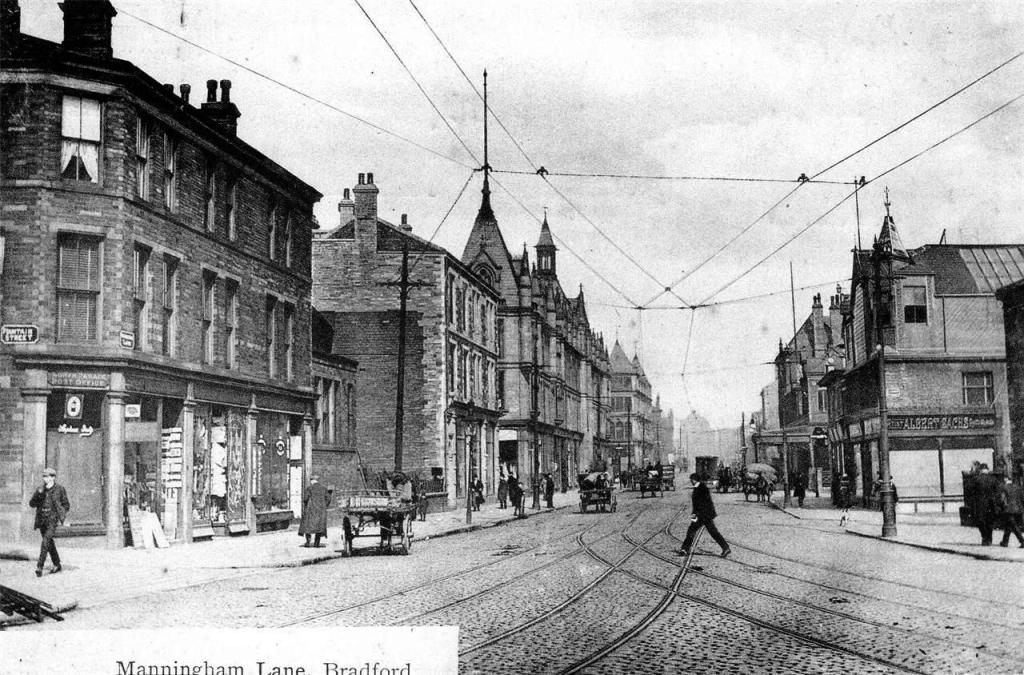
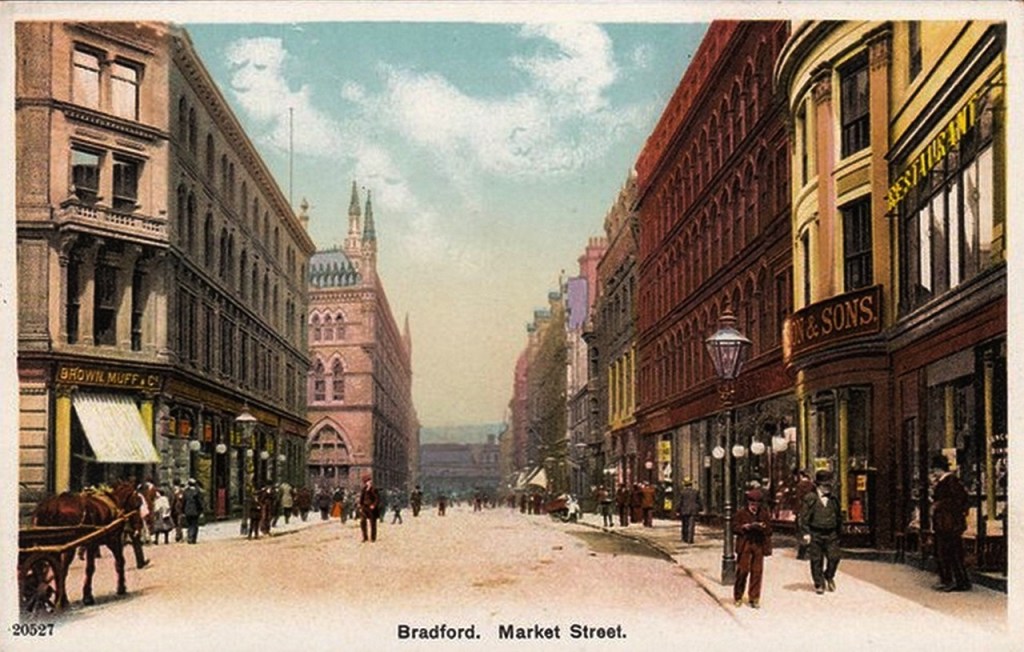
But most of the other principal characters in this post lived almost exclusively in Bradford, West Yorkshire, usually within a small area immediately to the south of the Town Centre, bifurcated by the Manchester Road and Little Horton Lane.
I have mapped out their residences for your convenience.
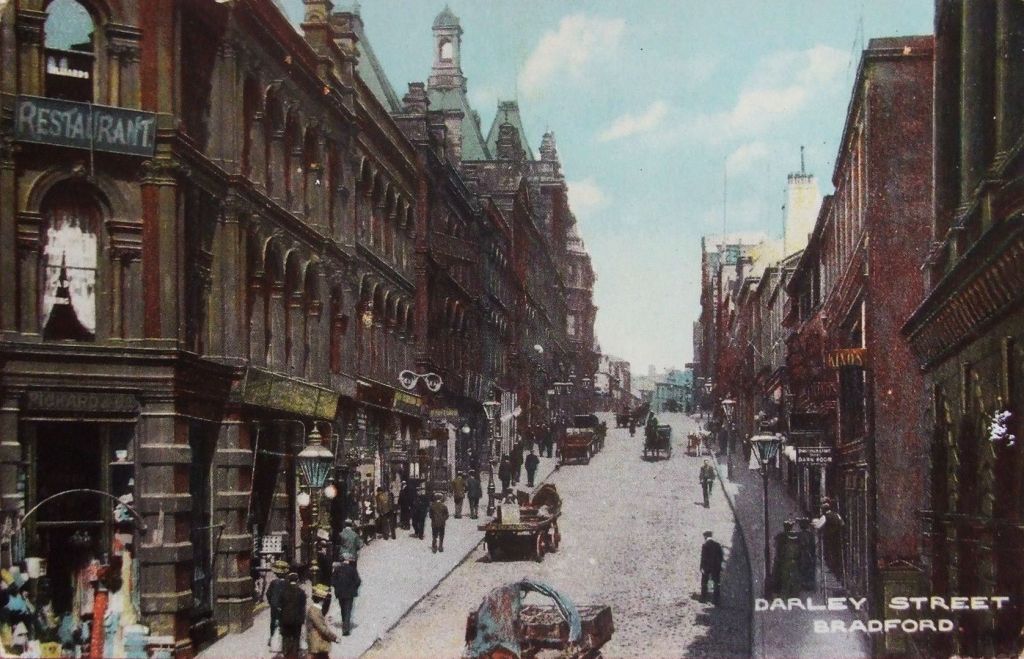
They were typically alive between the mid-Nineteenth and mid-Twentieth Centuries. For at least part of their working lives, many made a living from the sale of fruit and vegetables.
Not such riveting stuff, you may think, but you would be quite mistaken.
Aside from the Belgian episode, this post features a terpsichorean interlude, several bankruptcies, much low-level criminality, a smattering of adultery and illegitimacy, a false marriage and a false identity.
I believe I have also made some progress in resolving a few knotty problems in this section of the Dracup family tree.
George and Jane had up to twelve children all told.
But two sons definitely died before reaching adulthood; and two potential daughters mysteriously appeared in a single census apiece.
Of the eight remaining, four sons: William (1851-1923), Samuel (1856-1921), George (1860-1926) and Benjamin (1862-1928) all chose to remain in England. All of them married and all except William had children.

Another four children, two sons and two daughters, migrated to the United States: Albert Bullock (1845-1913), Henry (1853-1940), Mary (1857-1916) and Martha Jane (1859-1937). All of them married and had children.
This PDF chart shows the relationship between the individuals who feature in the first part of this post. (Warning – this is not a complete family tree.)
The sections below deal first with George’s and Jane’s parents and George’s siblings, then with each of the four sons who lived in England, their partners and children. It starts with the eldest son, William, and concludes with the youngest, Benjamin.
I have drawn on all the genealogical records I can find, as well as material in contemporary newspapers. I have laid out the facts that are in the public domain, making an occasional inference, based on probabilities, where I believe it justified.
I have tried not to be too judgmental.
Wherever possible, I have also tried to set these lives within their historical, social and economic context.
I’m happy to discuss anything you read here. If you have any further information or illustration that you are willing to share – and to have me share – please don’t hesitate to leave a comment or use the contact form provided.
George’s parents and siblings
George was born in 1824, the eldest son of Henry Dracup (1803-1862) and Mary, nee Haley (1803-1875).
When Henry married Mary, in St Peter’s Church, Bradford on 4 May 1823, he was described as a joiner.
George’s grandfather was his namesake, George Dracup (1775-1851), a shuttlemaker. He in turn was the youngest son of Nathaniel Dracup (1728-1798), George’s great-grandfather, a prominent Methodist preacher and the common ancestor of most living Dracups, if not all.
By the time of the 1851 Census, Henry’s job had become ‘mechanic’. He was most likely working with and for his brother Samuel Dracup (1793-1866), the Jacquard machine maker and the founder of Samuel Dracup and Sons.
George had three younger brothers – Luke, Lot and Adam – and three sisters who survived into adulthood – Mary, Ruth and Martha.
One, maybe two more Ruths died as babies, while two additional sons – William and Isaac – are mentioned in the 1841 Census, but I can find no further record of their existence.
George the youthful overlooker
The 1841 Census shows George already employed as an overlooker, at the tender age of 17.
Overlookers supervised the work undertaken by other employees, often spinners or weavers, but also those from other branches of the textile industry, such as combers and dyers.
They might be responsible for 30-50 workers or more, handling discipline, which might involve administering corporal punishment. They often recruited new staff, sacking those unable or unwilling to meet the standards they imposed.
They also undertook basic machine maintenance, calling in mechanics for more complex repairs.

Employers often expected their overlookers to be literate, as well as numerate, but this was far from universal.
Younger overlookers were cheaper to employ and likely more biddable.
As the textile industry expanded, looms became powered, and worsted replaced cotton, adult wages had generally fallen. By 1841, overlookers were typically earning some 24s to 30s a week. But average wages had recently fallen by up to 5s a week.

There were at this time 38 worsted mills in Bradford itself, plus another 28 in the wider borough, so 66 in all. That includes nine in Great Horton and 13 in Little Horton.
Roughly 10,400 people were employed, but only a minority was adult. And adult males numbered only some 460, many of them overlookers. Other contemporary sources suggest that some 200 overlookers were living in Bradford at this time.
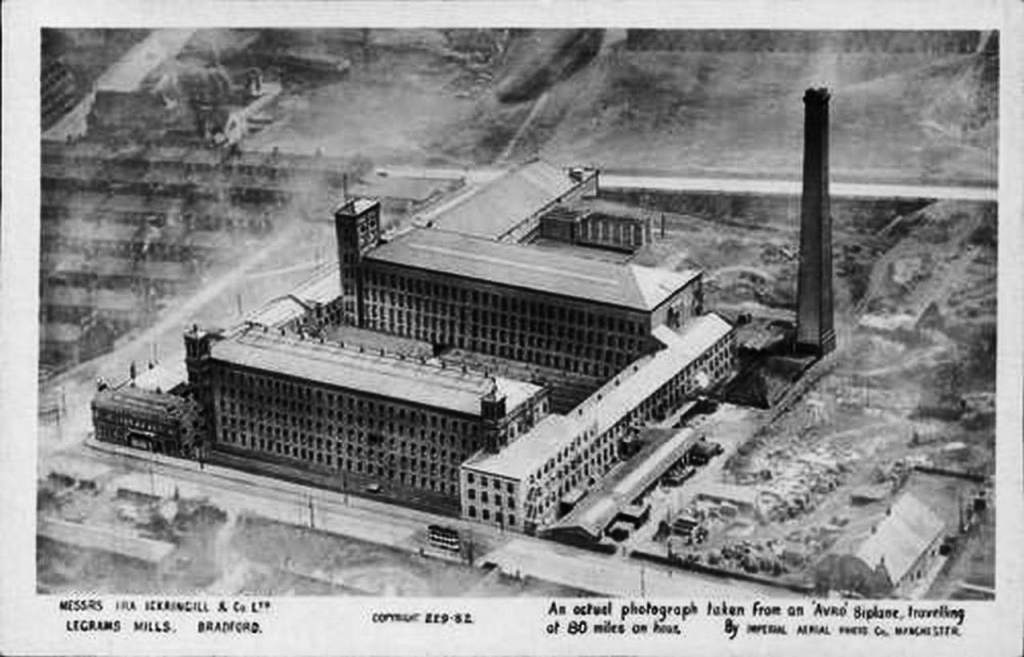
This situation led to an exodus of adult males seeking gainful employment elsewhere, not least my own direct ancestors, one of them an overlooker, who left Bradford for the south of England around 1860.
Three brothers, two bankruptcies
Like George, his brother Luke (1829-1864) was an overlooker. He married Rhoda Dalby (1833-1868), and they had four children before both died young. Also like George, he didn’t trouble the newspapers.
But the other two brothers, Lot and Adam, neither of them overlookers, both feature by virtue of their bankruptcies.
During the early Victorian period, many bankrupts languished for years in debtors’ prisons, because it was widely expected that creditors should be paid in full before a bankrupt was released.
But under the provisions of the Debtors’ Act 1869, a bankrupt could avoid imprisonment provided that he disclosed to the appointed administrator all his property and assets, surrendering them when required, as well as making available all relevant documents and papers. He might still be imprisoned if he attempted to conceal significant property or debt.
All filings for bankruptcy were published in the London Gazette, and often carried in local newspapers too, so public humiliation was virtually guaranteed.
The appointed administrator would convene a first meeting, at which creditors could learn the state of the bankrupt’s affairs and question him under oath. This was followed by a public examination in court, after which all creditors were requested to submit evidence of their claims.
Once the bankrupt’s remaining estate had been sold, the administrator would calculate the amount available to repay creditors, typically expressed as the sum they would receive for every pound sterling owed to them. Sometimes there were two or more repayments of this kind before the bankrupt was released from his obligations.
Often, the meetings convened during this process would also be reported in the local press, as well as in the Gazette.
Lot Dracup (1831-1903) married Martha Airton (1832-1900) in 1852. They had six children, but their youngest daughter died in infancy shortly after Lot’s bankruptcy.
He was initially apprenticed to a blacksmith but, by 1856, had established himself as a bolt and screw maker working out of premises in Westholme Mill, on the Thornton Road. He and his family were resident at Back Lane, Little Horton.
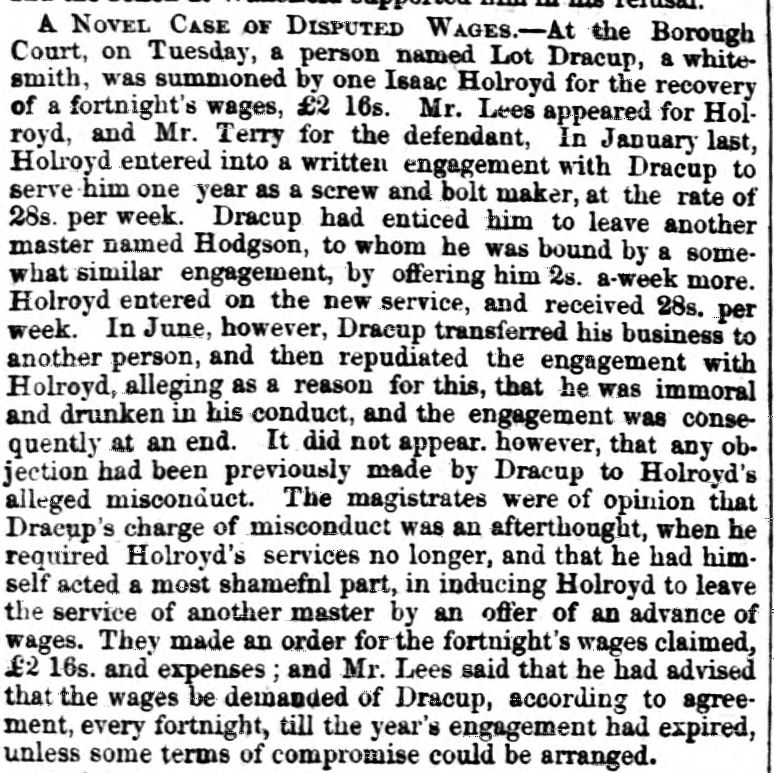
In July 1857 he was summoned to the Borough Court by his former employee, Isaac Holroyd, seeking recovery of a fortnight’s wages.
The Court heard that, in January 1857, Holroyd had entered into a contract with Lot to work for him as a screw and bolt maker for one year, at a rate of 28 shillings per week.
However, in June, Lot had transferred the work to a different employee, terminating his contract with Holroyd, alleging immorality and drunken conduct. He had not previously had cause to admonish Isaac for such conduct.
The magistrates ruled that the allegation was merely an excuse to terminate Holroyd’s employment, ordering Lot to pay the wages outstanding, and to continue paying them until the end of the year, or else reach a suitable compromise with Holroyd.
By the time of the 1861 Census, Lot was working as an ironmonger, having significantly expanded the range of products he manufactured. His work premises were now at 125 Chapel Lane, while the family lived at 13 Southfield Lane.

In January 1868 he was summoned for failing to obtain a dog license, paying a fine of £2 10s. But much worse was to come.
On 30 January 1869 he filed a petition for bankruptcy at the Leeds District Bankruptcy Court.
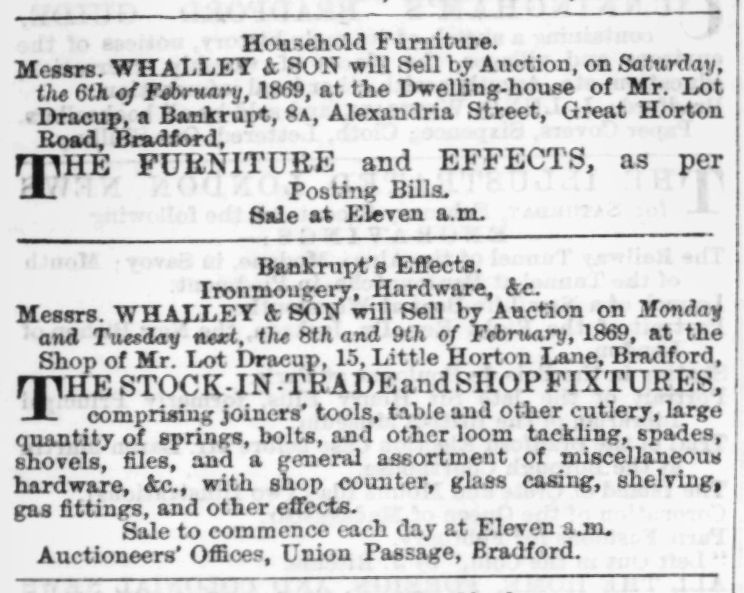
The Bradford Observer of 4 February 1869 carried twin advertisements: one announcing an auction of the furniture and effects from Lot’s family home, now 8A Alexandria Street, off the Great Horton Road, taking place on 6 February; and another announcing an auction of the stock and fixtures from his shop, now at 15 Little Horton Lane, scheduled for 8 and 9 February.
A notice subsequently appeared in the Leeds Mercury of 27 February, advertising his last examination and a hearing on Friday 10 March. At this, no opposition was offered and his bankruptcy was duly discharged. This was a much speedier resolution than was typically the case.
On Monday 2 August 1869, the Bradford Daily Telegraph carried a new advertisement declaring a marked change of career:
‘Lot Dracup, 3 Rand Street, Great Horton, Bradford, Auctioneer and Valuer, 20 years’ experience in Machinery. Goods sent for sale will receive his best care and attention.’
Lot was described as an auctioneer and valuer in both the 1871 and 1881 Censuses. By 1879, he had moved to 5 Greaves Street and by 1883, to 96 Ryan Street.
But, from 1887 he was no longer listed in the Bradford Directories and, in the 1891 Census, he was merely a ‘hardware salesman’, probably employed by someone else.
And, in 1901, now aged 67 and widowed, he had become a ‘general labourer’, residing on the infirm wards of the Bradford Union workhouse. He died just two years later.

Adam (1833-1906) was in a rather different situation. We also know that he was a ‘lively’ young man.
His first appearance in the newspapers was a curious one, published in the Halifax Guardian of 12 June 1852.
At one o’clock one Sunday morning, a woman resident in Cropper Lane, Halifax, heard a young man crying out near her door that
‘he had been whalloped [sic] by a policeman’.
When another policeman approached, the woman
‘commenced a tirade of abuse’
later alleging that the policeman had struck her with his stick. The walloped young man – who turned out to be Adam – was called by the policeman as a witness to disprove her allegation.

In April 1856, the Leeds Mercury reported that Adam had been enlisted ‘by Serjeant Watson of the 16th Lancers at the rendezvous, the Beehive Inn, Westgate, Bradford’.
Having received his 3d enlistment money, he used it to buy gin, which he promptly drank, after which he refused to give his proper name and address. He was fined 10s, with 12s expenses, ‘or 14 days imprisonment with hard labour in Wakefield House of Correction.’
Then, in August 1859, he and another man, called Mark Schofield, were charged with a violent assault on Mr John Haley, woolstapler. The assault took place on a Wednesday night, near Summerseat Place, Horton Road, as Haley was on his way home from a concert in St George’s Hall.
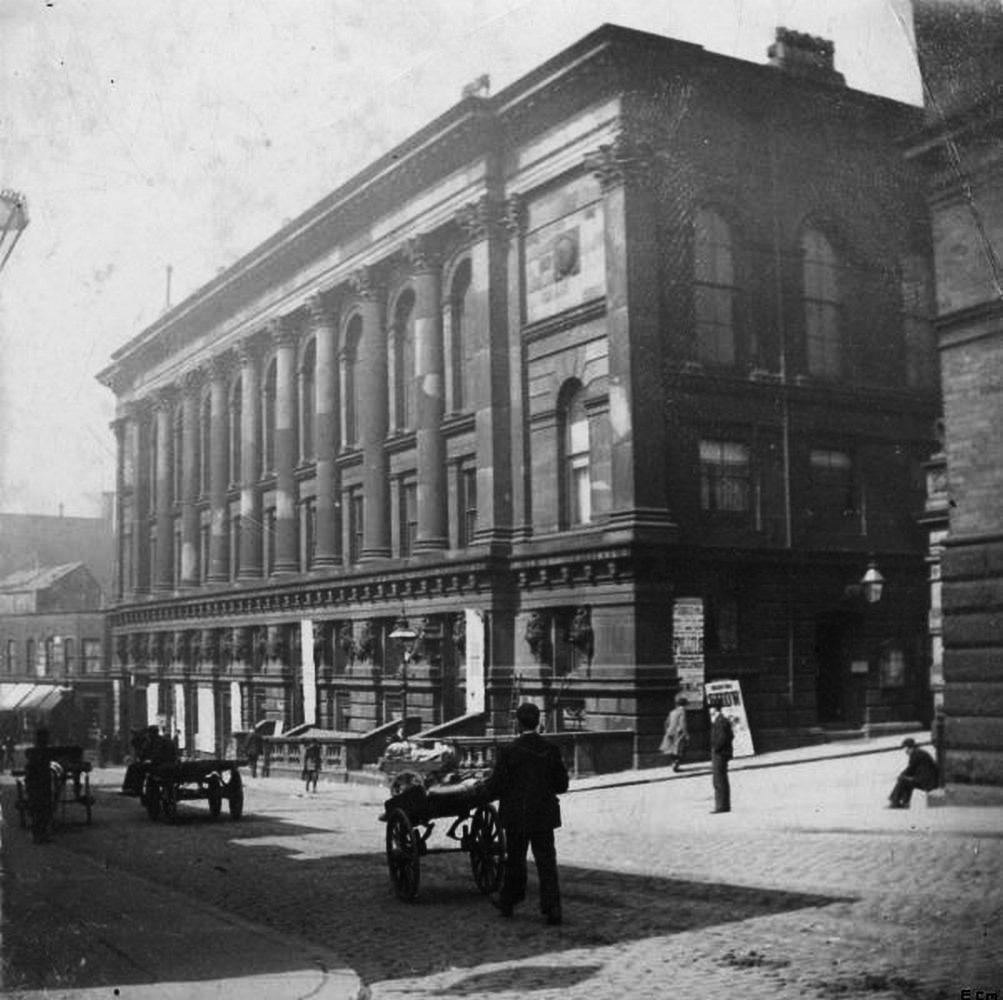
Adam and Schofield reportedly attacked Haley’s companion, Zaccheus Wilkinson, innkeeper and, when Haley tried to intervene, set about him too. The pair were each fined 10s, with 18s costs, or 14 days’ imprisonment.
In August 1864, he was also charged along with two other men with stealing 4lb of mutton at Heaton, but all three were acquitted.
In 1868, he married Hannah Jackson (b.1832), a milliner, the daughter of Abraham Jackson, a farmer. At that time, he was employed as a mechanic.
I have already explored in a previous post, about Samuel Dracup and Sons, how Adam briefly set up as a Jacquard machine maker, presumably in direct competition with his late uncle’s Company.
At some point between 1871 and 1873, he formed a partnership with his brother-in-law, Abram Ambler (1844-1897), then a wool, cloth and waste dealer, who had married his sister Mary in 1868 (see below).
But they quickly ran into difficulties.
They initially sought tenders for the purchase of all or part of their business as a going concern. An advertisement says:
‘The premises have recently been fitted up with first-class plant and machinery, and the stock consists of about 300 new and secondhand jacquard engines, and a large assortment of valuable materials ready for use.’
But there were seemingly no takers. In July 1873, the Bradford Observer carried a notice that the business – trading under the name ‘A. Dracup and Company’ – was entering liquidation by arrangement under the terms of the 1869 Bankruptcy Act.
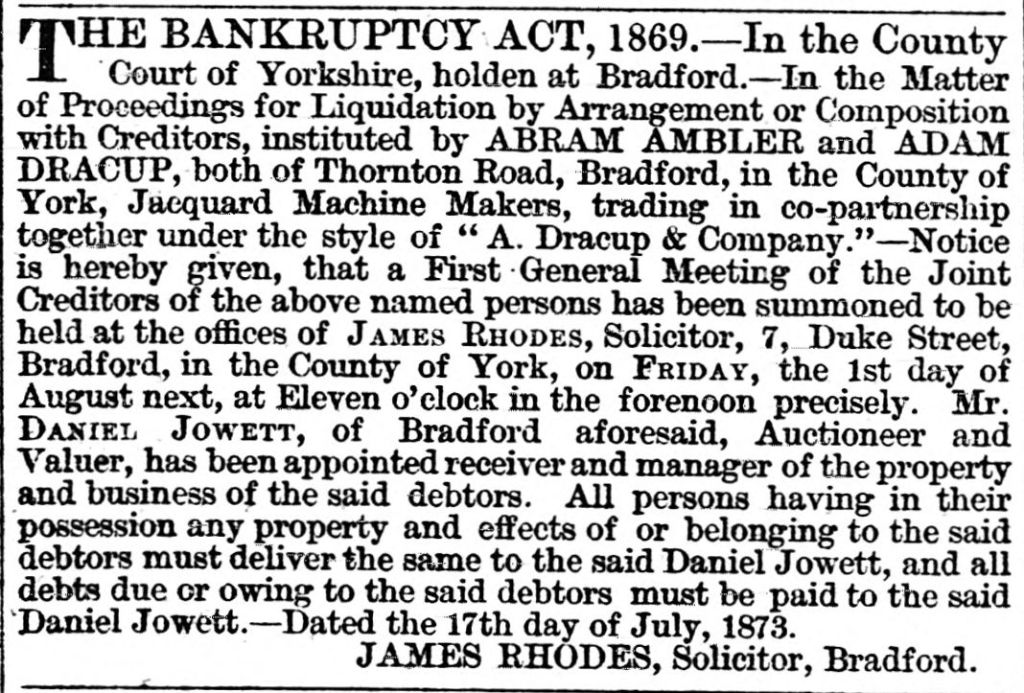
A first general meeting of the creditors was to be held on 1 August. Daniel Jowett, auctioneer and valuer, had been appointed receiver. A slightly later notice announced that Mr Henry Ibbotson, public accountant, had been appointed ‘Trustee of the property of the Debtors’.
This meeting was reported in the Bradford Daily Telegraph of Monday 4 August. The pair:
‘stated that their suspension was owing entirely to the want of capital and the slackness of trade, and that if they could have carried on their business they were quite solvent.’
The liabilities were estimated at about £1,600, and the assets at £800. Two dividends were paid, one of 2s 6d in the pound from 15 January 1874 and one of just 5d in the pound from 10 June 1874.
Adam returned to his former employment as mechanic. After Hannah’s death in 1900, he married a woman more than 30 years his junior, fathering a daughter at the age of 70.
Three sisters and their husbands
As for George’s sisters:
- Mary (1836-1900) married the aforementioned Abram Ambler (1844-1897) in 1868. Previously a dyer, by 1871 he was a cloth dealer and wool and waste merchant, prior to his brief partnership with Adam. By 1881 he had returned to being a dyer’s foreman, but, by 1891, he was publican at the Adelphi Inn, 404 Leeds Road, Bradford. (The Adelphi seems to have been knocked down soon afterwards, as part of road improvements.) I think this is the same Abram, of no fixed abode, reported to have been discovered in a nearby greengrocer’s at 410 Leeds Road, helpless and of unsound mind, just before his death. According to a brief newspaper story, he was conveyed to the workhouse after being seen by a doctor. Although the probate record confirms that he died in the workhouse, it also gives him an address at ‘Akers Street, Leeds Road’. (I think this may be a misprint for ‘Acre Street’.) Abram left a little over £100. Mary went to live with her sister Ruth, dying at her address in 1900.

- Ruth (1845-1911) married Paul Woodhead (1835-1906), in June 1880. He was also a publican and a widower – his previous wife Sarah, nee Boothroyd, had died in January 1880. He managed several pubs in succession, including the Foresters’ Arms at Wibsey, the Brown Cow Inn at Cleckheaton and the Bottomleys Arms at Shelf. While at the latter pub, he was charged with being drunk at his own premises – and was fined £1 11s 6d. By 1898, he and Ruth were resident in Bradford, at 40 Watmough Street, he using the soubriquet ‘gentleman’. The 1901 Census described him as ‘living on own means’, now at 264 Great Horton High Street, where they lived with their only child, Arthur, a butcher. Paul left some £900 to his family; Ruth left over £300 at her death five years later.

- Martha Dracup (1846-1926) married Francis Holdsworth (1845-1917), an overlooker and later a mill manager. By 1911, he had retired and also referred to himself as a ‘gentleman’. They had six children, though only three sons and a daughter survived into adulthood. Martha and Francis afterwards lived with their (as yet) unmarried daughter at 780 Great Horton Road. Francis left some £1,200 to his family.
George marries and moves to Belgium
On 12 February 1850, now aged 26, George married Jane Bullock, also 26.
She was the daughter of Benjamin Bullock, a dyer, and his wife Jemima. She had been born in Barnoldswick, now part of Lancashire, but formerly within the West Riding. She was baptised ‘Jenny Bullock’.
Both husband and wife signed the record with a crude cross – their ‘mark’, so neither could write. There is every chance that they were unable to read either.

In 1841 Jane had been living with her family somewhere in the vicinity of Brick Lane, Manningham, employed as a worsted weaver. George had been living further to the south-east on Horton Road. It is quite likely that they both worked in the same mill and George might even have been Jane’s overlooker.
A first child, Albert, had been born five years before the marriage, on 18 April 1845, at Brick Lane, Manningham. The birth was recorded under the name ‘Albert Bullock’ (he later married under that name, but subsequently switched to Albert Dracup).
No father is named on the birth certificate. That might mean that George was the father, but was reluctant to lend his name to a child born out of wedlock, or it could be that another unidentified man was the father.
The family cannot be found in the 1851 Census, taken on Sunday 30 March, so the three of them – George, Jane and Albert – had most probably departed not long after the marriage. The birth of the next child definitely places them in Tournai, Belgium no later than August 1851.
This contemporary map of Holland and Belgium shows the location of Tournai (within the province of Hainaut – no.18) and Liege (within the Province of Liege – no. 16) where the family moved after leaving Tournai.

Belgium was the first European country after the UK to experience an Industrial Revolution. Three sectors dominated: mining, metals and textiles. The first steam-powered mills were introduced in the 1820s and, by 1850, some 300 steam engines were employed within the textile industry.
It was not uncommon for British engineers and workers to migrate to other European countries at this time: thousands of British emigrants were employed in continental Europe, predominantly in the textile industries, machine making, railway construction and shipbuilding.
Sometimes they went because their employers were establishing businesses abroad, but many also went independently, responding to local skills shortages, or perhaps seeking improved pay and conditions. Belgium was a relatively popular destination because of its rapid industrialisation.

William Cockerill (1759-1832) had pioneered this relationship in the textile industry. Born in Haslingden, he was initially employed as a mechanic building machinery for spinning and weaving. He arrived in Belgium in 1799, via spells in Russia and Sweden.
From 1817 he began to establish a factory in Liege that specialised in steam-powered machinery. This proved highly successful, especially before the British lifted restrictions on the export of home-built machinery in 1843.
But it is important to underscore the comparative rarity of British workers in Belgium in the 1850s. Contemporary statistics, relating to 31 December 1856 and published by the Belgian Government in 1864, show that, while there were 43,000 foreigners living in the province of Hainaut, just 449 were from Great Britain.
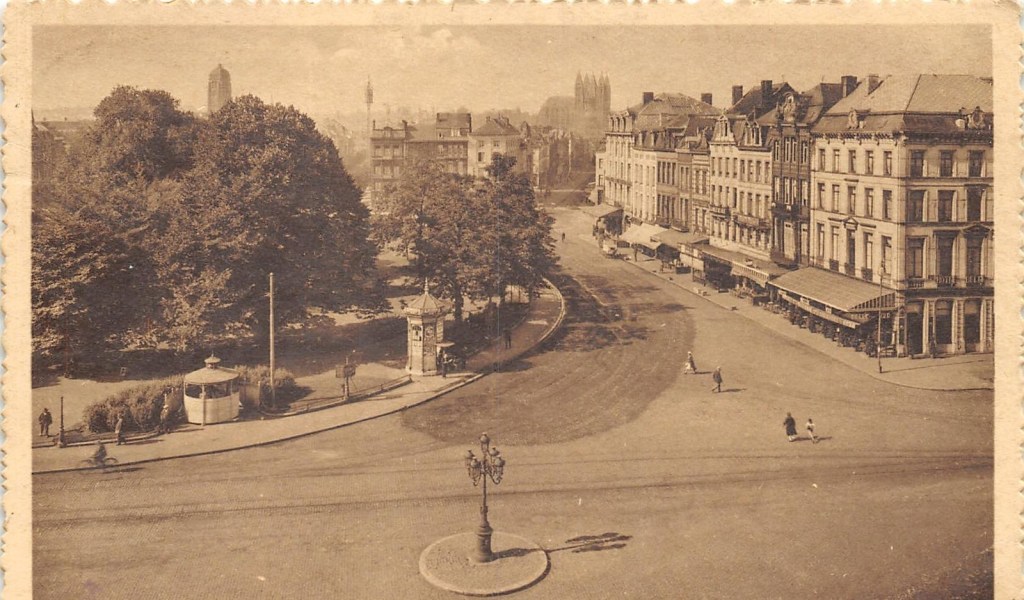
The total population of the town of Tournai was more than 30,000, but only 31 of its residents were British. Fewer than 6,000 lived in the smaller town of Leuze, nearby, and just six of those were British. The comparable figure for the town of Liege – with almost 41,000 inhabitants – was 118 British inhabitants.
So this was a very brave step for a young man who couldn’t write (and probably couldn’t read) in his native language, let alone understand written or spoken French. He must have had to rely heavily on compatriots who had been in Belgium longer, for neither interpretation nor formal instruction would have been available to him.
Unless or until he learned some French, any form of integration with the local populace would have been problematic. He and Jane would have had recourse only to the small migrant community.
The French-language birth certificates for the two children born to George and Jane in Tournai tell us a little more about their lives.
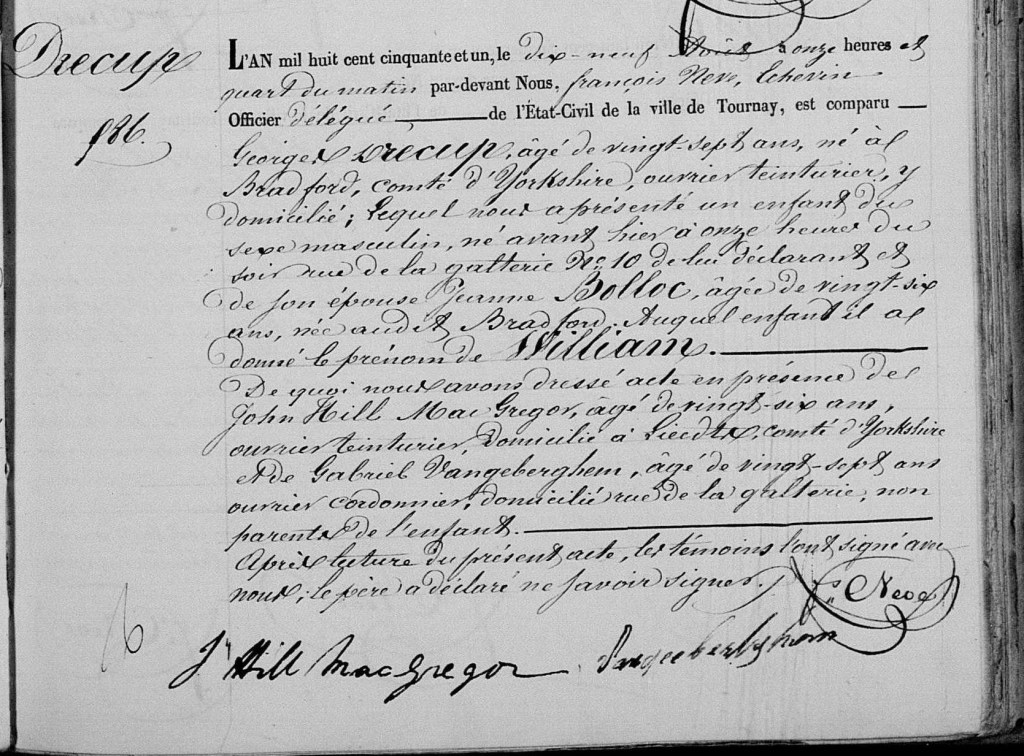
Their first son born in wedlock, William Dracup, arrived at a quarter past eleven in the morning on 19 August 1851. He was born to ‘George Drecup’, 27 years of age from Bradford in Yorkshire, a dyer (‘teinturier’) and his wife ‘Jeanne Bolloc’ [sic], aged 26, also of Bradford.
Did the official spell these names as they were spoken to him, or had someone else written them out for George?
George was now working in a specialist area that must have been relatively new to him, and no longer had a supervisory role.
The family lived at an address that looks like ‘Number 10, Rue de la Galterie’. There is still a Rue de la Galterie some 20 kilometres east of Tournai, running between two villages, Chapelle-à-Gie and Chapelle-à-Wattines. The postal address was Leuze-en-Hainaut.
There were several mills located in Leuze. The present day Number 10 Rue de La Galterie is located near Chapelle-à-Gie. It looks relatively modern, but the cottage next door may have existed when George was here.

Two witnesses are named in the record. One was John Hill MacGregor, aged 26, from Leeds, another dyer; the other Gabriel Vangeberghem, aged 27, a shoemaker, also resident in the Rue de la Galterie. Both witnesses have signed the record.
John Hill MacGregor (1826-1897) and his wife Ellen, nee Appleyard, were definitely located in Tournai during this period, since several records exist relating to the birth of their own children. We also know that, by 1861, they had moved on to Wasquehal, between Lille and Roubaix in France. They did not return to England until some point between 1874 and 1881, reappearing in the 1881 Census.
Judging by his name, Gabriel Vangeberghem was a native Belgian, so probably a French speaker, and clearly George’s neighbour. He also appeared as a witness for two marriages and a death in Tournai between 1848 and 1852, but I can find nothing more about him.
The fact that George and Jane could ask him to be their witness might suggest that they were already able to communicate a little in French.
After William, the next five children – John, Henry, Samuel, Mary and Martha Jane were all born in Liege between 1852 and 1859, and, if there are records of their births, I can find no transcriptions.

There is relatively little about Liege in contemporary English newspapers, though it is occasionally described as ‘the Birmingham of Belgium’.
In June 1857, the Dundee Advertiser reported that a decision to cut the hair of some local convent school girls caught dancing on a Sunday led to riots, during which most of the convent windows in Belgium were smashed. This caused the King of Belgium to prorogue Parliament.
The Prince of Wales visited a cannon foundry at Liege in July 1857, on his way to Germany and there is much reference to arms manufacture in the Town.
In 1860, there was allegedly a shower of ants!
The population had recently climbed above 100.000, which suggests rapid expansion over the previous decade.
The important Liege-Guillemins railway station had opened in 1842, significantly improving transport links. The original wooden structure was replaced by an impressive stone building in 1863.

The final child to be born in Belgium was George, in January 1860, by which point the family had returned to Tournai. His birth record reveals that he was born at ten in the morning on 31 January, also to ‘George Drecup’, now aged 35, still working as a dyer, and ‘Jeanne Bolloc’, aged 34.

The fact that the two names are spelled identically on both records might indicate that George had asked someone to write them down for him, so that he could present them on occasions such as this. Or perhaps the official simply copied the previous record.
On this occasion their home address was given as Bradford, which may indicate that they had made a temporary stop at Tournai on their way home.
The witnesses this time were Francois Boutry, a weaver (‘tisserand’) aged 25, of Tournai and Justin (or possibly Gaston) Carbonelle, aged 30, also a weaver, of what could be Messy Ville or Merny Ville. Both are likely to have been French speakers.
I can find references to Boutry as a witness for other events in Tournai but, although the surname Carbonelle is popular, I can find no other reference in Belgian records to a Justin Carbonelle.
However, a man named Justin Carbonelle was born on 24 December 1836 in Paris, France, dying there on 25 December 1888. There are also many French candidates for the man named Francois Boutry.

George the Dyer
George was employed in Belgium – at least in Tournai – as a dyer, having previously been an overlooker in England. It is possible that he had spent some time as a dyers’ overlooker, or had been training himself in the skills required of a dyer, since he would otherwise have faced a very steep learning curve indeed.
If unable to read, as well as unable to write, he would have had to memorise the recipes for different dyes. Even if he could read, recipes written in French would have been difficult to decipher.
George is not the first dyer to feature here. Arthur Herbert Dracup, Career Criminal was also a dyer when not in prison, though he was working in the industry from about 1880 onwards, some thirty years after George.

‘A Manual of the Art of Dyeing’ by James Napier (1853) is almost contemporaneous with George’s employment in France. It sets out in considerable detail the complex chemistry of dyeing.
The preface argues:
‘The trade is what is termed open, so that any man may enter it; and, in consequence, there are few instances where young men are taught the business systematically. A great many enter the trade who are grown up, – their chief ambition being to learn the mechanical operations of the dye-house, and when sufficient dexterity in these is attained, to secure the highest rate of wages. When this is accomplished, zeal for improvement in a great measure subsides. However, there are many who, not content with acquiring a knowledge of the mere mechanical routine, desire to look deeper into the principles of the art, and aim at higher honours than those of a mere labourer in it, but who believe that the means of success consist simply in long and steady service, and a good memory for the rules of manipulation. Both of these are valuable qualifications, but neither of them would be depreciated in the slightest degree by being conjoined with a more extended knowledge of the fundamental principles of the art than usually falls to the share of a practical dyer.’
Unless he was literate, George would have found these principles beyond him.
He may have been more attuned to a book I referenced in the post about Arthur Herbert: ‘A Complete Treatise on the Art of Dying Cotton and Wool’, translated from the French of M Louis Ulrich in 1863.
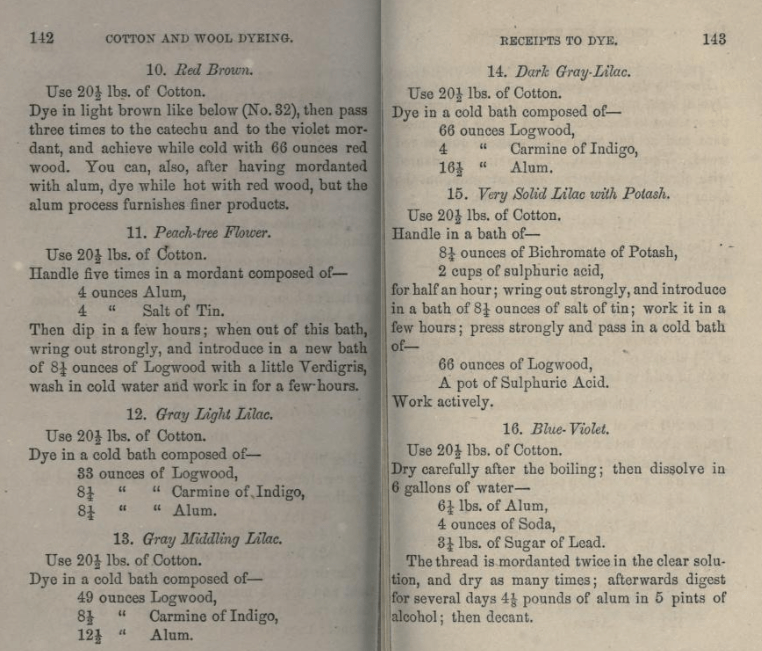
This was designed as a pocket manual for the workman or foreman, setting out the recipes for the mostly commonly used dyes.
At this period natural dyes were predominant, but synthetic dyes were just beginning to appear. Some of the first included: Mauveine in 1856, Magenta in 1858, Methylviolet in 1862 and Bismarck Brown in 1862.
George would have found himself at the heart of an industry that was developing rapidly.
But he left dyeing behind when he returned to England.

The family return to Bradford
The family – now comprising two parents and eight children – returned to Yorkshire at some point between 1 February 1860 and 7 April 1861, when the 1861 Census was taken.
They had been resident in Belgium for roughly 10 years, about eight of them spent in Liege.
The 1861 Census found them living in a newish house at 45 Ebor Street, just off Little Horton Lane. Ebor Street no longer exists, but was roughly where Bradford Ice Arena is today, just to the north of William Street.
It was apparently redeveloped in the early 1960s. The latest reference I can find to Ebor Street in a newspaper dates from 1956, while the ice rink was opened in January 1966.
It was located just to the south of Horton Lane Worsted Mill, the Church of St John the Evangelist lying in between. This had been constructed in the 1830s. It was later moved further down Little Horton Lane, but is now long since demolished.
George had returned to his former role, employed as a ‘weaving overlooker, stuffs’. He was now aged 37. Jane’s age was incorrectly given as 39.
Further children were born in the 1860s though there is some uncertainty about exactly how many.
- Benjamin was definitely born in Great Horton in the summer of 1862.
- Eliza, a daughter, born around 1865, makes a solitary appearance in the 1871 Census. (An Elizabeth Dracup was born in Dewsbury, Yorkshire in January 1865, but to William Dracup, a miner, and Martha, nee Law. I can find no other birth record under this name at this time.)
- A second Martha Jane, also apparently born in 1865, but in Great Horton, appears only in the 1881 Census. Was she perhaps the same person as Eliza? (A Martha Ellen Dracup was born in 1863, but belonged to a different family.)
- Fred was definitely born in the summer of 1867, in Bradford.
Within two years of returning to England, an older son, John, died, aged 12, on 10 June 1864.
According to the death certificate, an inquest was held at which the cause of death was determined as ‘injuries from the accidental falling of a hoist’. This was almost certainly an accident at work, quite possibly in the same mill that employed George.

I can find no reports about either the accident or the inquest in contemporary local newspapers.
By 1871, the family had divided into two households, as the three elder sons – Albert (26), William (20) and Henry (18) – found employment in Scotland. Albert was by this point married with a young child, while both William and Henry were bachelors.
Their address was 79 College Street, in the Parish of Old Machar, Aberdeen, directly adjacent to the railway station. All three men were employed as worsted overseers, most probably at Broadford Works.

These originated in 1808 when Grey Mill opened. Under the ownership of John Maberly, an MP and businessman, and later his partner, John Baker Richards, the site expanded rapidly, becoming only the second linen weaving factory with power looms in Scotland. By the 1860s it employed some 2000 workers, the vast majority female.
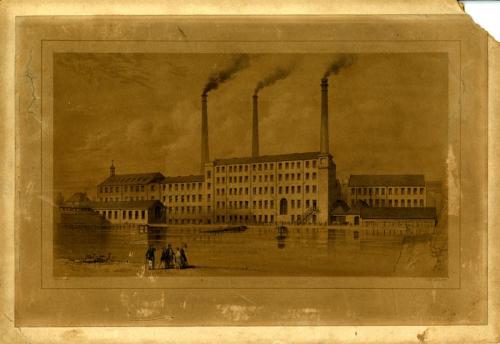
Meanwhile, George and Jane had also moved a little further south-east, to 1, Newby Street in Bowling, just off Bowling Old Lane. This road also no longer exists, but, comparing new and contemporary maps, it seems to have followed what is now Stone Arches, running between Ripley Street and Bowling Old Lane, parallel with the Manchester Road.
George was still working as a worsted weaving overlooker, while Jane had returned to work as a worsted weaver. They had with them Samuel (15), working as a warp twister, the elder Martha Jane (13), George (11) and Benjamin (9), all worsted spinners. Fred (3) was still at school.
On 24 May 1880, Fred died from tuberculosis, following three days of convulsions, aged 13. The death was registered by Jane, who again left her mark, showing that she still had not learned to write.

The 1881 Census found George (now 58) and Jane (57) at 9 Mill Lane, in the parish of Eccleshill, a few miles to the north-east of Bradford. George was still an overlooker, Jane a weaver. Mill Lane is now called Victoria Road – it was renamed to celebrate Queen Victoria’s Golden Jubilee. The original house does not survive.
The other residents were their children, Benjamin, Samuel and the second Martha Jane. The original Martha Jane, newly married, was also registered as a visitor to the house.
It seems likely that George worked at Old Mill, Eccleshill, or possibly Tunwell Mills. Benjamin was now also employed as an overlooker and Samuel still worked as a twister, quite possibly at the same establishment.
Jane died on 4 February 1886, aged 62, of ‘acute bronchitis’. Her address was given as 51 Tichborne Road, the residence of her eldest son Albert Bullock and his family. The death was witnessed by Albert Bullock (using that surname), rather than her husband. She was buried in the Great Horton Wesleyan Chapel on 6 February.

By the time of the 1891 Census, widower George was living with his married daughter Martha Jane and son-in-law Thorburn Kennedy, at 14 Boynton Street in Bowling. No longer an overlooker, he was now working as a simple worsted stuff weaver.
When he died on 2 May 1896, aged 72, his address was given as 35 St Stephen’s Road, Bradford. His death was reported by Martha Jane Kennedy, living at the same address with her family.

George’s employment at the time of death was ‘wool comb minder’ and the cause of death was ‘chronic rheumatism; senile decay’. He was buried at Great Horton Wesleyan Chapel on 5 May.

Eight children definitely outlived George: William, Henry, Samuel, Mary, Martha Jane, George junior and Benjamin.
The remainder of this post deals with the lives of William, Samuel, George junior and Benjamin, the four sons who remained in England, and the lives of their spouses and children. I have introduced them in order of seniority.
William Dracup (1851-1923) and Mary, nee Collingwood
I cannot say definitively when William returned to Bradford from Scotland. His brother Henry married in Bradford in 1873, which might have been the signal for all three brothers to depart Aberdeen.
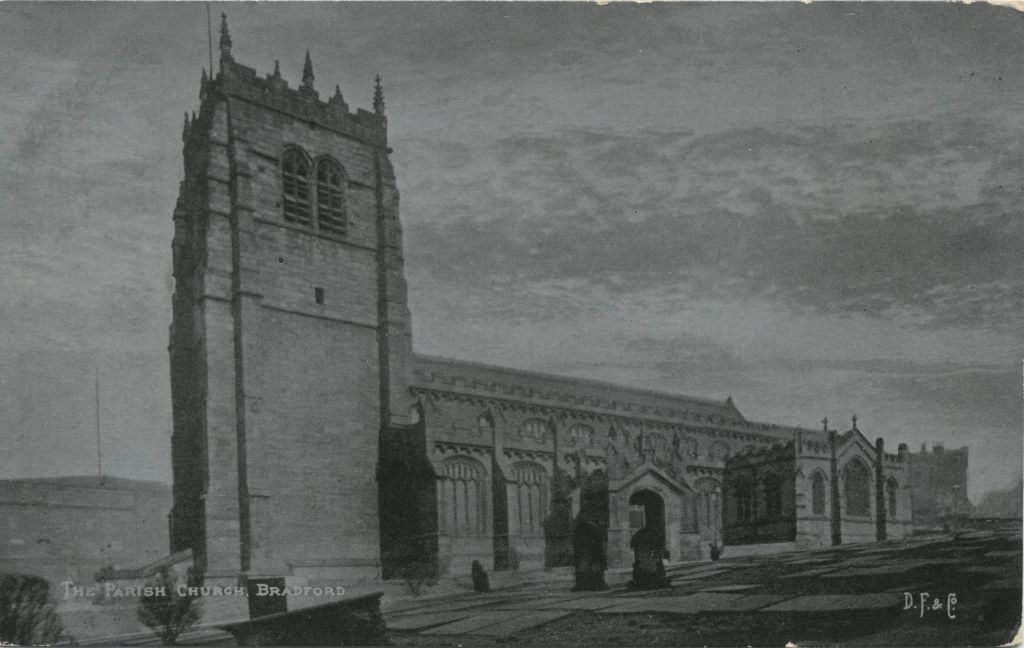
His own marriage took place in Bradford on 2 October 1877. By then 25, he married 20 year-old Mary Collingwood at the Parish Church (which was not made a cathedral until 1919).
The marriage record described him as an ‘overlooker of worsted spinners’ and, unlike his father, he was able to write his name. So could Mary, though no employment was recorded for her.
Her father was Joseph Collingwood, described here as a ‘beerseller and grocer’ and her address was ‘Gardener’s Arms, Horton’.
The Gardeners Arms was in Milton Street, a turning off the Listerhills Road, just after Preston Road. It was probably a two-room establishment, one serving as the grocery, the other as the beer room.
The 1830 Beer Act introduced the concept of a house licensed to sell beer, but not wine or spirits. Such licences were initially awarded automatically, subject to compliance with a few basic conditions and the payment of two guineas. But licences to sell wine and spirits alongside beer were much more strictly controlled, by local magistrates who had the power to revoke as well as award them.

By 1868 there were 400 beer houses in Bradford, but only 141 fully licensed premises. Then, in 1869, a law was passed which also brought beer house licences under the control of magistrates. In Bradford alone, 60 beer house licences were refused that year.

In July 1875, Collingwood applied for a license to sell intoxicating liquors and wine from his premises. He planned to give up the grocery side of his business. One report says he wanted to open an inn called the Melville Hotel.
He was apparently unsuccessful. His wife, Mary’s mother, died in 1879 and by 1881, he had retired, his census entry reading ‘formerly beerhouse keeper’.
By that point William and Mary were living at 109 Gaythorne Road. William continued as a worsted spinning overlooker while Mary had established herself as a corset and staymaker.

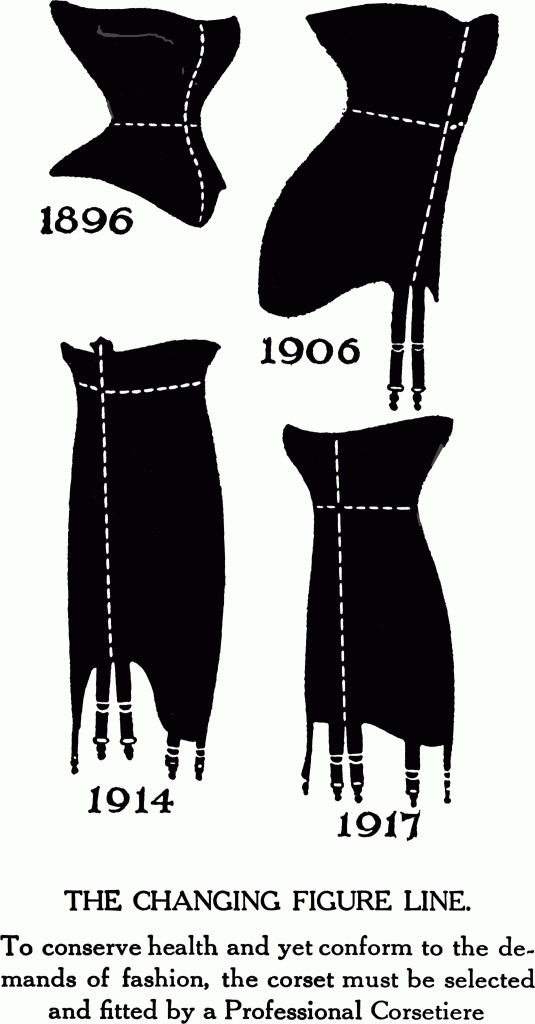
Corsets were typically made of cotton or wool. Whalebone was sewn in to provide flexible support, later replaced by steel. Corsets were typically strapless, often with front and rear fastenings, or else laced at the back. They were frequently colourful, often with a white lace trim.
They remained fashionable despite extensive discussion of their health risks. This is taken from the Bradford Telegraph of 27 March 1885:
‘Most women, from long custom of wearing the corsets, are really unaware how much they are hampered and restricted. A girl of 20 intended by nature to be one of her finest specimens gravely assures one that her corsets are not tight, being exactly the same size as those she was first put into, not perceiving her condemnation in the fact that she has since grown five inches in height and two in shoulder breadth. Her corsets are not too tight because the constant pressure has prevented the natural development of heart and lung space. The dainty waist of the poets is precisely that flexible slimness that is destroyed by corsets. The form resulting from them is not slim, but a piece of pipe, and quite as inflexible.’

By 1891, the couple had removed to 552 Manchester Road. William was now a ‘drawing overlooker’. Drawing is a process prior to spinning in which fibres are doubled, redoubled and compacted. Mary continued to develop her business. Two teenage nephews were living with them, both apprentices, and two lodgers besides.
We know they had only arrived here in 1890 because of this advert, which also suggests that Mary had been making corsets since well before her marriage.

The following year, some of her advertisements claimed her business had been established in 1868, when she would have been only eleven years old.
In 1901 they remained at the same address, both working from home. But while Mary was still making corsets, William had become a teacher of dancing.
William the dancing master
In February 1890 William had applied for a music and dancing license, for premises at 29 Addison Street.
However, the Chief Constable objected:
‘on the ground of there being a staircase, and the room being in an out-of-the-way place’.
The application was refused.
This makes more sense when one understands that the magistrates making such decisions were seized with a moral panic, fearing that dancing would encourage sexual expression, impropriety, or worse. They were determined to keep strict control over the number and quality of establishments operating in the Town.
This appeared in the ‘Daily Gossip’ section of The Bradford Daily Telegraph in October 1892:
‘The wave of morality sweeping over Bradford extends even to the harmless dancing room…The custodians of public morals appear to view the dancing hall with grave suspicion, and cold water was thrown on all applicants by the stern admonition of the magisterial spokesman. “We will never allow any Argyle Rooms to be set up in Bradford.” Possibly worse things than dancing rooms flourish in the Town!’
(The Argyle Rooms in London had acquired an unsavoury reputation as a place to meet prostitutes.)

By June 1891, however, advertisements had begun to appear for ‘Mr Dracup’s Dancing Class’, located at 46 Jacob Street, almost directly behind their home in Manchester Road.
Initially classes were offered on Monday, on Saturday and on Thursday evenings. Private lessons were also available. By the end of September the establishment was also open on Tuesdays. By November children’s classes were added.
It seems that, by providing tuition on the premises, William could avoid the need for a licence. The logical inference is that he became a dancing master primarily because he was initially unable to run a dance hall.

William was active as a dancing teacher during a seminal period in the development of modern English ballroom dancing. The waltz had been predominant for more than fifty years but, as the new Century began, a variation called the Boston was enthusiastically embraced, only for twin shock waves to displace it in the years leading up to the First World War.
Tango became a huge craze in Paris and soon crossed the Channel, while ragtime dances arrived on these shores alongside Irving Berlin’s ‘Alexander’s Ragtime Band’. Principal amongst these were the ‘animal dances’, namely the Bunny Hug, the Turkey Trot and the Grizzly Bear.

As dance schools proliferated, dance teachers began to organise themselves. The Imperial Society of Teachers of Dancing was formed in 1904; the National Association of Teachers of Dancing in 1907. The Dancing Times, first published 1894 and relaunched in 1910, enabled provincial teachers like William to keep in touch with all the latest developments.
During this period, organised dancing for working class people was largely confined to public houses, municipal halls and small ‘assembly rooms’. Large public dance halls were rare, except in major seaside towns. Blackpool was most prominent amongst these, accommodating both the Tower and the Empress Ballrooms.
Unfortunately though, William’s second career was drawing to a close just as the public dance craze was really kicking off, immediately after the end of the First World War. As we shall see, William was already superannuated before the War started.
In January 1892 he applied for a music and dancing license for these new Jacob Street premises, but was again refused. Nevertheless, the dancing classes continued, William now claiming to teach the ‘Waltz and Schottische in four lessons’.

He also hosted private events.
In 1892 the West Bowling Primrose League had a tea and ball at Dracup’s Rooms, as did the weavers from Sugden and Briggs. In 1894 it was the turn of the Airedale Harriers and the All Saints’ Mission Cricket Club. In 1895, the Bradford Dolphin Swimming Club held a smoking concert.
In January 1896, the employees of Messrs B. and W. Brown held their annual social and dance in the Rooms, which ‘had been nicely decorated for the occasion by Mr Dracup’. Also that year, St Stephen’s Harriers held their annual ball there.
In December 1896 a newspaper advertisement referred to:
‘DRACUP’S CITY DANCING ROOMS, 369 MANCHESTER ROAD (next door to Manchester Road Station). Mr DRACUP will open the above LARGE BALL ROOM TONIGHT (TUESDAY) December 8. The best appointed Ball Room in Bradford.’
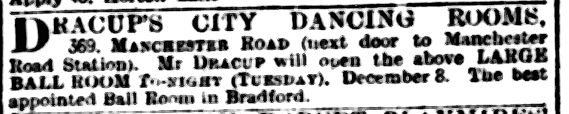
Next day, the Bradford Daily Telegraph carried a report:
‘OPENING OF A NEW BALL ROOM – Mr Dracup, the well-known dancing master, opened last night a new and well-appointed ball room at 369 Manchester Road. The rooms were crowded. The ball room itself is of an area of about 240 yards, fitted with a first class dancing floor, and tastefully decorated. There is also every other necessary accommodation in the shape of cloakroom, ladies’ and gentlemen’s dressing rooms, lavatories, etc. The rooms throughout are beautifully decorated and well-lighted, while the ventilation leaves nothing to be desired. Mr Dracup informs us that the rooms are engaged up to the end of March.’
In January 1897 his application for a music and dancing license for these premises was finally approved. The solicitor who made the application on his behalf said diplomatically that he ‘quite concurred with the remarks made by the Chairman about the late hours to which dancing was kept up’.
Prior to the Chairman’s remarks, the Chief Constable presented an annual report, stating that there were 284 places licensed for public music, dancing and entertainment in the Borough. These included 11 assembly rooms with music and dancing. There had been no convictions for impropriety. Places licensed for music and dancing had been visited frequently ‘and found to be carried on properly’.
The Chairman was a Mr W Oddy. These were his remarks:
‘…the bench did not think that the keeping open of these places (dancing halls) until two o’ clock in the morning was conducive to the morals or the health of those who attended them. A great many of these licensed music and dancing places were frequented by the working classes, and there were often cases where the fathers and mothers had to stop up to wait until after two o’clock in the morning before their children came home, and then they were knocked up again at five o’clock to go to work at six. If arrangements could be made for the places to be closed at say twelve o’clock, it would be much better. If it was necessary that they should have so many hours they might commence dancing earlier, say at half past seven or eight o’ clock, instead of nine or ten o’clock.’
This advertisement from December 1898 reveals that William had also developed a nice sideline in ballroom floor polish!

Dracup’s Assembly Rooms
William soon settled on the name ‘Dracup’s City Assembly Rooms’ (although ‘City’ was often dropped). In 1898, the West Bowling Cycling Club held their annual ball there, as did the Bradford Harriers. In 1900, it was the turn of E and F Troops of the Yorkshire Hussars. In 1904, the weavers of Isaac Sowden and Sons booked the venue.
Few adverts appeared between 1903 and 1909, if any. Perhaps they weren’t necessary.
In 1908 an article declared:
‘The twenty-first annual dancing season at Dracup’s City Assembly Rooms, Manchester Road, opened last evening and, judging by the events which have been already booked, the season promises to be a very busy one. There was a large attendance last evening and the rooms were beautifully decorated for the occasion. Many alterations for the comfort and convenience of the patrons have been made. A thorough system of ventilation has been installed, and plants, mirrors and statuary make the suite of rooms one of the most attractive in the city, and they may be used not only for dances, but all kinds of parties. The instrumentalists will in future be accommodated in an alcove, which has been constructed from the ball-room. In addition to the ladies’ and gentlemen’s retiring rooms, supper, smoke and card rooms are also provided. The ball-room floor is considered to be one of the finest in the country, being kept in beautiful condition by Dracup’s special preparation. It may be interesting to mention that attached to the rooms is a very nice bowling green, which should be an additional attraction during the summer season.’

When advertisements resumed in 1909, William was offering assemblies every evening except Friday, plus classes from three to five on Tuesday and Saturday afternoons.
In 1910:
‘The winter season was opened at Dracup’s Assembly Rooms on Tuesday night, and throughout the winter the spacious and well-appointed rooms in Manchester Road will be the resort of lovers of dancing on almost every evening…Judging by the attendance on Tuesday roller skating has not affected the popularity of the older winter diversion.’
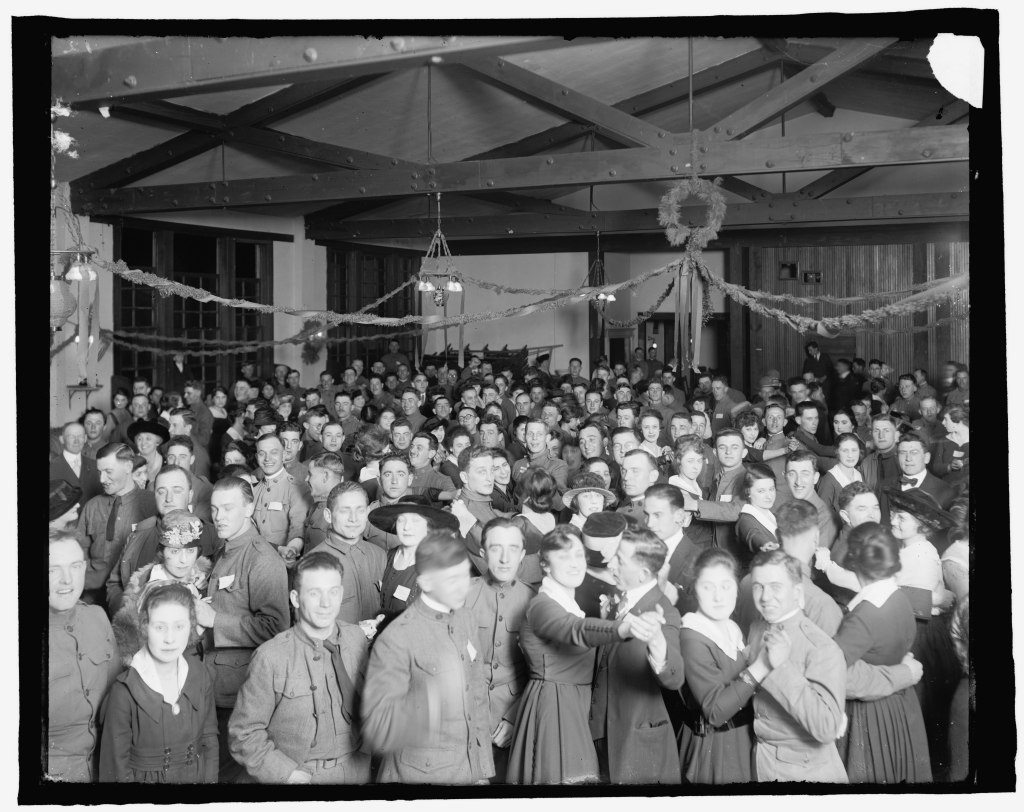
The 1911 Census recorded William, now aged 55, and Mary, 52, still employed as ‘dancing master’ and ‘corset maker’ respectively, but their home address was now 389 Manchester Road.
It confirmed that there had been no children, alive or dead.
Subsequent advertisements reveal that, by November 1911, the Assembly Rooms had also moved down the street, next door to their home, at 387 Manchester Road. This must have been somewhere in the vicinity of the Station Hotel, but on the opposite side of the road, at the junction with Bowling Old Lane.

In 1913 the local paper mentioned that, for the 25th year in succession, Devine’s Band was supplying the music for Dracup’s Assembly Rooms. The leader of Devine’s was Frederick Parker Devine (1855-1931), a former worsted overlooker who had turned to music, as William had turned to dance.
On December 23 1913, an additional entry was published underneath the standard advertisement for the Assembly Rooms:
‘IMPORTANT NOTICE
Mr WM DRACUP (Dracup’s Assembly Rooms) wishes to inform the public that he neither Encourages nor teaches THE TANGO or any other Fancy Dances; and when he was MC at Blackpool Empress Ballroom he never allowed any fancy dancing.’

The Empress Ballroom was part of Blackpool’s Winter Gardens. Built in 1896, it was one of the largest in the world, boasting a floor area of 12,500 square feet.
Although I have been unable to establish the veracity of William’s claim, a newspaper report from the Bradford Argus of 17 August 1896, just a few weeks after the Ballroom opened, says:
Visitors to the Winter Gardens at Blackpool Winter Gardens will notice a well-known Bradfordian there in the person of Mr W Dracup, who officiated as MC in the spacious ball-room. The floor in that immense saloon has been prepared by Mr Dracup’s own special floor polish, and gives a surface effect which enables Terpsichoreans to attain a pleasure akin to entrancement.’

As for the tango, from as early as January 1911 newspapers began to report the latest dance craze sweeping through Paris. This is from the Liverpool Evening Express of January 11 1911:
‘The new dance which is holding Paris in thrall this season is the Argentine Tango, which hails from the great South American Republic. It was created in the popular halls, then refined and adopted by the upper classes, and recently imported by proud hidalgos into Parisian drawing rooms. It is a combination of the undulating body movements of the Spanish dances and the rhythmic arm movements of the American dances. The position is that of the Boston, and is retained throughout the dance. The cavalier never leaves his partner. The Tango is composed of numerous figures, the first being in walking step. The cavalier throws his body slightly backward, and his partner throws hers slightly forward. The second is a gliding step, the body being inclined first to the right and then to the left, the American arm movements marking the cadence. Another figure is something like the closing and opening of a fan. The Tango is danced to slow music.’

It took until 1913 for the tango to hit Bradford. In May that year, the Bradford Daily Telegraph referenced a letter published in The Times:
‘The modern additions to the ballroom programme have greatly exercised the minds of staid and old-fashioned folk. Some of these dances are now arraigned as partly immoral and wholly vulgar. What degree of turpitude attaches to the Turkey Trot, the Bunny Hug, the Argentine Tango is made pretty clear in the course of the discussion. One correspondent alleges that the Turkey Trot is “a dance of purely negro origin frankly symbolic of those primitive instincts of human nature which it is the aim of civilisation to suppress, or at least keep under control”. If this be true, we are afraid that many of the new dances outrage the Terpsichorean code which bars “every gesture that is offensive to modesty and corruptive to innocence.” Judged by this standard and recalling the origin and symbolism of some of the new dances we think they stand condemned. Why have they been allowed to creep into so many London ballrooms? To begin with, the dances are a kind of revolt against the stagnation that had come over English dancing. It was perhaps too stiff and formal. Now dancing has run to the other extreme and threatens to become vicious.’

Meanwhile, several of William’s competitors were freely advertising tango lessons. By refusing to embrace it and these other ‘fancy dances’, he was aligning himself with the values (and dances) of a previous generation, and probably signing the death warrant of his business.
Advertisements for Dracup’s Assembly Rooms continued to appear until February 1915, but then vanished. The last reference I can find in the local press is to an annual social and dance held by the coating menders of Briggs Pollitt and Co, held in February 1917.
By the time of the 1921 Census, William was 67 and Mary 60. They declared themselves still employed, as dancing master and corset maker respectively, still living at 389 Manchester Road.
Mary’s business was also becoming outmoded, for this was the swansong of the corset. Either side of the First World War, brassieres and girdles began to replace corsets and stays. But no doubt some elderly customers stuck to the old ways.
Sadly, Mary was already suffering from the vulval cancer that was to kill her on 11 August 1922, aged 65, her address given as 3 Newton Street, just off the Manchester Road.
William died shortly afterwards, on 20 May 1923, aged 72, also at 3, Newton Street. Cause of death was given as arteriosclerosis and a brain haemorrhage.
The same person witnessed both deaths, one Kezia Davis. Perhaps she was a servant in the house, or employed as a nurse. I have been unable to establish her identity.

Probate for William was awarded to his nephew Harry Dracup, a grocer (see below) and Charles Broadbent, a hairdresser. He left £347.
I have been unable to discover William’s relationship with Charles Broadbent. He was born in 1859 in Mytholmroyd and, by 1921, aged 69, lodged at an address on the Bolton Road. He had a hairdressing business located at 928 Leeds Road.

Samuel Dracup (1856-1921) and Jane, nee Hardwick
Samuel had not accompanied his brothers to Aberdeen, most likely because he was only 15 in 1871. He remained in the family home, in Newby Street and was employed as a warp twister.
A warp twister was responsible for operating the machine that wound and twisted threads, often into a cord, or else linked the end of one thread to the beginning of the next.
Samuel was still a twister in 1881 and was still living at home. But he married Jane Hardwick on 5 November that year. He was 22, she 21. He had moved from 9 Mill Lane but remained in Eccleshill, at 9 Holdsworth Square. Jane was also resident in Eccleshill, on Chapel Street.

The marriage record states that she was the daughter of Henry Hardwick, giving no occupation, but it seems more likely that she was born at Apperley Bridge, to Richard Hardwick (1824-1860) a waterman, and Hannah, nee Illingworth (1818-1891). Given the location, her father most probably worked the Leeds and Liverpool Canal, constructed between 1770 and 1816.
The birthplace of Samuel and Jane’s first three children was Idle, not far from Apperley Bridge, indicating that the family was resident there from 1882 to 1888.
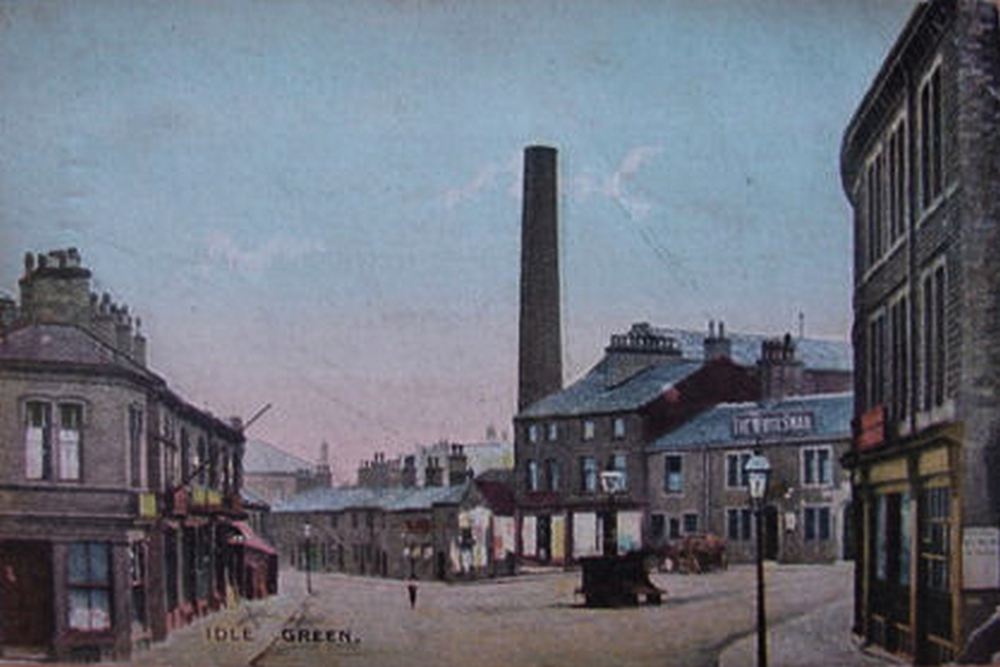
But, by 1891, they had moved to 154 Spring Mill Street in Bowling. Samuel was a ‘silk warp twister’ and there were now four children.
They may not have remained too long at this house: it was shown as ‘to let’ in newspaper adverts from July 1891. There were two bedrooms and a side scullery and the rent was 4s 6d per month.
The birth of later children shows that they were subsequently resident in Liversedge, some miles to the south of Bradford, from at least 1892 to 1894.
At some point between 1891 and 1901, Samuel also made a change of career. By the time of the 1901 Census, the family had moved to 228 St Stephen’s Road, a turning off the Manchester Road, not far from Ripley Street. Samuel had become a greengrocer and there were now seven children.
He was no doubt influenced by the career choice of many of his relatives (see below). But greengrocery was a temporary departure because, by 1911, he had returned to warp twisting. Their address was now 15A Bowling Old Lane, just round the corner from St Stephen’s road.
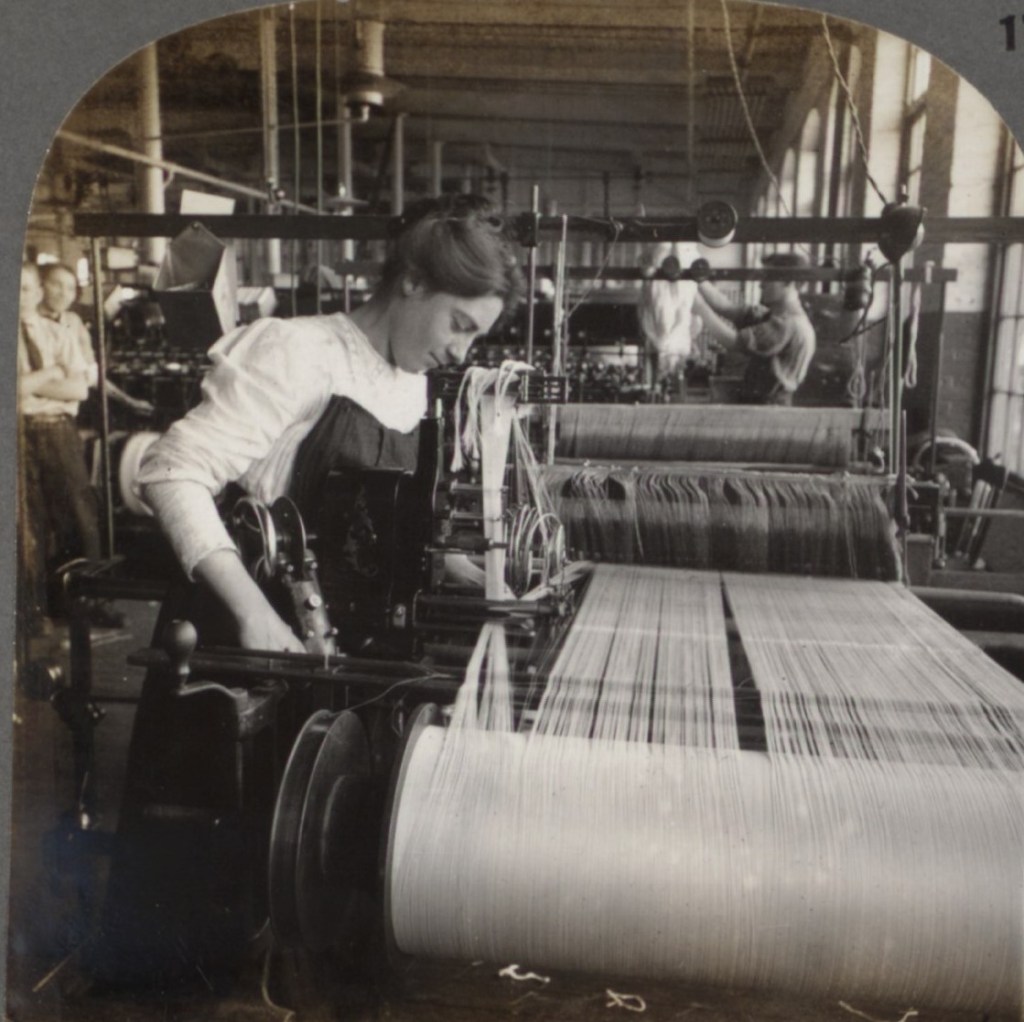
Samuel died on 14 March 1921, aged 65. Probate was awarded to his wife and he left £131. Their address at the time was 32 Jonas Gate, Bower Street, off the Manchester Road. This was close to Ebor Street and also no longer exists.
Jane and the remainder of her family were still residing at this address by the time of the 1921 Census. She described herself as a housekeeper and stated that she was married rather than widowed, even though Samuel had died three months earlier.
Jane died in April 1926, aged 65, her address remaining 32 Jonas Gate.
Altogether, Samuel and Jane had eight children, six girls and two boys.

Samuel’s and Jane’s daughters and their spouses
Like their parents, the daughters seem to have led fairly ordinary lives:
- Alice Maud (1882-1959) was born in Idle on 19 February 1882. At the time of the 1901 Census, she was a worsted spinner. By March 1910, when she married, she was a worsted twister, like her father. Her husband was Charles Elsworth (1884-1960), an ‘export maker up’ – essentially a packer – in a wool and worsted warehouse. In 1921 he was employed by James Edward Patefield, at 13 Union Street Bradford. (This was later the address of the British Cotton and Wool Dyers’ Association.) He was still employed in the same capacity in 1939. They had two children.
- Bertha (1884-1952) was born on 24 September 1884 in Idle. By 1911, she was also a worsted twister. In May 1913 she married James Chattaway (1882-1937), employed as a cycle/motorcycle packer and resident in Coventry. In 1921, he worked for the Triumph Company, Priory Street, Coventry. They lived in Coventry throughout James’s life, but Bertha returned to live in Spen Valley after WW2. She and James also had two children.


- Eva (1887-1889) died in infancy, aged two, on 21 September 1889, at 12 Spring Street, Idle, from a combination of measles, bronchitis and pulmonary oedema.
- Minnie (1888-1951) was born on 20 August 1888 in Idle. By 1911, she too was working as a worsted twister. In October of that year, she married Fred Fawcett aka Fred Fawcett Morley (1884-1944), then a self-employed hairdresser. They had one son. By 1921, they too were resident in Coventry, and Fred was employed as a painter by the Humber Car Company. However, by 1939, he had returned to hairdressing. After his death, according to the annotation on the 1939 Register, Minnie changed her name by deed poll to ‘Minnie Morley Fawcett’.

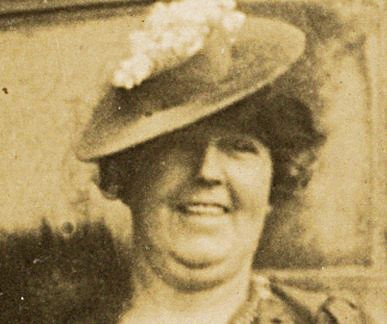
- Blanche Catherine (1892-1970) was born on 10 May 1892 in Liversedge. By 1911 she was employed as a burler and mender, working with ‘dress woollen goods’. (A burler removed imperfections in the cloth.) In October 1924 she married Herbert Wilfred Avison (1886-1952), a mechanic and engineer specialising in textile machinery. By 1921, he was self-employed, working out of Northgate, Cleckheaton. And, by 1939, with war approaching, he was working as an aircraft tool fitter. A child living with Blanche and Herbert at the time of the 1939 Register was actually their niece, Joyce, Gladys May’s daughter (see below). A reader who remembers Blanche recalls her mentioning that Harry Ramsden (1888-1963) of chip shop fame had courted her in her youth, but she had turned him down. This picture is taken from her niece Joyce’s wedding photograph, provided by the same reader. It was taken in 1942.
- Gladys May (1896-1973) was born on 19 September 1896, in Bradford. By 1911 she was a worsted spinner and, by 1921, also a burler and mender, but unemployed at the time of the Census. She gave birth to a daughter, Joyce, in June 1922 in Bradford. No father was named on the birth certificate. Then in April 1929 she married Herbert Risdon (1890-1962), a dyers’ labourer, following the death of his first wife, Maude Kathleen Shaw (1890-1927). Herbert had served in the Gordon Highlanders in the First World War. He was reported missing in May 1918, but by June was confirmed a prisoner of war. Gladys inherited four stepchildren, though one sadly died in the year of their marriage, and she had three more children with Herbert, all born in Bradford.

Samuel’s two sons were far more interesting subjects. Though both had relatively brief lives, those lives were packed with incident.
Edgar (1890-1930)
Edgar was born on 22 November 1890, at 154 Spring Mill Street Bradford, the address given by the family in the 1891 Census. Spring Mill Street runs south from the Manchester Road, crossing Ripley Street in the process.
During the 1911 Census he was one of 494 prisoners incarcerated in His Majesty’s Prison, Armley, Leeds. His age was recorded as 20, his employment ‘Iron Broker’, essentially a posh term for a scrap metal dealer.

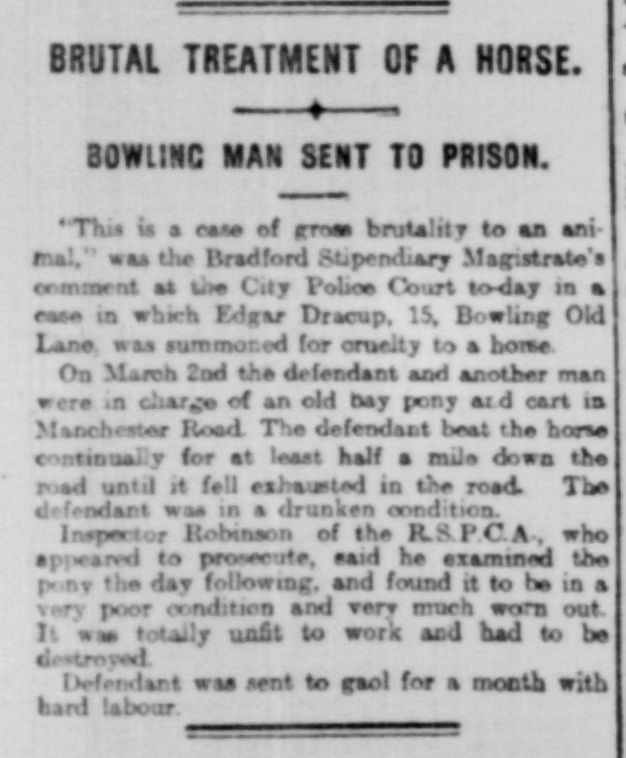
The Bradford Daily Telegraph reveals that Edgar, now of 15 Bowling Old Lane, had been imprisoned for cruelty to a horse:
‘On March 2nd, the defendant and another man were in charge of an old bay pony and cart in Manchester Road. The defendant beat the horse continually for at least half a mile down the road until it fell exhausted in the road. The defendant was in a drunken condition.
Inspector Robinson of the RSPCA, who appeared to prosecute, said he examined the pony the day following, and found it to be in a very poor condition and very much worn out. It was totally unfit to work and had to be destroyed.
Defendant was sent to gaol for a month with hard labour.’
In January 1914 a gardener called Herbert Holt was imprisoned for ten months after stealing Edgar’s mare, valued at £12.
Edgar served in the Great War as a Private, initially with the Durham Light Infantry and then with the Labour Corps. I have not found his service record. His Medal Roll Index Card declares, in relation to his candidacy for a Victory Medal:
‘Service Not Approved. Medal forfeited.
Declared a deserter 15/12/18. Still in state of desertion 11/6/21.
Died 3-12-1930.’
On another record, it states that Edgar died ‘without making a confession of desertion.’
There is a Court Martial record dating from 28 August 1918, at Richmond. Edgar was sentenced to 42 days’ detention. It seems probable that, having served that sentence, he absconded a second time.


It is often thought that desertion was quietly forgotten about when the war ended, but that is not entirely true.
This Parliamentary Question was asked on 5 June 1924:
‘Mr. MACLEAN asked the Secretary of State for War whether any amnesty has been granted to those who deserted during the War; and, if not, whether it is his intention to offer an amnesty?
Mr. WALSH
The answer to the first part of the question is in the negative. As regards the latter part, I am not prepared to dispense altogether, by a general amnesty, with the right to try and punish men, in serious and special cases, for the grave military offence of desertion. The normal practice, however, has for long been to discharge the deserter without resorting to trial and without withdrawing him from his civil employment. I see no reason to vary this general policy, but I can undertake to consider sympathetically any particular case which does not appear to be covered by it.’
In October 1916 Edgar married Bridget Ann (Annie) Campbell (1893-1959), youngest daughter of a brickie’s labourer. Prior to her marriage she had been a worsted spinner.
By the time of the 1921 Census, Edgar was 30, still a self-employed metal broker working out of ‘no fixed place’. Annie was 29. One child, Eileen (1916-1918) had already died. Another, aged two, was still alive.
The family was living at 4, Crowther Court, Bradford, off the Manchester Road.


In January 1923, a report appeared in the Leeds Mercury of a court case in which Edgar was accused.
A metal dealer from Liversedge found him and two other men in his yard attempting to steal lead and copper cable he had stored there. The men ran away, but Edgar was apprehended and they found his horse and cart nearby. The report concludes:
‘It transpired there were twenty-eight previous convictions against the defendant, and he was fined 40s.’
In December 1923, he was fined 20s for ill-treating another horse:
‘It was stated that this was Dracup’s 26th appearance before the Court, and that he had been bound over for cruelty to a horse in 1909 and imprisoned for a month in 1911 on the same charge. There were several minor convictions for offences connected with horses.’
In April 1926, the Leeds Mercury reported:
‘When ordered to pay 4s costs at Bradford yesterday for allowing his horse to stray, Edgar Dracup of Broadbent Street Bradford, said the horse was an old circus horse which could jump the wall of the field, and which since the issue of the summons, had jumped the wall again and vanished.’
Edgar died on 3 December 1930, aged 40, of pulmonary tuberculosis. The record states that he was employed as a scrap metal broker and his address at the time of death was 33 Moorside, Scholes, Cleckheaton.

This was the address of his sister Blanche and brother-in-law Herbert Wilfrid Avison. Herbert was present at Edgar’s death.
Edgar and Annie had four daughters and one son, but only two daughters survived him, including their youngest child, born just before his death. Her birth was registered under two surnames: Dracup and Varley.
For Annie had remarried, in 1931, to William Varley (1886-1959) a widowed painter and decorator. There were several children from his former marriage, including a son aged five. Annie bore him three further children.
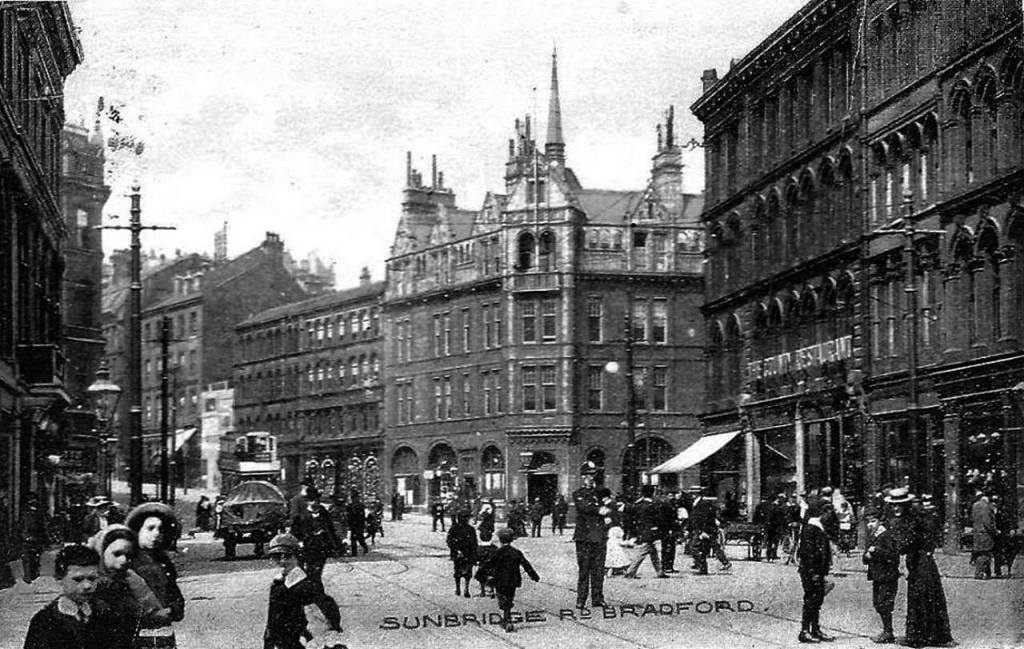
Arthur (1894-1940) and Mary Ellen, nee Wood
Samuel’s younger son, Arthur, was an equally colourful character.
He was born on 10 January 1894, in Hare Park Lane, Liversedge. In 1911, aged 17 and still living at home, he was employed as a ‘Dyehouse Boy’.
In 1914, now aged 20 and described as a ‘broker’ living at 15 Ripley Street, he was fined 5s with 5s costs for resisting a constable in the execution of his duty. The policeman was trying to arrest a hawker, called Albert Pickup for being drunk in charge of a pony and cart and animal cruelty. Pickup was fined 25 shillings and 10 shillings costs.

Four years earlier, Pickup had been admitted to hospital with ammonia poisoning. He had mistakenly swallowed some liquid ammonia thinking it was ‘ginger pop’!
In July 1916 Arthur was charged with obtaining by fraud a pair of boots worth £1 4s from a bootmaker called Edwin Lee, who had a shop at 484, Huddersfield Road, Wyke.
‘The prosecutor said the man came into get some boots, and displayed what he thought were a couple of half-sovereigns. Eventually, he bought the boots, giving the two coins referred to and two florins for them. Later the prosecutor found they were only tokens and not half sovereigns.’
He was sentenced to one month with hard labour.
By 1921, now aged 27, he was still living at home with his widowed mother and his sisters Blanche and Gladys. However, the census states that he was now married and employed as a hawker. His wife was not living at the same address.

Who had he married?
There were two marriages featuring an ‘Arthur Dracup’ in Bradford between 1911 and 1921. The earlier took place in the third quarter of 1913, involving a woman called ‘Kate Corley’. The later was in the second quarter of 1915, the woman named ‘Mary E Wood’.
I am finally clear that a different Arthur Dracup (1887-1975), a printer compositor, married Kate Corley on 19 July 1913. He had two children by a woman called Kathleen Florence, nee Corley, in 1923 and 1925 respectively.
I believe this is the woman, initially using the name ‘Kitty Corley’ and later ‘Kitty Dracup’, who enjoyed an extensive criminal career in the 1920s and 30s. She specialised in pickpocketing older males, usually working with a female accomplice.
At first I had assumed that Kitty Corley was the more likely match for this Arthur Dracup, but I was evidently mistaken! I shall have to postpone the fascinating tale of Kitty Corley until some other time.
That leaves Mary Ellen Wood, though she later went by ‘Mary Dracup’.
She had been born in April 1897 to Richard Wood (1872-1937), a wool comb minder, and Mary, nee Larvin (1877-1939).
Arthur and Mary Ellen married on 10 April 1915 at St Joseph’s Roman Catholic Church. He gave his address as 15 Ripley Street; she was living at 10 Jesse Street, off the Manchester Road. He gave his employment as ‘carter’, while she was a worsted spinner.
By the time of the 1921 Census Mary Dracup, aged 24 and married, an unemployed worsted spinner, was living with Charles Barker, a 44 year-old bag dealer, at 17 Salt Pie Street, Bradford. She was almost certainly Arthur’s wife, and probably already estranged from him.

Other family trees link her to a spouse called Irvin Lightowler (born 1891), and a son, Leonard Lightowler (born 1929).
A boy called Leonard Lightowler was born to a mother with the maiden name Wood in Bradford, in the final quarter of 1929. There is also a parallel record for a Leonard Dracup, so the birth was registered under both surnames.
Moreover, the 1939 Register contained an entry for Irvin Lightowler, actually born on 26 July 1879, a married coal miner. Resident with him at 173 Crowther Street, Bradford were Mary Dracup, born 26 April 1891, a married housewife, as well as Leonard Lightowler, born 17 December 1929, now at school.

(There is also a second entry for Leonard Lightowler, born 14 December 1929, at Woodlands Convalescent home in Aireborough, Yorkshire. I assume both records refer to the same boy.)
Mary’s stated date of birth was some six years earlier than her correct birthday – 1891 rather than 1897. Perhaps she wanted to narrow the 18-year age gap between herself and Irvin Lightowler. Her death record says she was born about 1898.
Lightowler was still married to Clara, nee Ellis (1880-1962), that marriage dating from May 1902. They had four children. The family was still living together in 1921 but, by 1939, Clara was residing elsewhere in Bradford with one of their sons.
So it seems that Mary and Arthur were already living apart by 1921 and that, by 1929, at the latest, she was cohabiting with Irvin Lightowler. I can find no marriage record for Mary and Irvin. Nor can I find any record of children born to Arthur and Mary.
Until recently I had been unable to trace Arthur in the 1939 Register. But I have since discovered the reason: he had changed his identity.
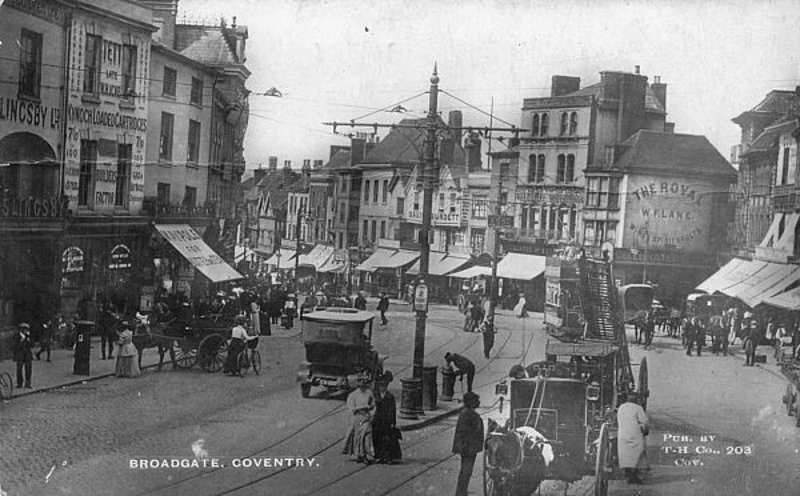
Arthur Dracup becomes Arthur Smith
Two facts substantiate this claim:
First, the 1939 Register includes a man called Arthur Smith, resident in Coventry, with a date of birth exactly a year before Arthur Dracup’s – 10 January 1893 instead of 10 January 1894.

He was lodging with a couple called John and Emma Lycett at ‘4 in court 2’, which was in Henry Street, Coventry. Both men were described as ‘Salesman Fruit’, while Emma was described as ‘Saleswoman Florist’.
The layout of the roads has changed since 1939, but the rump of Henry Street remains, close to Coventry Canal Basin. This contemporary map shows how it looked in 1939. One suspects that they were living in or next to their warehouse.

Second, there are multiple references in Coventry newspapers to this ‘Arthur Smith’, a hawker with a horse and cart, describing his frequent brushes with the law.
Prior to 1930, the address given for him is invariably 26 Harnall Lane East, Coventry. Thereafter it becomes 32 Harnall Lane East. These were the addresses of his sister Bertha Chattaway, her husband and family. They were a few hundred yards away from, Henry Street.
Perhaps Arthur normally lived with his sister, the 1939 Register entry being only a temporary arrangement. Or perhaps he gave his sister’s address when charged, because he moved his home address too often to be sure of receiving important mail.
According to the local papers, an Arthur Smith of 26 Harnall Lane East was fined for allowing his horse to stray as early as October 1923, then again in December 1923, May 1924 and August 1925.
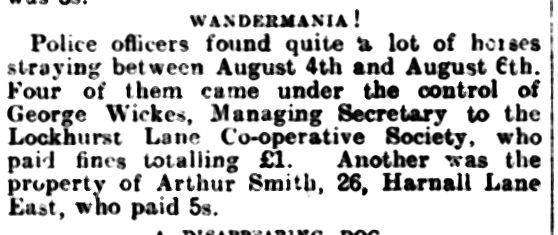
In 1928 he had a similar case dismissed because he was in Birmingham on the day he was alleged to have been over 20 yards from a horse and float for which he was assumed responsible.

Using the 32 Harnall Lane East address, he paid another fine for allowing his horse to stray in June 1930, and yet another in April 1932.
In May that year he was charged with being drunk and disorderly, and in October:
‘A hawker, Arthur Smith, 32 Harnall Lane, who was charged with using obscene language to the annoyance of passers-by in Bishop Street yesterday, was fined 20s.
PC Mason said the prisoner was engaged in a quarrel with a number of other men, and when spoken to by witness became very abusive.’
In January 1933, he was fined 10s for not having lights on his horse and dray and going too far away from it while hawking in another street.

Then there was a hiatus until the final year of his life.
The Royal Leamington Spa Courier and Warwickshire Standard of 4 August 1939 reported:
‘Hawker Summoned for Shouting
“These people come out from Coventry and shout in the streets, and, when we have complaints from residents, we have to take proceedings” said Inspector Perrott, when Arthur Smith, of 32, Harnall Lane East, Coventry, was summoned for shouting for the purpose of hawking to the annoyance of residents on July 1st. PC Spencer said that when in the police station he heard the defendant shouting, so he went out and cautioned him. He later received a complaint as to a man shouting in School Lane, and when he went there found it was the defendant. When told he would be summoned, defendant said “We always shout where I come from.” A fine of £1 was imposed, there having been a previous conviction for a like offence’.
In September 1939, he and two other men were alleged to have stolen two sacks of potatoes. They claimed it was a mistake and the case was dismissed.
Finally, in March 1940, he was again fined £1 for being drunk and disorderly. The offence took place in Castle Street. Inspector Ward said of Arthur:
‘He has been in trouble for this kind of offence for eight years.’
So, in 1922 or 1923, Arthur had decided to follow two of his sisters to Coventry, and to live there under an assumed name.
He must have wanted to escape from his life in Bradford. Perhaps he felt that his cards were marked there, or that there was nothing left to keep him in Yorkshire, or perhaps he simply thought that he could make a better living in the Midlands.
But the fact that he dropped his surname for ‘Smith’ suggests that he didn’t want to be traced, whether by the police, the authorities or his estranged wife.

Two fatalities
Back in March 1924, Arthur Dracup/Smith was involved in a collision that caused the death of a motorcyclist, James Leonard Gibbins:
‘Arthur Smith, Harnall Lane East, stated that at about 7.45 on Tuesday night he left Kenilworth, driving a pony and trap. When about a hundred yards from the two miles post from Coventry he saw a motor cycle proceeding from Coventry on the wrong side of the road. Witness had a good candle lamp burning, and there was also a light on the motor cycle. He (witness) said to a friend in the cart “Hello, where is he coming to?” The cyclist came on and ran straight into the horse’s chest. The animal fell down on to its knees, witness was thrown out on to the horse and then to the ground, while deceased lay partly on the grass and partly on the road. The near wheel of the trap was practically touching the grass on the left hand or proper side of the road.
Sidney Lloyd, Munition Cottages, who was in the cart, said he just looked in time to see deceased run straight between the horse’s legs. The animal fell on to its knees, and was twisted right round in the shafts; it was badly cut in the chest.
Sergt. Manlove, who was called to the scene of the accident said deceased had been taken to the Hospital on his arrival. The motor cycle had been placed in the ditch, but the place of contact was shown by a quantity of petrol in the road. This was two feet from the right hand side of the road proceeding into Coventry. There was a skid mark 12 feet long, which ended where the petrol was, and witness thought that probably deceased saw the cart too late to avoid the collision, although jamming on his brakes. The number plate of the cycle was bent over and there were horse hairs on the plate. There was no doubt the front wheel went between the horse’s legs and the animal was cut by the number plate. There was no reason why deceased should not have seen the cart, as the accident happened on what was known as the “straight mile”.
Dr McClure said Gibbins was dead on arrival at the Hospital. The chief injury consisted of the fracture of the upper four ribs on the right side. Death was due to heart failure, there being direct injury to the heart.
Returning a verdict of “Accidental death”, the Coroner said it was a most extraordinary case. If there was any negligence deceased seemed to have been guilty of it. There was no question that there was any negligence on the part of Smith or Lloyd, Neither of them was in any way to blame.’
Gibbins was only 34. He left a widow and two small children. He had been riding a Triumph; coincidentally Arthur’s brother-in-law James Chattaway worked as a motor cycle packer for Triumph.

One wonders about the impact of this accident on Arthur. Did he have any cause to blame himself, despite the evidence given to the police and the Coroner?
When Arthur himself died, sixteen years later, on 5 July 1940, aged 46, he was once more recorded as living with his widowed sister Bertha Chattaway at 32 Harnall Lane East in Coventry. The death was registered under his correct name. The cause of death was Broncho-pneumonia
His employment was recorded as ‘Fruiterer (Master)’. I take this to mean that he employed an assistant, rather than that he was a Master Fruiterer.

George Dracup (1860-1926) and Mary Jane, nee Holmes
George was 11 in 1871, but already employed as a worsted spinner.
He married Mary Jane Holmes on 3 November 1878 when they were both aged 19. She was a worsted stuff weaver, daughter of Thomas Holmes, an overlooker and Jane, nee Marshall.
At the time of his marriage George was employed as a soap boiler and was living at 19 Copley Street in Horton. Mary signed her name, but George could only leave his mark, so he may also have been illiterate.
The job of a soap boiler involved heating up large amounts of fat, typically tallow, derived from animals. During the process lye would be added. Lye is an alkali metal hydroxide, normally sodium hydroxide, or possibly potassium hydroxide. This created a chemical reaction, and through this process of ‘saponification’, soap would be produced.

In ‘The Art of Soap Making’ (1884), Alexander Watt explained:
‘When tallow is boiled for a considerable time in a solution of caustic soda (or ley, as the solution is called) the fatty matters, stearine and palmitine, assume a granular or curd-like appearance, entirely losing their greasy and oily character; and if a small portion be pressed between the folds of a piece of paper it will not produce a greasy stain. This is proof that the conversion of the fatty substances into stearate and palmitate of soda is complete – that the mass is saponified in fact. If the boiling has been sufficient, and an excess of caustic alkali remains in the ley, this will subside, and the soap, after being allowed to repose for a short time, will appear on the surface. If now a small portion be treated with warm alcohol, it will readily and entirely dissolve, forming a transparent solution of soap. After expelling the alcohol by evaporation, the transparent soap will remain, which on cooling will assume considerable hardness.’
The 1881 Census found George and Mary Jane living with her parents at 49 Fitzgerald Street, just off Little Horton Lane. There were eleven people resident all-told, including the young couple’s first two children, Clara and Jane.
Both daughters were soon to die in infancy, both aged 3: Clara on 23 May 1882, of ‘Hydrocephalus Convulsions’ and Jane on 30 November 1884, of pneumonia. But, meantime, two further daughters had been born, both of whom survived.
George had switched employment again, now working as a fire wood dealer, while Mary Jane continued as a worsted weaver. Firewood may only have been a sideline – essentially George was a hawker greengrocer.
In August 1881, he appeared at Bradford Police Court with a man called George Exley. Both young men were summoned for having in their possession, while hawking at Windhill on 22 July, two weights – one supposedly of 4lb the other of 2lb – both a fraction of an ounce light.
As a consequence they would have given their customers slightly ‘short measure’:
‘Supt Ball said the defendants went to the market late on Saturday nights, and bought up this greengrocery, which they afterwards took into the country and sold. Defendants pleaded poverty, but the Chairman said the Bench must protect the poor people who bought these goods. A fine of 2s and 6d and costs was imposed.’
In January 1885, the Bradford Weekly Telegraph reported:
‘George Dracup, hawker, Fitzgerald Street, was summoned by Catherine Higgins, Berwick Street, for assaulting her on the 29th November last. Complainant said that she and the defendant had some dispute about some apples which she was hawking, and during the altercation, he picked up a potato, threw it at her and knocked her eye out. She was now completely blind of one eye. Defendant, in answer to the charge, stated that complainant used most disgusting language and called him bad names. He did throw a potato at her, but he did not mean to do her any injury. The Bench imposed a penalty of 18s, including costs, with the alternative of one month’s imprisonment.’
In 1891, George, Mary Jane and their two surviving daughters were living at 159 Round Street, between the Manchester Road and Bowling Park. George stated he was now a greengrocer, rather than a hawker. Mary Jane remained a worsted weaver.
However, in September of 1891, George was summoned with Jacob Dobson, both described as hawkers, by the Inspector of Weights and Measures for having four light weights. The defendants said they had borrowed the weights ‘as they were out of work and wanted to earn something’. They were ordered to pay 8s 6d costs.
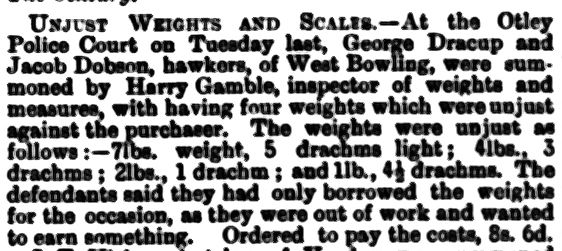
And in January 1893:
‘George Dracup, hawker, of Thirkhill Street, was charged with having stolen, or received, knowing to be stolen, a harness saddle and a pair of reins, of the value of £2, the property of Jeremiah Barker, of the Robinson Hotel, Moody Street. – The Chief Constable stated that on the 12th November the harness was placed in the back yard, and was afterwards missed. The prisoner was found dealing with it a month afterwards, and when arrested he stated that he had purchased the harness from a person whom he did not know.’
The case was adjourned while the defence arranged for character witnesses, but to no avail. George was fined 10s with 26s costs, or 21 days’ imprisonment.

There is an interesting addition:
‘The Chief Constable said gambling had been this man’s ruin, for at one time he was the owner of eleven horses and carts, and he had gambled the whole lot away.’
I found several newspaper reports of a particular gambling incident in February 1887. This is from the Selby Times (my paragraphs):
‘RAID UPON GAMBLERS. – At the Bradford, West Riding Court on Tuesday, nine rough-looking men, named Levi Jowett, Henry Binns, Benjamin McCrae, Holroyd Warburton, Ebor Holroyd, Alfred Baldwin, George Dracup, Simpson Barker, and David Walmsley, were charged with gambling with coins at Clayton, on Sunday afternoon, and a man named John Smith, a labourer, was charged with aiding and abetting the prisoners in this unlawful proceeding.
For some time the public have been subjected to much annoyance by rings of gamblers assembling in a footpath at Clayton on Sunday afternoon for the purposes of gambling. Lookout men were usually placed in several directions to give warning of any person suspected of having connection with the police aurhorities, and it became a rather difficult matter to effect the capture of any of the members of these lawless gangs.
Means, however, were devised to this end by Supt. Ball, of the West Riding Constabulary, in the Bradford division (formerly of Selby) and on Sunday afternoon a successful raid was made upon the gamblers. About a score of police officers were disguised for the purpose, and they assumed different costumes, such as navies, farm labourers, and general “cads”.
As some of them approached the gamblers, they threw into the air a number of pigeons, and stood to watch them with the apparent interest of professional pigeon fanciers. Thy gamblers were completely thrown off their guard, and apparently regarded the pigeon flyers as lawless as themselves.
The latter found no difficulty after the incident in finding access to the gambling rings. There they watched the operations for some time, and at length made a raid upon the offenders, and apprehended the prisoners. The “make-up” of the police officers was so deceptive that some of them, it is said, were captured in mistake for gamblers by some of their fellow officers, and had to give evidence of their identity before they were released.
Evidence was given of the men having been actively engaged in gambling, and they were each committed for two months with hard labour. Smith was remanded till Thursday on the alleged ground that he could prove an alibi’
By 1901, the family was living at 25 Ripley Street, now with two sons as well as two daughters. Mary Jane had stopped weaving, handing that responsibility over to both daughters, while both boys were at school.
Mary Jane died on 15 September 1904, aged just 45 and now resident at 25 Emsley Street, of cervical cancer and exhaustion. George was the informant: he described his employment as greengrocer but he could provide no signature – merely his ‘mark’.

Catherine Liles, nee Catherine Glynn (1871-1945)
At some point, Catherine Liles entered George’s life, marking the beginning of an extraordinary sequence of events.
She had been born Catherine Glynn (or Glenn), in Bradford, on 18 September 1871. Her father was William Glynn, an agricultural labourer, later a mason’s labourer.
In February 1891 Catherine married John William Liles, a dyers’ labourer. They lived in Pollard Street, not too far from George. Altogether, five sons and a daughter were born between 1891 and 1903: Walter (1891), William (1893), Edith (1896), John Edward (1898), Ernest (1900) and Herbert (1903).

(I am most grateful to Valerie Thompson for allowing me to publish this photograph of her great-grandmother, as well as the photograph of her grandmother, below)
On 25 July 1906, John William Liles arrived alone in New York, aboard the SS Carmania. He was heading to an address in Andover, Massachusetts, where his sister Hannah Maria and her husband James Pratt were resident, and was almost certainly looking for work. He returned to England on 15 December 1906.
Then on 14 August 1907, he and eldest son Walter left again for the United States, arriving in Boston, Massachusetts eight days later. They gave as their contact address in England: ‘Cath Liles, 15 Berry Street, Hall Lane, Bradford’.
On 8 March 1908, Catherine gave birth to a daughter. The birth certificate states that her name was also Catherine Liles, that her father was John William Liles, and that she was born at 15 Berry Street. I will call her ‘Kitty’ to distinguish her from her mother.

Assuming that Kitty hadn’t been born prematurely, she would have been conceived around 10 June 1907. It is therefore feasible that John William Liles was the father, as Catherine had claimed on the birth certificate.
However, there is also strong evidence to the contrary.
Firstly, on April 22 1908, a man named George Dracup was served with a bastardy order. The record doesn’t definitively state that it was this George Dracup, let alone provide the name of the mother or child but, on the balance of probabilities, it relates to him.
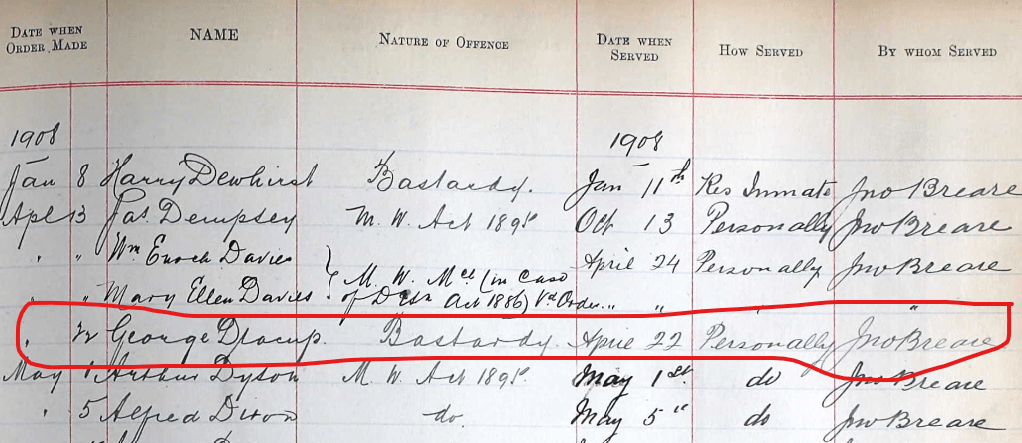
It must mean that Catherine had applied for a maintenance order against George, making him liable for a contribution of five shillings a week to support their child.
By doing so, she was demolishing the fiction that her husband was the father. But perhaps George was reluctant to assist financially…and Catherine may already have been considering how to provide for their baby in her absence.
George may have been short of money, having returned to gambling. On 2 April 1908 there was a big police raid on a ‘gambling school’ at Woodhouse Hill, Bradford, They were playing ‘pitch and toss’ on land above a railway tunnel.
A George Dracup, who gave his address as 25, Muff Street, was one of many rounded up. Each was fined 10 shillings with 7 shillings costs, or seven days’ hard labour.
On 5 May 1908, just eight weeks after Kitty’s birth, Catherine departed from Liverpool for Boston Massachusetts aboard the SS Ivernia with her other five children, aged between 5 and 15, plus a niece for good measure.
Why would she have left her newborn baby behind, rather than taking her across to her husband with all her other children? It seems obvious that, either John William was unaware of Catherine’s pregnancy, or he knew of Catherine’s adultery and had refused to accept the new baby into his family.
Perhaps Catherine had also convinced George that, upon returning to United States, she would seek a divorce from her husband, enabling her to rejoin George in England as soon as she could manage.
If Kitty was left in George’s care, he must have had some female assistance. This would have come from one or both of his older daughters, Beatrice and Sarah Elizabeth, both recently married and both shortly to have their own babies.
Catherine Liles did return again to England in 1909, along with her two next youngest children, now aged 7 and 9. I have not been able to find the passenger record for this journey.
However, the three of them returned once more to Boston in October 1909. The contact address she gave in Bradford was that of an unnamed uncle living at ‘Coldonian Street, Bradford’. (This must be ‘Caledonia Street’, since her brother Michael Glynn lived at Number 45.)
She was heading back to Lawrence, Massachusetts, where her husband had established himself in a house at 23 Portland Street. It looks out, across the railway, at the vast hulk of the Wood Worsted Mill, constructed between 1906 and 1909, six stories high and 400m long.

She stated that England was her last permanent country of residence, but that she had been in the US the previous year. She was described as five feet four inches tall, with a fresh complexion, dark brown hair and grey eyes.
There is a faintly written note directly underneath her entry. It is extremely hard to decipher but I think it says:
‘Husband appeared and guaranteed to take care of wife and children while living here, being [informed] in time.’

One begins to form a picture of a woman, ill-equipped to support herself, shuttling between two potential breadwinners.
The whole family, excepting Kitty, was duly present at 23 Portland Street for the 1910 US Census, taken on 15 April. John William was employed as a labourer. Catherine stated that she had emigrated in 1908 and that she had six children (so excluding Kitty).
Yet, by 2 April 1911, when the Census was taken in England, she had returned to Bradford, this time accompanied by all of her children excepting Walter, the eldest.
The 1911 Census entry is the strongest piece of evidence suggesting that George was Kitty’s father.

Catherine and George were living together at 143 Tennant Street, Bradford. She gave her name as Catherine Dracup, aged 38 (she was 39). They claimed to have been married four years previously and to have had seven children, all of them still living.
All the Liles children were resident with them, excepting Walter. So was ‘Kitty Dracup’, aged 2 (she was actually 3). The children preceding their supposed marriage, all named Liles, were to be assumed the product of a previous marriage, since annulled.
The whereabouts of John William Liles, her true husband, are unclear. Although he had been mentioned in the 1910 edition of the Directory for Lawrence City, Massachusetts, he wasn’t included in the 1911 or 1912 editions.
There is no evidence that Catherine had divorced him, nor any record I can find of a marriage between her and George. This was probably a convenient fiction, designed to prevent scandal and to demonstrate Kitty’s legitimacy.
It was still possible at this time for people to lose their employment for having children out of wedlock. Fortunately, George was self-employed, the 1911 Census entry stating that he now had his own green grocer’s shop, operating out of their home.
There is an interesting, though largely illegible exchange of correspondence included in the WW1 service record for John Edward Liles. It dates from July 1915.
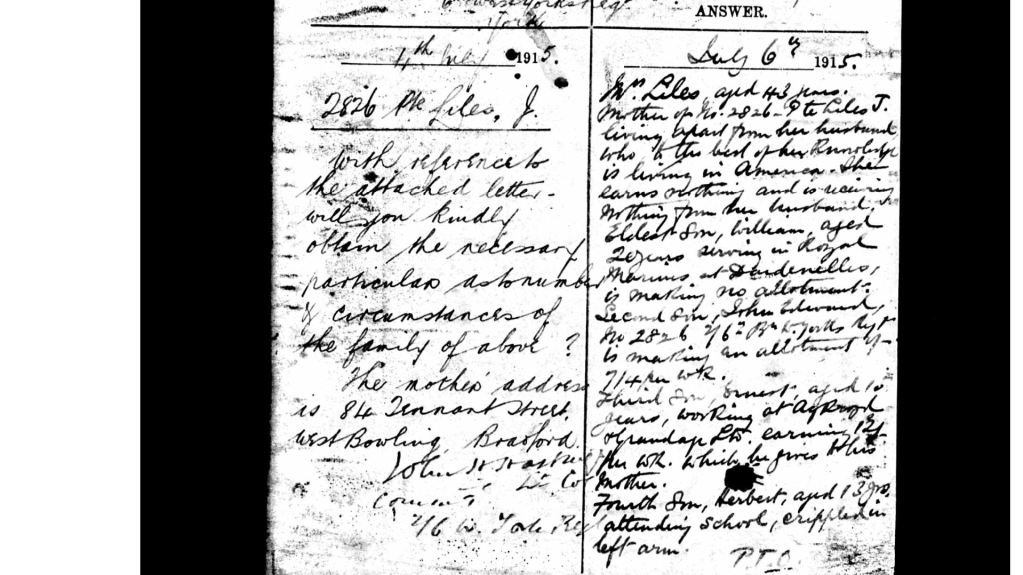

It seems that he had joined up aged seventeen-and-a-half, but his mother mounted a vigorous campaign to have his service delayed. This more readable memorandum describes her situation, citing financial hardship and referring to her marriage:
‘Mrs Liles aged 43 years. Mother of No. 2826 Pte. Liles J, living apart from her husband who is to the best of her knowledge living in America. She earns nothing and is receiving nothing from her husband.
Eldest son, William, aged 20 years serving in Royal Marines at Dardanelles, is making no allotment. Second son, John Edward, No 2826 of 6th Battalion W Yorks Rgt. Is making an allotment of 7/4 per week. Third son, Ernest, aged 15 years, working at Ackroyd [ ] Ltd. Earning 12/- pwk which he gives to his mother.
Fourth son, Herbert, aged 13 years, attending school, crippled in left arm. Daughter Kathleen aged 7 years, attending school. Total family, four sons and one daughter.
The above details were given by Mrs Liles, who seems a decent woman.’
Naturally, George wasn’t mentioned, though they were probably still living together at this point.
Coincidentally, the first Bradford soldier to win the Victoria Cross, Lance Sergeant Samuel Meekosha also lived in Tennant Street, a few doors down at Number 91. Here he is outside his home, with his mother and sisters. The picture was taken in January 1916

It is instructive to compare the 1911 and 1921 Census entries. By the time of the 1921 Census, Catherine Liles was emphatically the head of the household, while George had been relegated to ‘boarder’.
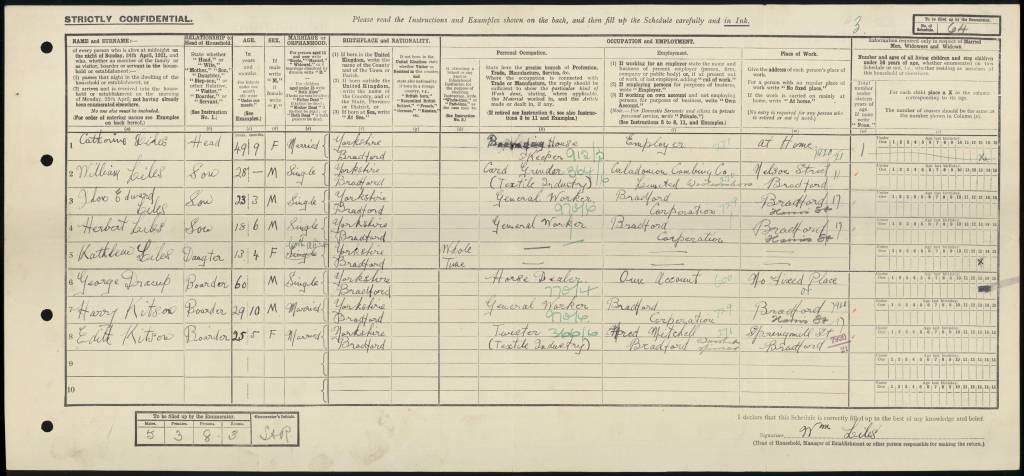
She was still married, aged 49, employed as a boarding house keeper. Her address was now 132 Tennant Street and this was the boarding house. Four unmarried children were living with her, including ‘Kathleen Liles’, now aged 13.
There were also three boarders, all known to her intimately. One was George, aged 60, now stated to be single, employed as a horse dealer. The others were Harry Kitson and his wife Edith, nee Liles, Catherine’s married daughter.
It is impossible to know whether Catherine and George were still in a relationship at this point. If so, the excuse for their living together in the same house had changed, while Kitty no longer bore his surname.

This might have had something to do with the fact that John William Liles had definitely returned to England at this point. He was boarding with the Taylor family at 19 Newington Street, Bradford and was working at Ripley’s Dyeworks in Bowling. But he also now described himself as single.

George died on 14 March 1926 at St Luke’s Hospital, Horton, allegedly aged 64. His address was given as Broadbent Street, Horton, so he had eventually departed from Tennant Street.
It is unlikely to be a coincidence that his former daughter-in-law, Emily, nee Perkins, lived at 21 Broadbent Street with her second husband, Patrick McCarten (see below).
George’s employment remained ‘greengrocer’. The cause of death was pneumonia and shaking palsy. His death was reported by his other son, Harry, but he wasn’t living at the same address as his father.

Catherine Liles appeared in the 1939 Register, living alone as a 68 year-old ‘widow’ at 2 Mary Gate, Manchester Road, Bradford.
In fact, her husband John William Liles was to outlive her. In 1939 he was resident with his daughter and son-in-law, Edith and Harry Kitson, who were now running the Station Hotel, at 7 Arctic Parade, Manchester Road, no more than a mile from Catherine’s home. He now stated that he was married.
Catherine died in 1945 aged 73 and John William on 16 March 1948 aged 77. At the time, his address was 14, Hawes Mount, Little Horton, where the Kitsons also lived.
George’s surviving children
Beatrice was born on 18 October 1882.
By 1901, she was working as a worsted weaver. Then in November 1905, aged 23, she married Edgar Lupton, 25, a carrier living at 12 Tennant Street. His father was John William Lupton, also a carrier, or drayman for a cloth washing company.
By 1911, Beatrice and Edgar Lupton were living at 442 Manchester Road. Edgar remained a carrier, but now worked for a railway company, while Beatrice worked as a greengrocer, on her own account, from their home.
Her two younger brothers were boarding at the same address, (both employed as ‘hawker – greengrocer’) and the couple also had a baby daughter, Lily.
In 1921, the family was still at 442 Manchester Road, but Edgar was now the greengrocer, working from home, while Beatrice was his greengrocer’s assistant!

His change of career may date from 1913 since he several times advertised a pony and cart for sale that year. Lily was at school and they were joined by a niece, also called Beatrice (see below).
Edgar died in 1935. By 1939, Beatrice was living at 86 Moore Avenue, but no longer working. She was still accompanied by Lily, now a clerk for a wholesale fruit market (see below), and by her widowed sister Sarah Elizabeth Holmes (see below), now a fruit and vegetable dealer. Beatrice died in 1955.
Sarah Elizabeth Holmes, born 5 July 1884, was working as a cotton weaver in 1901.
She married Vincent Emsley in September 1907, aged 23 when, appropriately enough, she was resident in Emsley Street. Vincent, then aged 24, was employed as a Twister, the son of Joshua Emsley, a warehouseman.
By 1911, Vincent and Sarah were living at 14 Ramsey Street. Vincent remained a warp twister and they had a one year-old daughter, Doris.
In 1921, they were living at 2 Carr Street, Bradford and Vincent had become a…greengrocer. Sarah was shown as his willing assistant, just as her sister was now Edgar’s assistant.
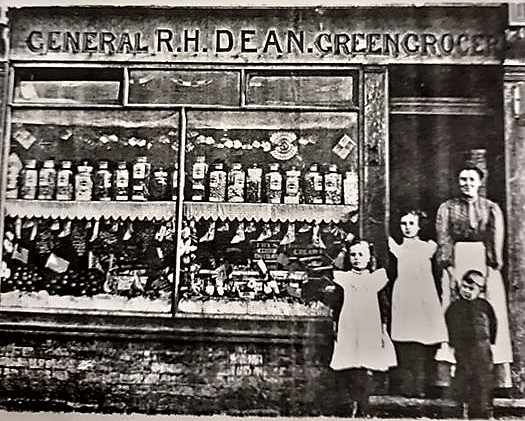
Their daughter was now 11 and they were joined by Vincent’s widowed father Joshua, described as ‘ill’. He was to die in 1926, but his son outlived him by only three years, succumbing in 1929.
As stated above, by 1939, ‘Elizabeth Emsley’ was living with her sister and working as a fruit and vegetable dealer. She died in 1949.
Marshall was born in 1892. By 1911 he was a ‘hawker greengrocer’ boarding with his sister and brother-in-law, the Luptons.

In 1914, he married Emily Charlotte Perkins, daughter of Charles and Mary Elizabeth Perkins. They had two children, Beatrice, born in June 1914, later a nurse, and Ernest, born in 1916, who was killed in Sicily during WW2.
On Saturday 24 November 1917 there was a bad storm in Bradford, with strong winds and heavy rain. The Bradford Weekly Telegraph reported:
‘The most serious incident of the storm in Bradford occurred in the stable yard in Ripley Street about three o’ clock on Saturday afternoon. A wall 10 feet high was blown down for a distance of five or six yards, and a young man and boy were buried beneath the debris. Passers-by heard the boy shouting, and both the man and boy were soon rescued. Marshal Dracup (24 years) of 39, Tudor Street, who was seriously hurt, was detained at the Royal Infirmary. He received injuries to the leg and body, and a scalp wound.’
The death certificate reveals that he died on 30 December 1917, aged 25, at the temporary Union Workhouse Hospital Bowling, Bradford. The cause of death was:
‘Fracture of the spine and compression of the spinal cord caused by having been accidentally knocked down and crushed beneath a falling wall in Ripley Street Bradford aforesaid on the 24 day of November 1917.’

An inquest had been held on 2 January 1918 by H E Milnes, the Deputy Coroner, but I have been unable to track down press coverage.
Emily remarried Patrick McCarten in 1920 and died in 1977.
Harry was born on 10 April 1894. In 1911, he too was a ‘hawker greengrocer’ boarding with the Luptons. But in 1912, he married Florence Wilkinson, a wool spinner and daughter of James Wilkinson, a woolcomber.
They had one son, Marshall Noel, born in 1912. I cannot find Harry and Florence in the 1921 Census. By 1939 they were living together at 132 Paley Road and Harry’s employment had changed to…‘Greengrocer: mixed’. Harry died in 1970 and Florence in 1980.
As for Kitty, on 17 July 1926, aged 18, she married a 22 year-old journeyman painter called Herbert Emmott Smith.
On the marriage record her father’s name was given as ‘John William Lyles (deceased)’ (he was of course very much alive) and his employment as ‘greengrocer’.
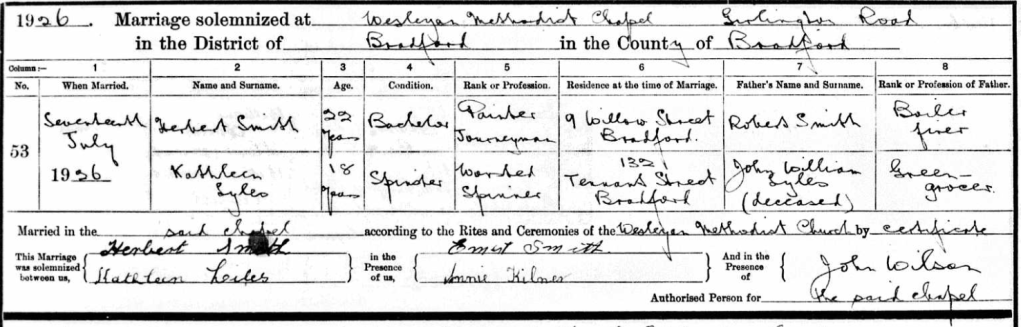
George Dracup was a deceased greengrocer, however, having departed just four months previously.
Her address at the time of her marriage was 132 Tennant Street, indicating that the Liles family was still resident there after George’s death.
Indeed, we know that Catherine’s youngest son Herbert Liles lived at this address until 1936, most probably with Catherine herself. Sadly, he died there on 19 June that year, of coal gas poisoning. The inquest concluded that this was self-administered while ‘in a temporary state of insanity’.
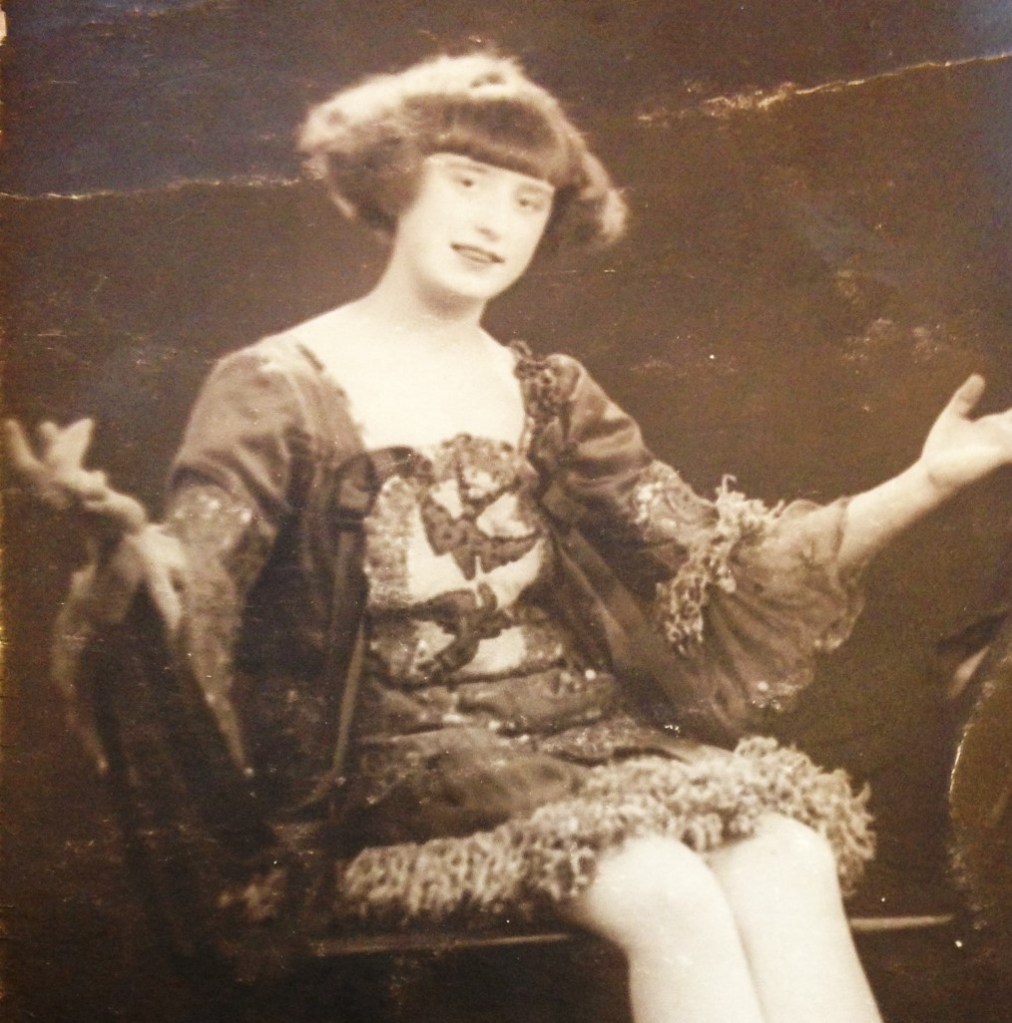
Kitty and Herbert Emmott Smith had five children together.
I can find Herbert in the 1939 Register, living at 20 Stanage Nook in Shelf. It looks as though three children were with him, but two of the names are still blanked out.
I believe I have found her too, a patient at Halifax General Hospital Salterhebble, where she had just given birth to a son, Herbert Jack Smith. She was using the name ‘Kathleen Smith’ and gave the correct date of birth, but a year later – so 1909 rather than 1908, as in the 1911 Census.

Kitty died in 1979 and Herbert in 1989.
Benjamin Dracup (1862-1928) and Mary Ann, nee Palliser
A degree of normality returns to this narrative, since Benjamin and his family seem to have led rather less extraordinary lives.
In 1881, Benjamin was still living at home, working as an overlooker like his father. On 18 December 1886 he married Mary Ann Palliser at the Parish Church, Bradford.
He was 21, employed as an overlooker of worsted spinners, resident at 87 Round Street, Bowling. She was 26, a weaver, daughter of John Palliser, described as an innkeeper and Mary Ann, nee Worfolk, his first wife. Mary Ann was resident at 426 Leeds Road, Bradford. She left her mark; he signed his name.

John Palliser was described as a greengrocer in both the 1881 and 1891 censuses. However, in October 1886, when charged with stealing a horse, he was a publican, landlord of the Adelphi Hotel on the Leeds Road (a predecessor of Abram Ambler, above, who also ran the Adelphi). He was acquitted of the charge.
Palliser seems to have declared himself bankrupt in both 1889 and 1901. On the latter occasion, he was described as a ‘hawker and fruit salesman of St James’s Market…in business for 40 years in Leeds and Bradford’.
The Bradford Daily Telegraph reported:
‘The Official Receiver (Mr J A Binns) has issued to the creditors a statement of the affairs of John Palliser, residing at 14 Mosscar Street, Bradford, and lately carrying on business as a fruit salesman at St James’s Market, under the style of “Palliser and Son”. The liabilities are £73 8s 6d and there is a deficiency estimated at £62 8s 6d. The bankrupt attributes his insolvency to depression in trade, competition, and want of capital. About twelve years ago he made an assignment for the benefit of his creditors, and subsequently obtained an administration order in respect of the same debts, his creditors receiving 2s 6d in the pound.’
The 1891 Census placed Benjamin and Mary Ann at 17 Tichborne Road, Bowling. Benjamin continued as an overlooker, and they had two young sons, Frank and Frederick. A daughter, Lily, had been born in 1887 but died the same year.
By 1901, the family was at 11 Upper Seymour Street but, otherwise, little had changed. But by 1911, though still at the same address, Benjamin had also turned to greengrocery.
Though, in 1921, he had switched again, to being a ‘General Carrier’. Benjamin died in 1928, aged 65, while Mary Ann lived until 1937.

In 1911, Benjamin’s sons Frank (1888-1957) and Fred (1890-1964) were both working as pig dealers, though by 1921 they were also general carriers, like their father.
In November 1911, Fred appeared in Court:
‘A Youthful Bookmaker – at Bradford City Court yesterday, Fred Dracup, aged twenty-one years, of Upper Seymour Street, pleaded guilty to a charge of street betting in Leeds Road. It was urged on his behalf that he had been led into the business by people asking him to “get money on” for them. He had lost money on the proceedings. A fine of £5, including costs, was imposed.’
I wonder if Uncle George was one of those people!
Fred married Grace Ellen Murgatroyd, a 43 year-old widow, in July 1934. She had two sons from her first marriage.
Her first husband had been Fred Ford (1886-1924), previously a barman, though the 1921 Census described him as a coachbuilder, out of work and a striker, employed by Eric Myers. Grace, a weaver, was also unemployed at that point.
Fred Ford’s WW1 service record survives. He was in the 6th Battalion of the West Yorkshire Regiment, later transferring to its 5th Reserve Battalion. When he enlisted, he was a packing case maker and riveter, but stated that he had previously served in the 4th Battalion of the Yorkshire Regiment. He was wounded in both feet on 3 September 1916 in France, and discharged in May 1917 owing to ‘wounds caused or aggravated by serving overseas’.
Fred Dracup again appeared in court in September 1936, this time Pudsey Borough Court, charged with another man, George Clarke:
‘…under Section 73 of the Public Health Act with endangering the health of the public by exchanging whistles, swinging birds and other toys for rags and bones and old jam jars…
Police Sergeant Spencer said Dracup had charge of a pony and cart and collected the rags while Clarke walked alongside with a box of toys in his arms. Dracup said they had been told by the dealer who took their rags that if they did this the law could not touch them.’
Since this was the first such case to come before the Court, they were dismissed on payment of costs.
In 1939, Frank was still a carrier, using a horse and cart, and was still resident at 11 Upper Seymour Street. He was unmarried. He died in 1957.
In 1939, Fred and Grace Ellen were resident at 50 Park Street, Bradford, now with a five year-old daughter, Rita. Fred also remained a general carrier. He died in 1964; Grace Ellen died in 1975.

Postscript: St James’ Market
So many individuals from this branch of the Dracup family were fruit and vegetable sellers.
There was a hierarchy in this business, though it wasn’t always clear-cut. The least well-equipped were hawkers, typically selling their wares from a hand-held basket. A rung above were costermongers, who would typically sell from a cart, whether propelled by hand or horse-driven. It might also be stationary, effectively forming a temporary market stall. Then there were full-fledged greengrocers, who might sell from a permanent market stall and/or a shop, often part of their home.
But contemporary Bradford newspapers only rarely apply the term ‘costermonger’ to local men and women, reserving it almost exclusively for Londoners. They tend to use ‘hawker’ to describe those selling from a cart.
In practice, there was a continuum between less established hawkers, living a hand-to mouth existence, and prosperous greengrocers with substantial shops.
In all cases, their function was to distribute fruit and vegetables obtained from wholesale markets, making it more convenient for working customers to purchase, and making a profit in the process. The wholesale business offered an additional opportunity for those with profits to invest.

Bradford’s own wholesale fruit and vegetable market – the St James’s Wholesale Market – was constructed in the 1870s, near the Leeds Road. It was to consist of:
‘… sixteen large potato warehouses, and thirty wholesale fruit warehouses. These buildings will form two sides of a broad avenue down the centre of which will be covered sheds for thirty market gardeners’ wagons. The estimated cost is about £14,000. Sidings will be laid from the Great Northern Line adjoining.’
The Bradford Daily Telegraph of 13 July 1874 reported on the opening:
‘This forenoon the wholesale fruit and fish market, known as St James’s Market, which is adjacent to Hammerton Street, Leeds Road, was formally opened by the Mayor…
Alderman Law, as chairman of the Markets Committee, then addressed the assembly. He said they were present for the purpose of formally opening that admirable market place. The premises had been erected after considerable thought and attention had been bestowed on the subject by the Markets Committee, in order to afford increased facilities and accommodation…The new market had been erected at considerable cost; but he hoped that it would be repaid by the increased comfort and convenience of all parties.’
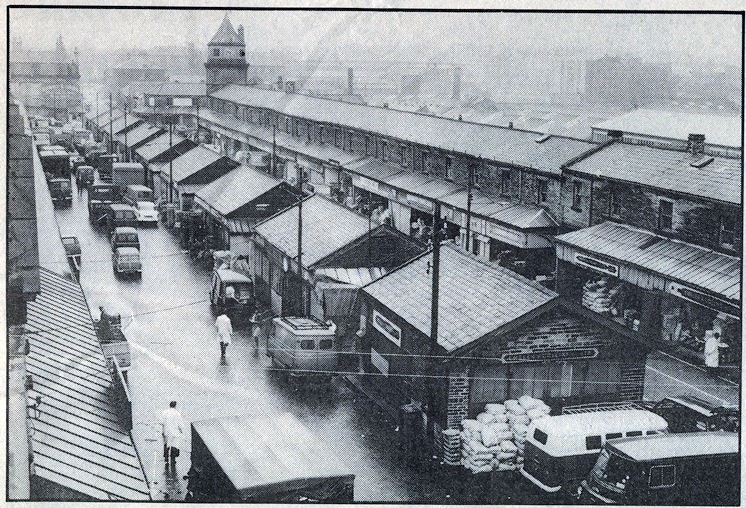
But the new Market was not without its problems. In 1879, the Council discussed the problem of waste:
‘The Markets Committee had a difficulty with the refuse, particularly from the wholesale market, such as dead and putrid fish and decayed vegetables. Some of the members of the Council had been to Leeds, and they saw there that the Leeds Corporation were destroying different articles which he had named and getting rid of a great nuisance. At Leeds they had what was called a destructor, and also a carboniser, the latter being intended to convert certain things into charcoal for manure…It was not the intention of the Bradford Corporation to put up a carboniser, but their object was to put up a destructor, and so by fire purify objectionable and offensive matter.’
And in March 1892:
‘A correspondent writes to me in very indignant fashion asking whether the control at the St James’ wholesale market is in the hands of the police or of roughs. He asserts that no-one can pass through the market without risk of molestation, and begs for more attention to the spot on the part of the police.’
New cold stores were installed in 1901, by which time weekly reports had begun to be published in the Bradford Daily Telegraph detailing the produce available.
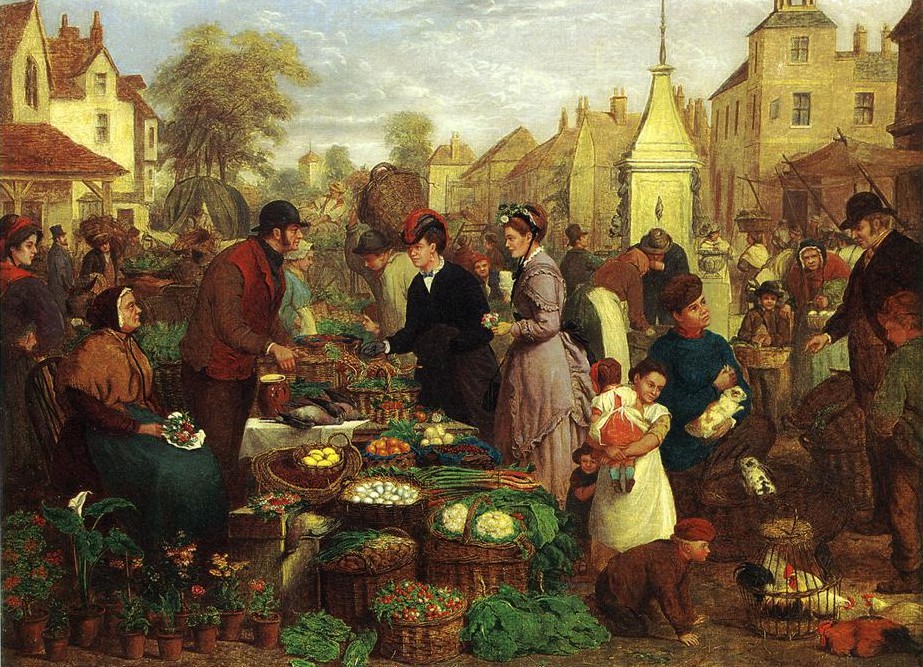
This example is from September 1909:
‘Trade on the fruit and vegetable side of St James’s Wholesale Market has been better during the last few days.
One of the principal lines just now consists of blackberries, for which there is a good demand. The rain and lack of sun have interfered with the crop, which is by no means heavy, and good prices prevail.
Plums are getting towards the end of only a moderate season, and prices have gone up.
The prospect in regard to apples gets no better, and it looks as if they are going to be dear. Large English are difficult to obtain. Americans are now arriving in fair quantities.
There is nothing much better to be said respecting pears. Hazels are particularly scarce. Tomatoes are fairly reasonable.
After a bad experience in respect to cauliflowers earlier in the year, housewives will be pleased to hear that some good Yorkshire grown are now arriving, and the price should be easier than what it has been.
Mushrooms are coming better, and the best made today up to 9d per lb. Large specimens were much cheaper.’
These reports continued throughout the Great War, when the market continued to operate, though there were occasionally shortages of different fruits and vegetables, and prices increased substantially.

Although the connection is rarely made in the evidence, it is highly likely that all these Dracup hawkers and greengrocers had a close connection with St James’s Market, and would have been found there often during the course of their daily business.
It was clearly attractive to escape the mills and factories and ‘work on one’s own account’, but greengrocery did not always generate a large enough profit for these men and women to live comfortably. Some experimented with greengrocery, only to return to more more secure employment.
There must have been intense competition from rivals and, particularly for hawkers, out on the streets in all weathers, life could be extremely hard. These men often had to struggle to earn a living. They were regularly at odds with the police, whether for cruelty to their horses, allowing them to stray, using ‘light measures’, drunkenness or some other misdemeanour. Few seemed to live beyond middle age.
In 1976 St James’s Market was transferred to a different site, off the Wakefield Road.
TD
September 2024


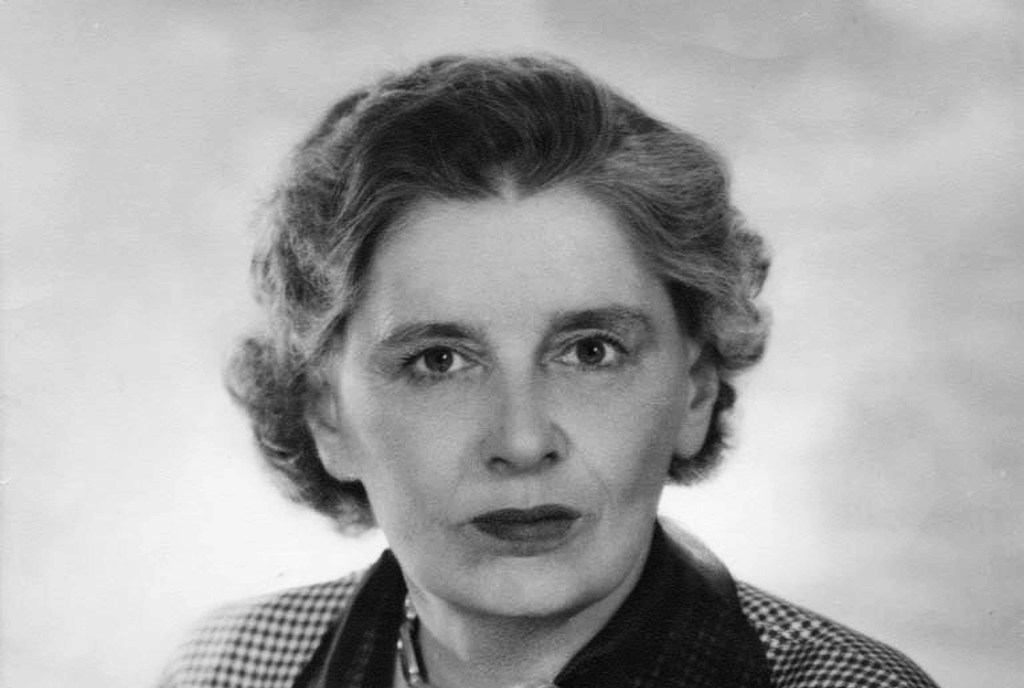


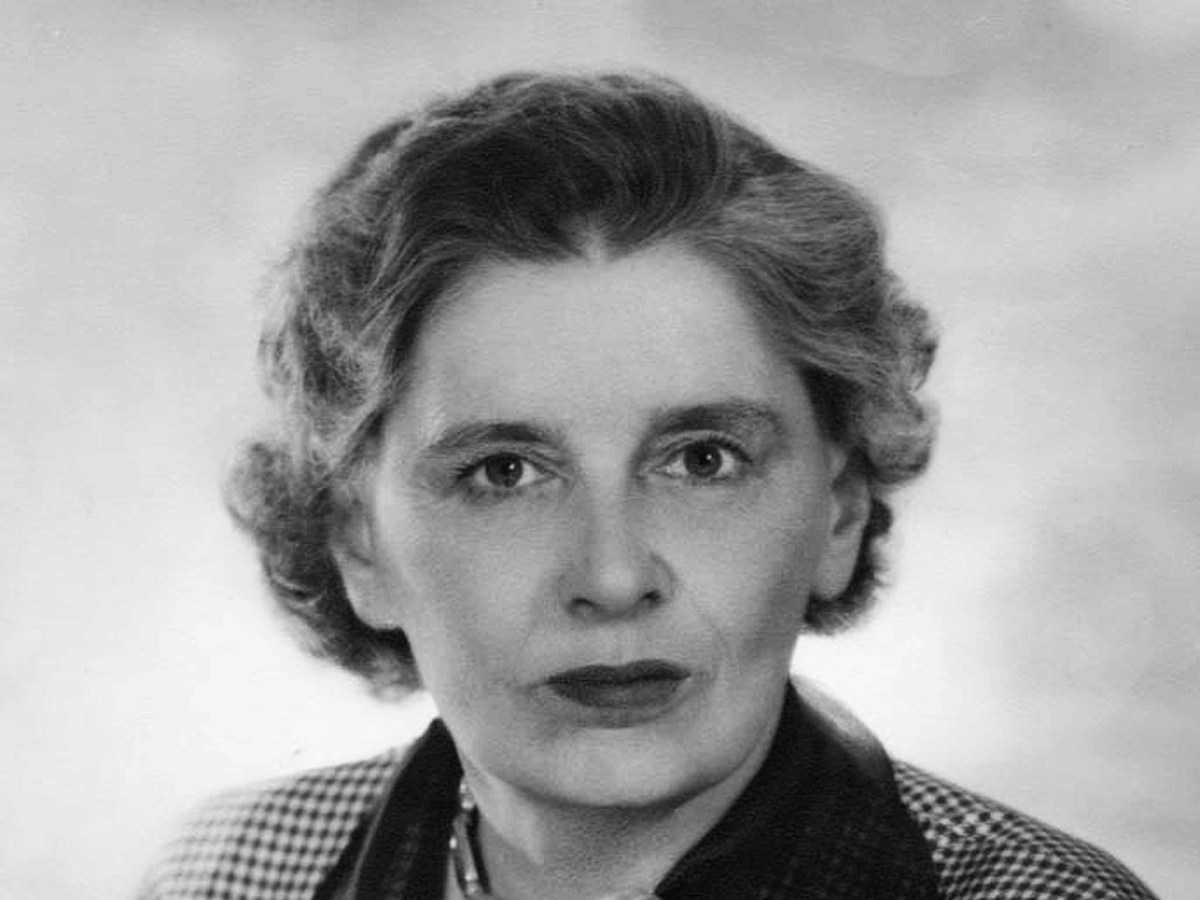




Leave a Reply