J.M. Coetzee – Disgrace

John Maxwell Coetzee was born in 1940 in Cape Town, South Africa. He attended a Catholic school and then the University of Cape Town. After three years working as a computer programmer in England, he completed a PhD on Samuel Beckett at the University of Texas, Austin, then spent a further three years teaching English … Continue reading J.M. Coetzee – Disgrace

The Old Boys – William Trevor

William Trevor Cox (1928-2016) disposed of his surname for writing purposes. He was born in County Cork, Ireland, to James Cox, a bank manager, and Gertrude, nee Davison, originally from Ulster. They were a Protestant family. It was not a particularly happy childhood and, owing to his father's postings, Trevor spent it in several different … Continue reading The Old Boys – William Trevor

It Can’t Happen Here – Sinclair Lewis

Harry Sinclair Lewis (1885-1951) was born in rural Minnesota, the youngest child of a doctor. When he was six, his mother died and his father remarried. Lewis attended Yale, graduating in 1908, after which he worked as editor for a variety of newspapers and publishers. His first serious novel appeared in 1914 but success eluded … Continue reading It Can’t Happen Here – Sinclair Lewis

Portrait in Brownstone – Louis Auchincloss

Louis Auchincloss (1917-2010) was born into a privileged family of businessmen, lawyers and stockbrokers. Though, according to him, the Auchincloss menfolk owed their wealth, not to inheritance, but to advantageous marriages and their personal acumen. He studied at Yale but, midway through his degree, transferred to read law at the University of Virginia, eventually graduating … Continue reading Portrait in Brownstone – Louis Auchincloss

Offshore – Penelope Fitzgerald

Penelope Fitzgerald (1916-2000) was born Penelope Knox, her parents being Edward Knox, a poet and later Editor of 'Punch' and Christina, nee Hicks, daughter of the Bishop of Lincoln. She graduated from Somerville College, Oxford in 1938, and in 1942 married Desmond Fitzgerald, a barrister. Ten years later he was caught forging signatures on cheques … Continue reading Offshore – Penelope Fitzgerald

Heat Wave – Penelope Lively

Dame Penelope Lively was born Penelope Margaret Low in Cairo, Egypt, in 1933, to Roger Low, a bank manager, and Vera, nee Greer. When her parents divorced in 1945, her father sent her to an English boarding school, from which she proceeded to St Anne's College, Oxford, where she read modern history. Shortly after graduating … Continue reading Heat Wave – Penelope Lively

Delta Wedding – Eudora Welty

Eudora Welty (1909-2001) was born in Jackson, Mississippi, at the south-eastern extremity of the Mississippi Delta. The Delta is an alluvial floodplain of some 7,000 square miles, spreading across north-west Mississippi, between the Mississippi and Yazoo Rivers. Welty studied at the Mississippi State College for Women, the University of Wisconsin and Columbia University before returning … Continue reading Delta Wedding – Eudora Welty

Billiards at Half Past Nine -Heinrich Böll

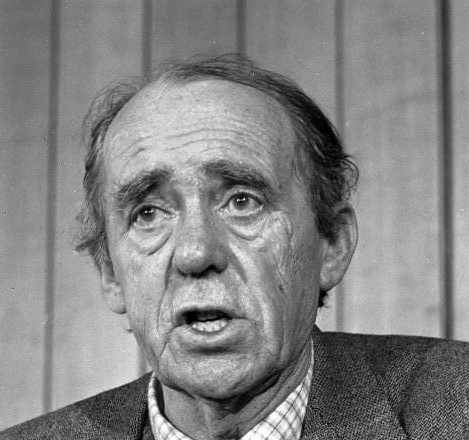
Heinrich Böll (1917-85) was born into a Roman Catholic, pacifist family in Cologne, Germany. He was conscripted in 1939, shortly after beginning a degree in German and Philology at the University of Cologne. He served for five years in several countries and was four times wounded. On leaving hospital in August 1944, he tried to … Continue reading Billiards at Half Past Nine -Heinrich Böll

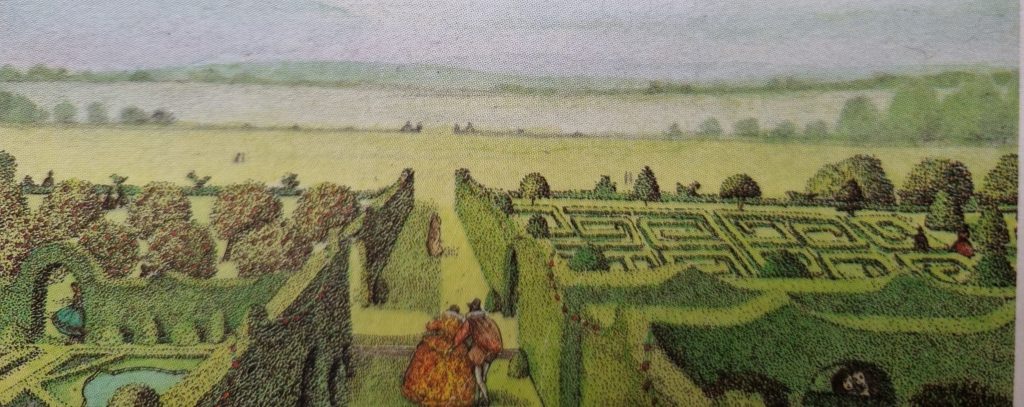
The Virgin in the Garden – A. S. Byatt

A.S. Byatt (1936-2023) was born Antonia Susan Drabble, the eldest child of a barrister (later a QC) and an academic. One of her younger siblings was the novelist Margaret Drabble (b. 1939). Byatt was born in Sheffield, but the family moved to York to avoid German bombing during WW2. Shortly after graduating from the University … Continue reading The Virgin in the Garden – A. S. Byatt

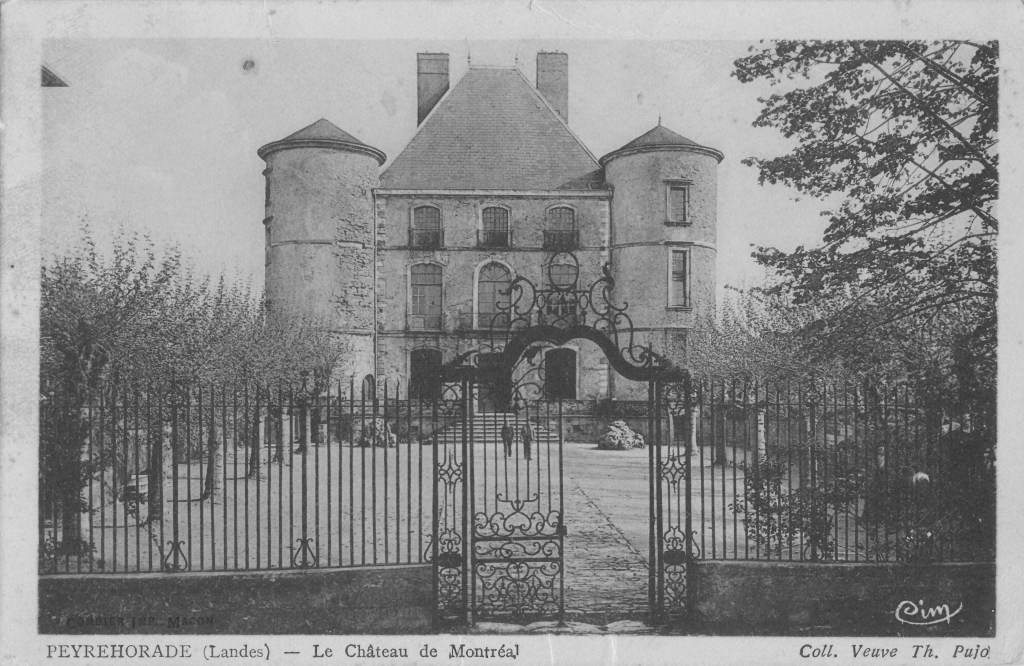
The Chateau – William Maxwell

William Keepers Maxwell (1908-2000) edited the New Yorker magazine from 1936 to 1975. He wrote six novels over roughly the same period, the penultimate being The Chateau (1961). Maxwell married a painter called Emily Gilman Noyes (1921-2000) in May 1945. In 1948, three years into their marriage, the couple took a trip to France. He … Continue reading The Chateau – William Maxwell

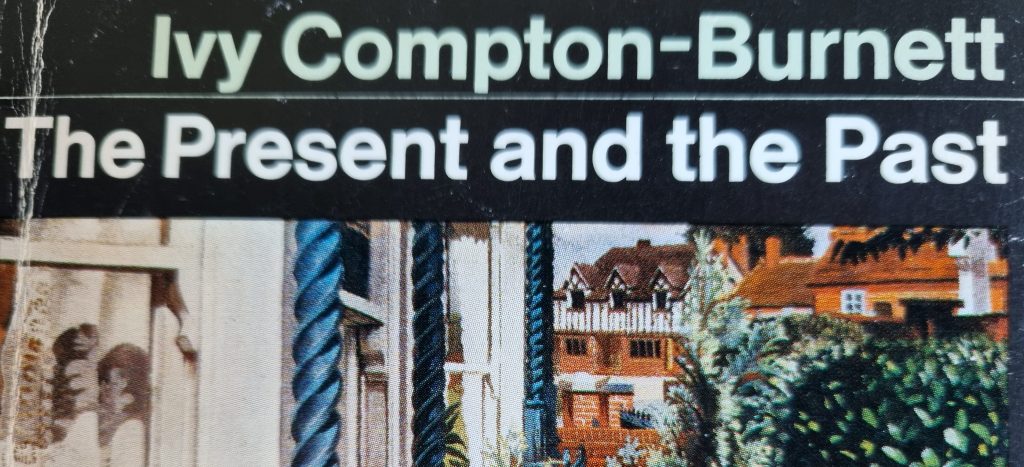
The Present and the Past – Ivy Compton-Burnett

Ivy Compton-Burnett (1884-1969) wrote some twenty novels, 'The Present and the Past' (1953) coming relatively late in her career. Her parents were the medical author James Compton-Burnett and his second wife, Katharine. She was the seventh of twelve children: eight girls and four boys. Despite the hyphen, their origins were relatively humble. Home educated until … Continue reading The Present and the Past – Ivy Compton-Burnett

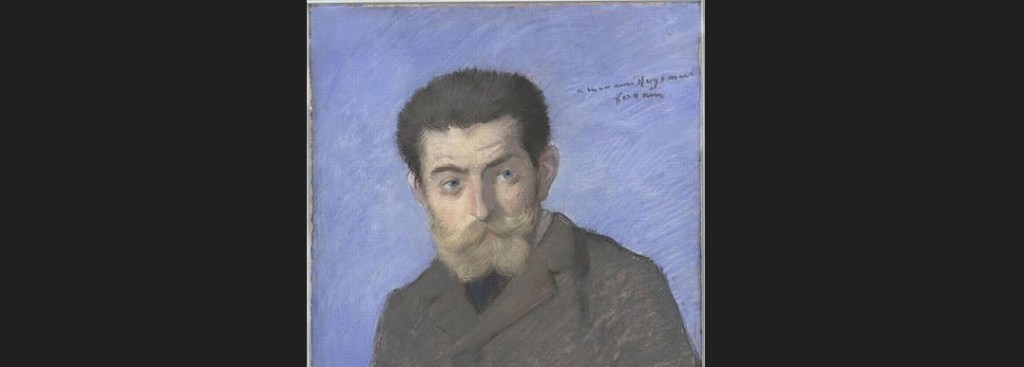
The Damned – J.-K. Huysmans

Novelist Joris-Karl Huysmans (1848-1907) is best known for 'Au Rebours' (Against Nature) (1884), widely regarded as a seminal work in the French Decadent tradition. 'La-bas' (The Damned) was published seven years later in 1891. I read the 2001 translation for Penguin Classics by Terry Hale. Huysmans was employed as an administrative civil servant in the … Continue reading The Damned – J.-K. Huysmans

The Nebuly Coat – John Meade Falkner

This is John Meade Falkner (1858-1932), best known as the author of Moonfleet (1898), a riproaring tale of smuggling and derring-do. I remember it being read to us in primary school. Sometimes, when he was tired, Mr Smith, bespectacled and ginger-bearded, would ask me to take his place, reading aloud to the class. It was … Continue reading The Nebuly Coat – John Meade Falkner

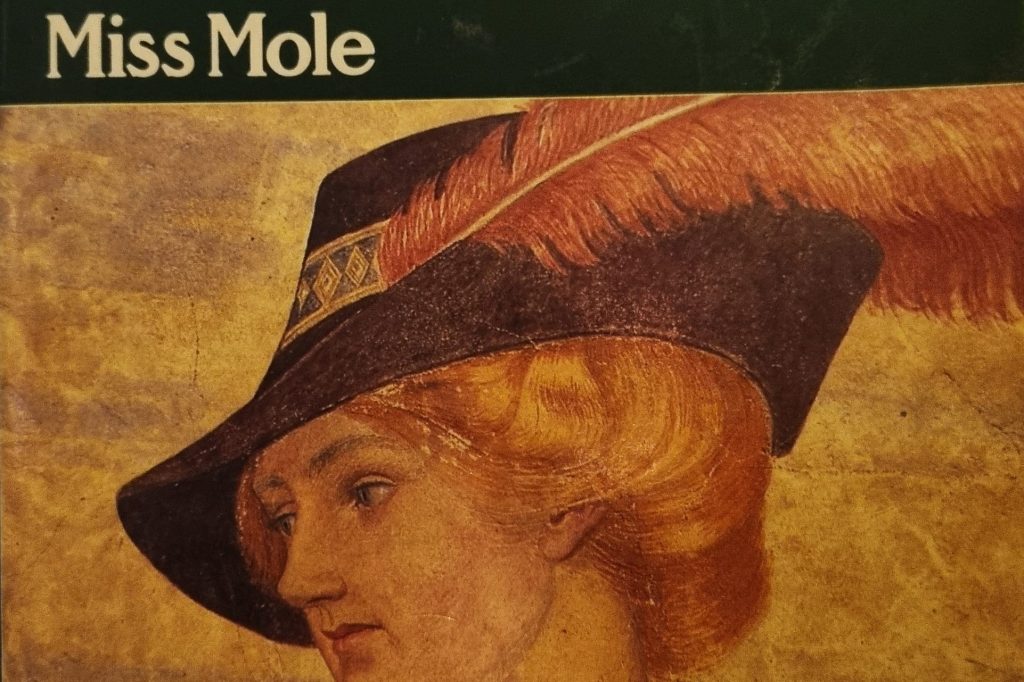
Miss Mole – E H Young

Emily Hilda Young (1880-1949) enjoyed an unconventional life. She married a solicitor, John Arthur Daniell, settling in Clifton, Bristol. But she also began a lifelong affair with Ralph Bushill Henderson, a married teacher, theologian and fellow mountaineer. Henderson had married Beatrice Mansfield in 1901. Although well into his 40s, Daniell served as a Sergeant Instructor … Continue reading Miss Mole – E H Young

That was 2024

It's been a lively year here on Eponymous (aka timdracup.com) This is my 26th post: I've been writing the equivalent of a new post each fortnight. Exactly half have been book reviews. There were also ten travelogues, one Dracup family history blockbuster and one bereavement-related post in memory of my late wife, Kate. Starting with … Continue reading That was 2024

The Jewel in the Crown – Paul Scott

Paul Scott (1920-1978) won the Booker Prize shortly before his death and acquired posthumous fame when the 'Raj Quartet' - his tetralogy of novels about the final years of British rule in India - was televised in 1984. The first in the sequence is 'The Jewel in the Crown' (1966), which gave its name to … Continue reading The Jewel in the Crown – Paul Scott

The Romantic – Hermann Broch

Despite half a century's engagement with literature, Hermann Broch (1886-1951) was completely new to me. Between 1931 and 1932 he published a trilogy of self-contained novels, collectively called 'The Sleepwalkers'. Together they span a period of thirty years, set in 1888, 1903 and 1918 respectively. Each is intended to capture the zeitgeist: in 1888 this … Continue reading The Romantic – Hermann Broch

Her Son’s Wife – Dorothy Canfield

Dorothy Canfield (1879-1958) published 'Her Son's Wife' in 1926. It is set in Gilmanville, a fictional place in small-town America, between 1908 and 1925. The 'her' in question is Mary Bascombe, a middle-aged widow. Though a determined, highly capable teacher and mother, she seems incapable of understanding or forgiving weakness in others. Her son, Ralph, … Continue reading Her Son’s Wife – Dorothy Canfield

The Mountain Lion – Jean Stafford

Jean Stafford (1915-1979), though better known as a short story writer, also published three novels. Her second, 'The Mountain Lion' appeared in 1947, not long before the collapse of her first, unhappily tempestuous marriage with the poet Robert Lowell (1917-1977). Stafford herself had been born in Covina, California, the youngest of four children, later moving … Continue reading The Mountain Lion – Jean Stafford

The Bird in the Tree – Elizabeth Goudge

Well, this is a thoroughly nasty little novel, and no mistake! Elizabeth Goudge (1900-1984) published 'The Bird in the Tree' in 1940. It is the first part of a trilogy, the companion volumes written in 1948 and 1953 respectively. Goudge was born into a wealthy academic-religious family and never married, living with her mother after … Continue reading The Bird in the Tree – Elizabeth Goudge

The Petty Demon – Fyodor Sologub

Fyodor Sologub was the pseudonym of F K Teternikov (1863-1927), a poet and novelist, part of the Russian Symbolist movement. Here he is, circa 1910, posing alongside his wife, Anna Chebotarevskaya. He began writing 'The Petty Demon' in the 1890s, but couldn't get it published until 1907. Sologub draws heavily on his own personal experience. … Continue reading The Petty Demon – Fyodor Sologub

The Squire’s Daughter – F. M. Mayor

Flora MacDonald Mayor (1872-1932) is best known for 'The Rector's Daughter' (1924), often cited as a neglected masterpiece. 'The Squire's Daughter' (1929) is not quite in that league - is perhaps more of a curate's egg. It deals with the 'generation gap', as it manifested a century ago, between two generations of the De Lacey … Continue reading The Squire’s Daughter – F. M. Mayor

The Late Mattia Pascal – Luigi Pirandello

Pirandello (1867-1936) published 'Il Fu Mattia Pascal' in 1904, three decades before he was awarded the Nobel Prize for Literature. I read the 1964 translation by William Weaver. The novel was written shortly after the Pirandello family were bankrupted, causing his wife's mental collapse. But it successfully established his literary reputation. As it begins, Mattia … Continue reading The Late Mattia Pascal – Luigi Pirandello

Cullum – E. Arnot Robertson

E. Arnot Robertson was the pseudonym of Eileen Arbuthnot Robertson (1903-1961) and ‘Cullum’ was her first novel, published in 1928. As with many other debut novels, it draws heavily on the writer’s own life. Like her heroine, Esther Sieveking, Robertson spent her childhood at Holmwood in Surrey, moving to London in 1917. Two years later, … Continue reading Cullum – E. Arnot Robertson

The House of the Spirits – Isabel Allende

This is something of a departure for me, because this novel, which was written within the last half century, remains extremely popular, and its author is still alive. Isabel Allende (b.1942) published ‘The House of the Spirits’, her first novel, in 1982. The English translation from the original Spanish appeared three years later. It takes … Continue reading The House of the Spirits – Isabel Allende

Impatience of the Heart – Stefan Zwieg

Stefan Zweig (1881-1942), seen here in 1936, was an Austrian Jew. He was a hugely popular writer in the 1920s and 1930s, but then went out of style. Now he is fashionable again. 'Impatience of the Heart' ('Ungeduld des Herzens' in the original German) was first published in 1939, the English translation called 'Beware of … Continue reading Impatience of the Heart – Stefan Zwieg

Letty Fox: Her Luck – Christina Stead

Christina Stead (1902-83) was a native Australian who lived much of her life elsewhere. She wrote this novel – often regarded as one of her best – in 1946, after spending several years in New York. It is a ‘bildungsroman’, narrated by the precocious Letty, describing her development into womanhood. Her parents are separated. She … Continue reading Letty Fox: Her Luck – Christina Stead

The Rock Pool – Cyril Connolly

Cyril Connolly (1903-74) was primarily a literary critic, publishing this, his only novel, in 1936. It falls into the category of books about writing books, or researching them at least. Our anti-hero, Edgar Naylor, is partly an autobiographical study, and partly modelled on someone who later died in WW2 . He is employed as a … Continue reading The Rock Pool – Cyril Connolly

The Fortnight in September – R C Sherriff

Robert Cedric Sherriff, best known for the play 'Journey's End', published this novel in 1931. It describes a fortnight's family holiday in Bognor Regis, circa September 1930. Mr Stevens, a clerk, travels by train to the seaside, accompanied by his wife, teenage son and daughter and younger son. They stay with their usual landlady, Mrs … Continue reading The Fortnight in September – R C Sherriff

The Land of Green Ginger – Winifred Holtby

Winifred Holtby, best known for her posthumous novel 'South Riding', published 'The Land of Green Ginger' in 1927. The title is the name of a street which the heroine, Joanna, encounters as a child. In the novel, it is located in the town of Kingsport; in reality, it exists in Hull. Joanna, who was born … Continue reading The Land of Green Ginger – Winifred Holtby

Novel on Yellow Paper – Stevie Smith

'Novel on Yellow Paper' (1936) was the first of three written by Stevie Smith, now better remembered as a poet. The book is about writing a book - and is also the book that results. The author is nominally one Pompey Casmilus, a publisher's private secretary, who records her thoughts on yellow paper, to distinguish … Continue reading Novel on Yellow Paper – Stevie Smith

Little Boy Lost – Marghanita Laski

Marghanita Laski (1915-1988) published 'Little Boy Lost' in 1949. It concerns Hilary Wainwright, an English poet and intellectual, whose wife, Lisa, has been murdered by the Gestapo in Paris. Just before her capture, she managed to smuggle away their baby son. Now, after the War has ended, Hilary revisits France to find his son. He … Continue reading Little Boy Lost – Marghanita Laski

Near to the Wild Heart – Clarice Lispector

Clarice Lispector (1920-1977) was born in Ukraine to Jewish parents who emigrated to Brazil in 1922. She published her first novel in 1943, aged just 23. It is known in English as 'Near to the Wild Heart', from the book's epigraph, which is from Joyce's 'A Portrait of the Artist as a Young Man'. I … Continue reading Near to the Wild Heart – Clarice Lispector

Journey to the End of the Night – Céline

Céline was the nom de plume of Frenchman Louis Ferdinand Destouches (1894-1961). 'Voyage au bout de la nuit' was his first and most celebrated novel, published in 1932. I read the 1983 English translation by Ralph Manheim. Destouches was a medical doctor whose later anti-semitism and Nazi sympathies have undermined his literary reputation. Even so, … Continue reading Journey to the End of the Night – Céline

Memento Mori – Muriel Spark

Muriel Spark published 'Memento Mori' in 1959, two years before 'The Prime of Miss Jean Brodie'. The novel is about several old people whose earlier life paths have crossed in different ways. Now, as they approach their final years, they begin to receive anonymous telephone calls. The caller sounds different to each, but always relays … Continue reading Memento Mori – Muriel Spark

Journey by Moonlight – Antal Szerb

Journey by Moonlight (1937) is the English translation of a novel by Hungarian author and academic Antal Szerb.Mihaly is honeymooning in Italy with Erzsi. He is still haunted by his youthful relationship with brother and sister Tamas and Eva, and their friends Janos and Ervin. They form a death cult, holding that the end of … Continue reading Journey by Moonlight – Antal Szerb

Excellent Women – Barbara Pym

'Excellent Women' (1952) is probably the best-known novel by Barbara Pym (1913-1980). It deals with the humdrum middle class existence of one Mildred Lathbury, part-time charity worker and pillar of the local church. She mostly interacts with the vicar and his sister, two new neighbours and a spare anthropologist. These characters revolve around each other … Continue reading Excellent Women – Barbara Pym

A Hazard of New Fortunes – William Dean Howells

William Dean Howells (1837-1920) published 'A Hazard of New Fortunes' in 1890. It deals with the lives of several inhabitants of New York, most of them connected in some way with the publication of a fortnightly review called Every Other Week. The owner, Dryfoos, was once a farmer but has made his fortune from natural … Continue reading A Hazard of New Fortunes – William Dean Howells

A Game of Hide and Seek – Elizabeth Taylor

Elizabeth Taylor - the other one - published 'A Game of Hide and Seek', her fifth novel, in 1951. Harriet and Vesey meet as teenagers: she is weak-willed and passive; he is thoughtless and neglectful. She falls in love with him anyway. He disappears from her life, and, after working as a shop assistant, she … Continue reading A Game of Hide and Seek – Elizabeth Taylor

The Long View – Elizabeth Jane Howard

Elizabeth Jane Howard (1923-2014) published her second novel 'The Long View' in 1956. It tells the story of a middle class marriage in five episodes, arranged in reverse chronological order. We first encounter heroine Antonia Fleming in 1950, when her coercive husband Conrad has become almost completely detached. We trace their story back, through infidelities, … Continue reading The Long View – Elizabeth Jane Howard

Marcella – Mrs Humphrey Ward

I intended my next book to be Maurice Baring's 'Cat's Cradle', but soon discovered that I'd read it already! So I switched to 'Marcella' by Mrs Humphry Ward, aka Mary Augusta Ward. This is her. Previously I'd read only her 'Robert Elsmere', which I very much enjoyed. 'Marcella' was written six years later, in 1894. … Continue reading Marcella – Mrs Humphrey Ward

The Polyglots – William Gerhardie

As you can see from the cover, William Boyd (no less) rates 'The Polyglots' (1925) as: "The most influential English novel of the Twentieth Century." I would be inclined to award that prize to 'Ulysses', perhaps, or else 'To the Lighthouse'. Those are both great literary masterpieces, while this, emphatically, is not. The narrative, such … Continue reading The Polyglots – William Gerhardie

Red Pottage – Mary Cholmondeley

This is Mary Cholmondeley (1859-1925) whose novel 'Red Pottage' (1899) is, in my opinion, a neglected classic. It tells the story of two very different female friends, Rachel West and Hester Gresley. The main plot revolves around the consequences of adultery: at the husband's behest, he and his rival draw lots. The loser is honour … Continue reading Red Pottage – Mary Cholmondeley

Women Against Men – Storm Jameson

Storm Jameson published these three novellas in the early 1930s - and they are heavily redolent of that period. Each examines the life of a woman who struggles to overcome her circumstances: First, a novelist, increasingly overshadowed by her less talented but more charismatic, beautiful (and promiscuous) childhood friend. Second, a wealthy heiress who, escaping … Continue reading Women Against Men – Storm Jameson

The Doll -Boleslaw Prus

Here's my latest report from some of the less frequented avenues of literature. Boleslaw Prus was the pen name of Polish author Alexsander Glowacki (1847-1912). He first published 'Lalka' ('The Doll') in serialised form between 1887 and 1889. It is panoramic and ambitious, reflecting the development - and arguably the decay - of Polish society … Continue reading The Doll -Boleslaw Prus

The Morgesons – Elizabeth Stoddard

This is Elizabeth Drew Stoddard (1823-1902). She published her first novel 'The Morgesons' in 1862. We follow the development of heroine, Cassandra Morgeson, and her unworldly sister Veronica. Cassandra develops a taste for the wrong kind of man, falling in love with her married cousin Charles. After he dies when their carriage overturns, she becomes … Continue reading The Morgesons – Elizabeth Stoddard