Ninth in my ‘not-planned-in-advance’ cycle, codenamed Ouroboros, in which I’m exploring twelve pieces of music that hold personal significance.
This one is really a dark horse (no pun intended). It has never featured at the top of my playlists of personal favourites, and it has little in common with other selections in this sequence.
Though, when I come to consider why I’m writing about it, I realise that it has long been lurking somewhere in the background, exerting a surreptitious influence. I have always enjoyed listening to it but, betweentimes, have always forgotten quite how much I like it.
Perhaps it is something of a guilty pleasure.
Anyway, there’s a nailed-on connection with my last choice, Bob Dylan’s ‘Black Diamond Bay’; a connection I hadn’t known about before. It is as if fate is dictating this selection.
‘Different Drum’ was written by Mike Nesmith in 1964, at the age of 21.
It was first recorded by The Greenbriar Boys, an urban bluegrass outfit featuring John Herald, appearing on their final studio album ‘Better Late than Never’ (1966).
A youthful Bob Dylan opened for the Greenbriar Boys in September 1961, when he was just 20 years old. Moreover, Rob Stoner, who played bass on ‘Black Diamond Bay’, first met Dylan at a John Herald gig, and Stoner met Howie Wyeth, who played drums for Dylan, when Wyeth played organ and piano on Herald’s solo album.
The Stone Poneys recorded ‘Different Drum’ in 1967. Or, more accurately, their 21 year-old singer, none other than Linda Ronstadt, was the vocalist.
She was backed by a bunch of studio musicians, while the other two Poneys were sidelined. It was her first hit single, also appearing on the band’s second album ‘Evergreen, Vol. 2’, released in June 1967.
The song later appeared on Nesmith’s own album, ‘And the Hits Just Keep on Comin’ (1972), with an additional, penultimate verse:
‘Well I feel pretty sure that you’ll find a man
Who will take a lot more than I ever could or can
And you’ll settle down with him
And I know that you’ll be happy.’
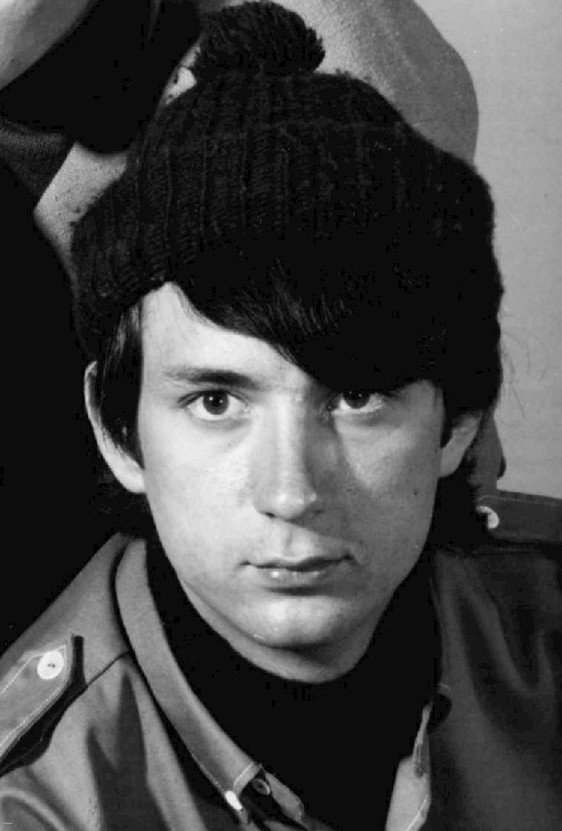
Mike Nesmith
Robert Michael Nesmith was born in Houston, Texas in December 1942, to Warren Audrey Nesmith and Bette Clair McMurry. His parents were divorced in 1946, not long after his father returned from the War.
Thereafter, she and Mike were a single parent family, relocating to Dallas where his mother had relatives and land.
He was brought up as a Christian Scientist after his mother became a convert. When Nesmith injured his hand, his mother’s beliefs prevented him receiving medical treatment. As a result, he lost the use of a finger on his right hand and could no longer ‘make a fist’.
The damage was not caused by a firecracker as claimed in subsequent publicity material.
His mother made rapid progress in her career as a secretary. Then she invented a correctional fluid and, in 1958, formed the Liquid Paper Company. She sold it to Gillette in 1979 and, when she died the following year, her estate was worth $50m.
Meanwhile, her son attended Thomas Jefferson High School in Dallas, where he enjoyed drama and singing, taking a role in the School’s production of ‘Oklahoma’.
But he was not academically inclined and left school before graduation, joining the US Air Force. Having completed basic training, he trained as an aircraft mechanic and was posted to a base at Burns Flat, Oklahoma. While there, he ran a small theatre in his spare time.
One weekend, on a pass to Oklahoma City, he visited a folk club where he saw Hoyt Axton, as yet unknown. Nesmith was inspired to follow in Axton’s footsteps. He has claimed as earlier influences both Hank Williams and Bo Diddley.
Discharged from the Air Force in 1962, Nesmith enrolled at San Antonio College to study Speech and Drama, newly equipped with the guitar his mother had bought him for Christmas. He was predominantly self-taught and, despite his damaged right hand, must have been a fast learner.
For, in 1963 he released a first single on the Highness label called ‘Wanderin’, though he paid for the recording and pressing himself. He also became part of a short-lived group, including Phyllis Barbour, his future wife, which performed in and around San Antonio.
Several of Nesmith’s gigs at this time were branded ‘Hootenannies’ – typically folk concerts with some pre-booked acts as well as an ‘open mic’ session.
Then, in the autumn of 1963, he met John Kuehne (otherwise known as John London) and they began writing and performing together. Kuehne was a bass guitarist, also enrolled at San Antonio College. Together they won its talent contest together.
They also worked as a duo in a San Antonio club called ‘The Rebel’ and were, for a time, part of a group called the ‘Trinity River Boys’. The Boys recorded an album, but it has never been released.
They briefly tried basing themselves in Dallas, but ultimately decided they must relocate to Los Angeles.
On 27 June 1964, Nesmith married Phyllis Ann Barbour in the Post Chapel at Fort Sam Huston in San Antonio. Barbour was the daughter of a US Army Major They would have three children together before they divorced in 1972.
Nesmith and his wife joined Kuehne in Los Angeles immediately after their marriage. Their initial gigs, billed as ‘Mike and John’, were at the Troubadour, a West Hollywood Night Club. He continued to MC ‘hootenannies’ at this new venue.
According to Nesmith, he wrote ‘Different Drum’ early one morning, while sitting on the back porch of their apartment in the San Fernando Valley. He was consciously trying to build his repertoire with a view to becoming a solo performer.
Meanwhile, Mike and John were introduced to veteran singer Frankie Laine by a relative of one of his business associates. They auditioned for Laine’s talent agency, were taken on and booked to play a series of concerts in Texas high schools and colleges, including in San Antonio.
They became ‘Mike, John and Bill’, taking in drummer Bill Sleeper. This trio recorded the Nesmith composition ‘How Can You Kiss Me?’ in 1965, but broke up when Sleeper was drafted.
Later that year, Nesmith performed solo under the alias ‘Michael Blessing’, releasing two singles: ‘The New Recruit’ (a Tom Paxton cover under a different title) and ‘Until It’s Time For You to Go’ (written by Buffy Saint Marie).
One night at the Troubadour, Nesmith included four of his own songs in his set, one of which was ‘Different Drum’. Ronstadt was also in Los Angeles at this time, though we have no evidence that their paths ever crossed.
But amongst the audience that night was Randy Sparks, the founder of the New Christie Minstrels. He offered Nesmith a publishing deal. Sparks had left the Minstrels and was concentrating on his Los Angeles nightclub, Ledbetter’s, which he saw as a showcase for promising young musicians. Sparks also established an ensemble called ‘The Survivors’ with Nesmith, Kuehne and others.
At some point in 1965, Nesmith was visited by John Herald and they played each other their songs. Herald was much taken by ‘Different Drum’.
That October, he auditioned for ‘The Monkees’ television series, having responded to an advertisement placed in trade publications. Some 400 applicants were whittled down to 14 who attended screen tests, from which the final four were to be selected.
But, as it turned out, Nesmith was the only one of the chosen four who had responded to the advert
The history of ‘The Monkees’ is largely irrelevant to this narrative except that, some time in 1966, Nesmith proposed that they might record this song, only to have it rejected as ‘too twangy’. This was probably Donald Kirshner’s decision: he had been hired to supply the hits for the first series.
A brief, garbled version did, however, feature in the episode ‘Too Many Girls’ (Series 1, Episode 15, 19 December 1966) when Nesmith, masquerading as a folk singer afflicted with stage fright called ‘Billy Roy Hodstetter’, gives a muted but high-speed rendition.
This was after it had been recorded by the Greenbriar Boys, but predated the Stone Poneys’ recording. Perhaps it was Nesmith’s way of revenging himself on Kirshner.
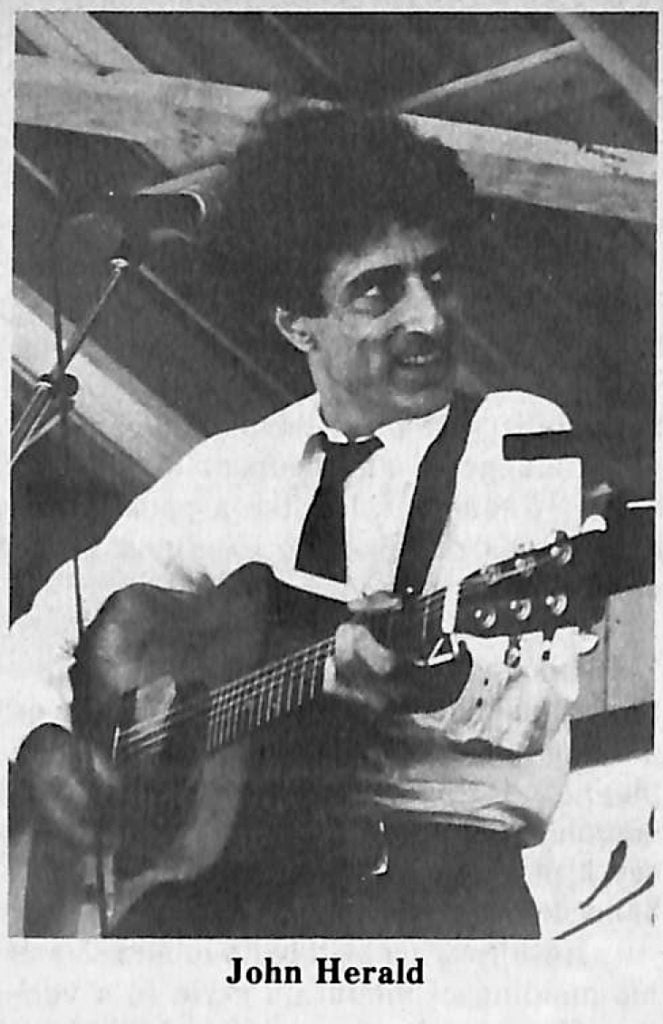
The Greenbriar Boys
John Herald was a few years older than Nesmith, having been born in New York in 1939, the son of an Armenian-American poet.
By 1957 Herald was in his senior year at the Manumit School, a Christian socialist boarding school in Bristol, Pennsylvania, and was planning a degree course at the University of Wisconsin.
That summer he began to visit Washington Square Park in Greenwich Village, where he got to know several other musicians. He persuaded his father to give him $50 with which to buy a guitar and, in 1958, he formed the Greenbriar Boys, the name drawn from a Carter Family song: ‘Girl on the Greenbriar Shore’ (1941).
Herald was vocalist and played lead guitar, Bob Yellin played banjo and Eric Weissberg mandolin. They appeared frequently in Washington Square Park, but had no recording sessions. Eric Weissberg left, was briefly replaced by Paul Prestopino, and then by Ralph Rinzler.
This Herald, Yellin, Rinzler line-up began to pick up gigs at Gerdes Folk City, on West 4th Street in Greenwich Village. This was where Bob Dylan played his first professional gig, on 11 April 1961, supporting John Lee Hooker.
Meanwhile, the Greenbriar Boys signed to Vanguard Records, having garnered the interest of Maynard Solomon, one of the two founding brothers. Their early recordings appeared on a compilation album, ‘New Folks’, which also featured three more acts.
This drew them to the attention of Joan Baez. She invited them to play on ‘Joan Baez, Vol. 2’, released on Vanguard in September 1961, and subsequently to tour with her. They feature on two of the tracks on the album: ‘Pal of Mine’ and ‘Banks of the Ohio’.
On 29 September 1961 Bob Dylan opened for the Greenbriar Boys at Gerde’s Folk City.
A New York Times review, penned by Robert Shelton, begins:
‘A bright new face in folk music is appearing at Gerde’s Folk City. Although only 20 years old, Bob Dylan is one of the most distinctive stylists to play in a Manhattan cabaret in months.
Resembling a cross between a choir boy and a beatnik, Mr. Dylan has a cherubic look and a mop of tousled hair he partly covers up with a Huck Finn black corduroy cap. His clothes may need a bit of tailoring, but when he works his guitar, harmonica or piano and composes new songs faster than he can remember them, there is no doubt that he is bursting at the seams with talent.’
Continuing on to the Greenbriar Boys, he wrote:
‘If Mr. Dylan’s pace is slow, the other half of the show at Folk City compensates for it. A whirlwind trio, the Greenbriar Boys, whips up some of the fastest, most tempestuous Bluegrass music this side of Nashville on eight cylinders and nineteen strings. (Five strings on Bob Yellin’s banjo, six on John Herald’s guitar and eight on Ralph Rinzler’s mandolin.)
The Greenbriar Boys were the first Bluegrass band to play regularly in a New York night club. Messrs. Yellin and Rinzler take off their executive white collars each evening to don blue collars and black string-bow ties. They join Mr. Herald, a leather-lunged tenor whose athletic, high-range country yodelling is a thing of wonder.’
In 1962 they recorded their first, eponymous album on Vanguard, cementing their position as pioneers of urban bluegrass. Then, in 1963, they appeared on ‘Dian and the Greenbriar Boys’, for Elektra, a collaboration with Dian James. She was Randy Newman’s cousin and the girlfriend of Travis Edmonson, one half of folk duo ‘Bud and Travis’.
Their own second album, ‘Ragged But Right’, followed in 1964. They were already beginning to diversify, seeking out material beyond the traditional bluegrass canon.
Rinzler left the band and was replaced by Frank Wakefield, who transferred from Red Allen’s band, the Kentuckians. They also recruited Jim Buchanan to play fiddle. In 1966 this line-up recorded what turned out to be their final album, ‘Better Late than Never’, which included the first recording of ‘Different Drum’.
Herald later said that he was very much open to the all-pervasive influence of the Beatles, while the rest of the band were committed to a bluegrass and acoustic country sound. (Similar tensions are evident in the history of the Stone Poneys, below.) As the band split up, Herald moved to Woodstock and tried to focus on songwriting
The band’s decision to record ‘Different Drum’ was certainly a vote of confidence in the young songwriter Nesmith, who was still only 23 at this point, but already on the road to stardom in a very different musical environment.
According to Nesmith, he had intended the song to be ‘a bouncy folky thing’, but Herald reimagined it as a ballad. He works through the lyrics slowly with a mandolin backing. It all sounds just a little bit laboured and he inserts a few too many ‘gals’ along the way!
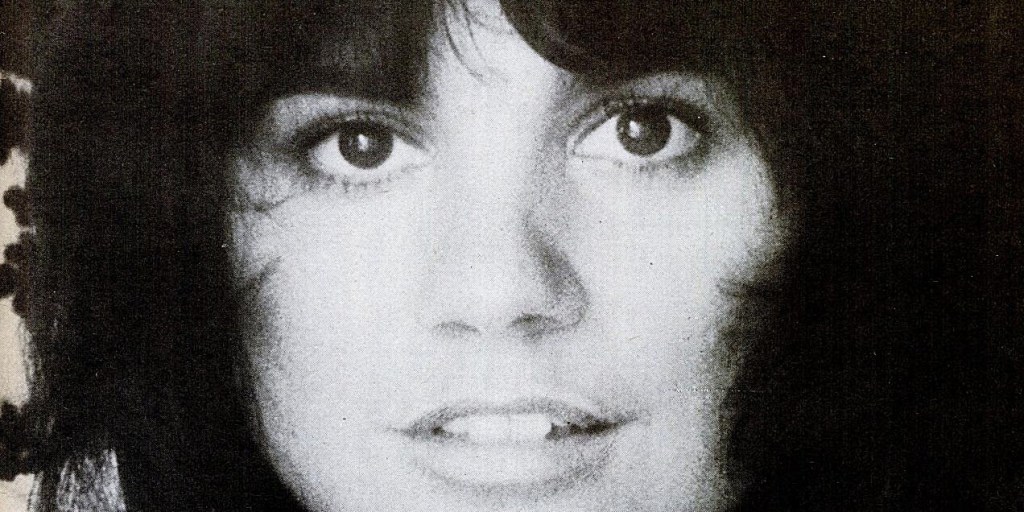
Linda Ronstadt
Linda Maria Ronstadt was born in Tucson, Arizona in July 1946, making her four years Nesmith’s junior and seven years younger than Herald.
She came from a prosperous background, with mixed Mexican and European ancestry. Her father ran a machinery and hardware business and the family lived on a 10-acre ranch. This was the remainder of a much larger property, her grandfather having sold most of the land during the Depression.
Linda, the third of four children, was raised a Roman Catholic. Her mother played the ukulele, banjo and piano; her father played guitar and sang. As a young man he had performed in clubs and on local radio. After an early Catholic education against which she rebelled, Linda attended Catalina High School.
At 14 she formed a folk trio with her elder siblings Gretchen (known as Suzy) and Peter. They called themselves variously ‘The Three Ronstadts’, ‘Union City Ramblers’ and ‘New Union Ramblers’. They played a mixture of folk, bluegrass, country and Mexican.
Under the name New Union Ramblers they recorded in a local Tucson studio, the Copper State Recording Company, in 1963. One local newspaper story claims that they also signed a recording contract, while Linda was still a High School senior. This may be wishful thinking.
The youthful Ronstadt is revealed to have very firm musical preferences:
‘I’m an ethnic folksinger and very much against all the commercialism in folk music today. You can preserve a genuine ethnic quality on records but most of the faddists who fill the concert halls for a hootenanny like the jazzed up folk sound which I despise.’
The story adds that she had been discovered at Tucson’s artistic centre, Ash Alley, by one David Graham, a radio announcer, who subsequently invited them on to his radio show on local station KTUC. He had since become their manager.
Other musicians sometimes played with the trio, which had regular gigs at a local pizza restaurant and a folk club called First Step. These included bassist Bobby Kimmel, some six years her senior, whose father owned a music shop and was principal double bass player with the Tucson Symphony Orchestra.
When Kimmel headed to Los Angeles in 1963, he began to encourage Ronstadt to follow in his footsteps, but she continued playing with her siblings in the New Union Ramblers and, after graduating from Catalina High School, enrolled at the University of Arizona.
As of March 1965, the New Union Ramblers were still performing in Tucson, although Ronstadt had visited Kimmel in Los Angeles during the 1964 Easter break, singing with him in a small coffee house called The Insomniac at Hermosa Beach.
While Ronstadt remained in Tucson, Kimmel met Kenny Edwards and they began writing songs together.
Kenneth Michael Edwards had been born in February 1946, in Santa Monica California, so was just a few months Ronstadt’s senior. He grew up in the Mar Vista area, attending Venice High School.
Kimmel met Edwards at the Ash Grove, a folk music club, formerly a furniture factory, founded by Ed Pearl in 1958. It had become an important melting pot, where folk musicians could find an audience while also learning from their elders and their peers.
Dylan said he used to dream of playing there, while Ry Cooder played his first gig there in 1963. Ronstadt herself has said:
‘My goal in those days was just to play the Ash Grove in Los Angeles because that was the centre of folk music at the time.’
For a while, Edwards and Kimmel worked together at McCabe’s Guitar Shop in Santa Monica. McCabe’s was also more of a place for musicians to meet and interact than a shop selling guitars.
A local journalist who visited in 1964 wrote:
‘Mc Cabe’s is a favorite hangout of the Southlands folk-singing fans, and it’s more of a hangout than a store. A battered guitar hangs in the window and the sign drooping from it reads, ‘Browsers and Itinerant Musicians Welcome’. Customers are treated well but not really encouraged…
…Folk guitarists and bluegrass banjo players drop in, sit around a table in the middle of the little shop and work out folk music together. Visitors drop in to sit and listen. They will be allowed to buy something, if they pressure the employes [sic] a little.’
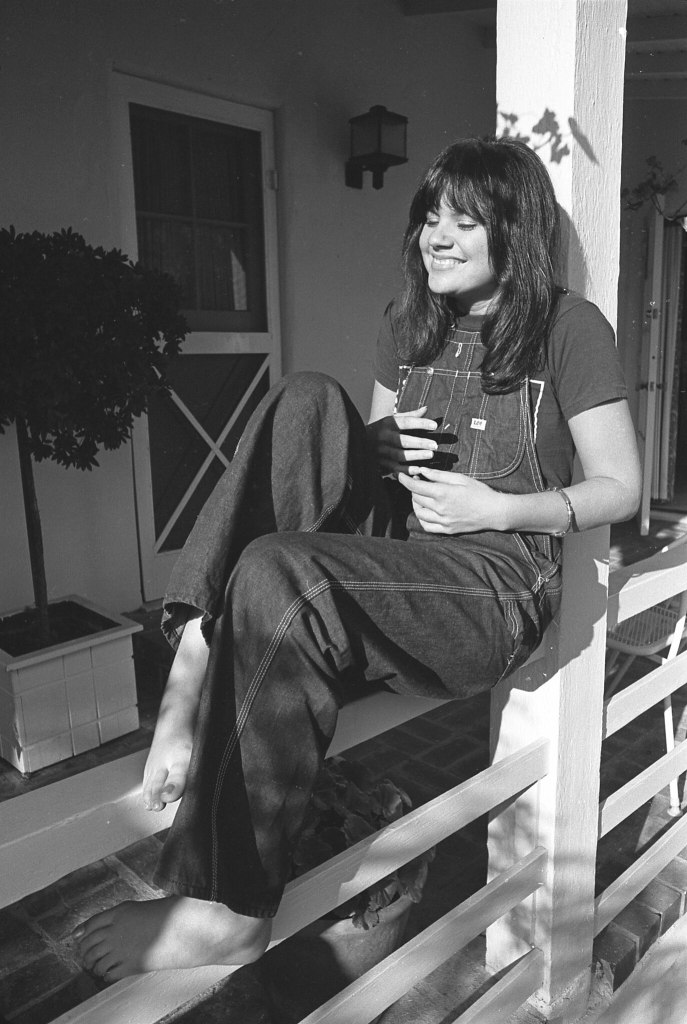
Linda Ronstadt, 1974, courtesy of Larry Bessel , Los Angeles Times
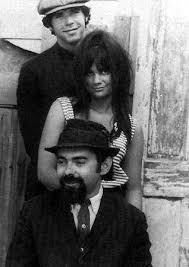
The Stone Poneys
Ronstadt is said to have arrived in Los Angeles by December 1964 though, as noted above, she was still performing with her siblings in Tucson as late as March 1965.
She first met Edwards and Kimmel together at a branch of McCabe’s which had been established inside the Ash Grove. Kimmel, the eldest, took the lead in forming a band.
Initially he envisaged a five-strong band, fronted by Ronstadt, but they decided they would be a more viable proposition as a trio. Their name was taken from Charlie Patton’s song ‘The Stone Pony Blues’ (1929), though it’s unclear why they preferred to misspell ‘ponies’.
By all accounts, both Ronstadt and Edwards were interested in developing a more traditional, countryfied, even rock-oriented version of commercial folk music, and were also inspired by the music of the Beatles. But Kimmel was more ‘folky’ in outlook, which led to musical disagreements.
So the story goes, the trio were rehearsing above a laundrette in Ocean Park, Santa Monica. It was opposite Olivia’s, a restaurant much patronised by the music industry.
Two men heard them while having lunch and came across, fancying they could make them stars.
They introduced the band to Mike Curb who, in 1963 at the age of 18, had founded Sidewalk Records. He was also working as an assistant staff producer for Mercury Records, a combination that would later land him in difficulties.
Curb produced the first recording session by the Stone Poneys, either in late 1965 or early 1966. It featured ‘So Fine’, a Johnny Otis song that had been a hit for The Fiestas in 1959. They had learned it from the Chambers Brothers who they had often supported while playing at the Ice House in Redondo Beach.
‘So Fine’, together with a Kimmel song’ Everybody Has Their Own Ideas’ were finally released in 1968, on Sidewalk, after ‘Different Drum’ had been a hit.
According to Stone Poneys mythology, Mercury Records, whether in the shape of Curb or their A&R department, were interested in signing them, on condition that they embraced the surfing sound and called themselves ‘The Signets’. They even hired surf rock band The Hondells to help them.
Meantime, they secured a gig at The Troubadour on Santa Monica Boulevard through a comedian they knew. Immediately afterwards, the comic introduced Ronstadt, alone, to manager and promoter Herb Cohen.
Cohen, now in his early 30s, had spent time in the army and then began his musical career as part owner of a folk club on Sunset Boulevard. He had subsequently managed several other venues as well as promoting folk concerts.
He already managed comedian Lenny Bruce but had just had his big break, signing Frank Zappa and helping to get the Mothers of Invention a record deal.
According to Ronstadt, Cohen thought he could get her a recording contract but was sceptical whether he could extend it to Kimmel and Edwards. However, Ronstadt was adamant that she wouldn’t go solo.
So they decided instead to prioritise their live work in Los Angeles nightspots. Ronstadt invariably appeared in a miniskirt with bare feet, a la Sandie Shore. They managed to obtain a job at the Troubadour in Hollywood, where they were opening for Oscar Brown Junior.
But they found the experience completely demoralising, because Oscar Brown, his wife, Jean Pace, and his band were all outstandingly good, playing exactly what the predominantly black audience wanted to hear.
They were the antithesis of this: Ronstadt later described it as ‘really pathetic, like throwing me to the lions’. So they disbanded. Ronstadt and Edwards continued performing as a duo, but picked up little work.
Swallowing her pride, Ronstadt contacted Herb Cohen, who had the bright idea of pairing her with Zappa! Unsurprisingly, that idea came to nothing. Then he thought she might be the Rolling Stones soundalike songstress that Jack Nitzsche was after. No such luck.
So the Stone Poneys reformed and, this time, Herb Cohen agreed to manage the entity rather than just Ronstadt. He introduced them to producer Nick Venet.
Venet (originally Nikolas Kostantinos Venetoulis) was now 30 and highly experienced. At 17 he had worked as a writer in the legendary Brill Building, before moving on to World Pacific Records in Los Angeles. He subsequently became a staff producer with Capitol Records, best known for signing the Beach Boys in 1962. He had also signed Lou Rawls and Glen Campbell.
Ronstadt later said of Cohen and Venet:
‘I would have a manager that would say to me, ‘You don’t want to do that country shit. It’s too corny.’ And he also managed the Mothers. He wasn’t a musician. He didn’t really know anything about music…We struggled along with…Nick Venet – we were never any of us on the same page. I was trying to do one thing; they were trying to do another.’
This is perhaps a little uncharitable towards Venet, who signed them to Capitol in the Summer of 1966. He planned a subsidiary label called Folk World for which he needed a stable of artists. (Folk World never materialised.) Capitol would have preferred Ronstadt as a solo performer, but Venet helpfully argued that she needed more experience first.
Their first, also eponymous album, produced by Venet, was recorded in Autumn 1966 and released in January 1967. Predominantly folk-oriented, it failed to sell. One single was released, ‘Sweet Summer Blue and Gold’, which also flopped. Several contemporary newspaper reviews saw a resemblance to Peter, Paul and Mary.
Edwards said of the record:
‘Nick Venet was trying to jump on that bandwagon, and we were the ideal sort of vehicle for him as far as he was concerned. There was a time, right about there, that the folk music thing was somewhat associated with almost like a jazz, late-night cocktail feeling. I think he related to that. His personal taste was more towards the smoky jazz-folk…Much more laid back, not aggressive. The first record was just basically bass, drums, and us: the live representation of what we did, with the addition of a rhythm section.’
Prior to their second album, ‘Evergreen, Vol. 2.’, there was another brief break-up. But Venet pulled them together, advocating for a more commercial record to garner radio play.
They recorded Evergreen Vol.2 early in 1967 and it was released in June of that year.
It had a very different, slightly rockier, feel, some detecting an homage to English folk rock.
Five of the tracks were written by Kimmel and Edwards, and Ronstadt was the dominant lead vocalist. But ‘Evergreen’, the title track in two parts, had a psychedelic flavour, with Edwards singing and playing sitar.
In June 1967 they began a promotional tour with a week’s residency at La Cave in Cleveland, also appearing on local station WKYC. By July, they were again supporting Oscar Brown, this time at the Cafe Au Go Go in Greenwich Village, moving on the Main Point, Bryn Mawr, Philadelphia, where they headlined.
According to Ronstadt, they also opened for the Paul Butterfield Blues Band at the Cafe Au Go Go, which led to another fracture:
‘We did things like open for Butterfield at the Cafe au Go Go – which was worse than Oscar Brown. Here we were rejected by the hippest element in New York as lame. We broke up right after that. We couldn’t bear to look at each other.’
Edwards recalled:
‘From the record company’s point of view, immediately they wanted to push Linda as a solo artist. And frankly, Linda’s taste in songs was really growing away from what Bobby was writing…. So there was a spontaneous growth toward her being a solo artist.’
After the success of ‘Different Drum’, the Stone Poneys essentially became Ronstadt’s backing band. Edwards left for India early in 1968. Ronstadt and Kimmel recruited new musicians, beginning a tour as support for ‘The Doors’. Ronstadt was certainly not Jim Morrison’s biggest fan!
Then Kimmel left as well. For a year he worked as a vegetable gardener and night watchman in Big Sur, before moving back to McCabe’s Guitar Shop.
There was a third album, pointedly called ‘Linda Ronstadt, Stone Poneys and Friends, Vol. 3’, released at the end of April 1968. This transitioned away from folk to a country rock sound. Ronstadt’s was the only presence on the front cover.
Her first official solo album followed in 1969.
Ronstadt’s ‘Different Drum’
The original Stone Poneys version of ‘Different Drum’, as recorded for ‘Evergreen Vol. 2’, was an acoustic ballad that bore a close resemblance to the version by the Greenbriar Boys. Though, of course, Ronstadt had made the lyrical changes necessary for it to be addressed by a woman to a male lover, rather than vice versa.
But, as this second album threatened to follow the first into obscurity, Venet suddenly decided that ‘Different Drum’ could be a hit with a different arrangement.
Ronstadt initially pushed the acoustic version, in what Edwards later called ‘a jug-bandy bluegrass-light’ style, but Venet insisted on a different approach.
According to Ronstadt, he set up a recording session at Capitol’s Studio B. She was expecting to record three songs in three hours, including the acoustic version of ‘Different Drum’, with Kimmel and Edwards only. But, on arriving at the studio, she found other musicians there she didn’t know.
The other two songs were completed with Kimmel and Edwards, but then Venet asked them to sit out ‘Different Drum’.
Kimmel later said:
‘Kenny and I didn’t mind. It was always going to be a solo vocal feature for Linda anyway, and Nick wanted more going on instrumentally behind her. Kenny and I stood in the engineer’s booth and watched and listened.‘
Venet had commissioned an alternative arrangement from Jimmy Bond, who also played bass on the session. He had invited Don Randi to play harpsichord, as well as Jimmy Gordon on drums, Al Viola and Bernie Leadon on guitars. There was also a string section.
Ronstadt recalled:
‘We didn’t rehearse. I was just thrown into it. I was completely confused. I didn’t have the lyrics in front of me—I sang them from memory. Since I can’t read music, I didn’t have a lead sheet either. I knew I could remember the words, but I wasn’t sure how to phrase them with the new arrangement and faster tempo.
Different instruments pull different textures out of my voice, which was conditioned to sing with guitar and mandolin. The harpsichord and strings were going to be harder. We recorded the second take without any overdubbing. That became the version you hear on the record.’
Bond had asked Randi to play a double-keyboard harpsichord, giving his arrangement a psychedelic edge. Randi improvised his solo on the spot. He later said:
‘[The sheet music] said, ‘Baroque style’…So I just played on a rock ‘n’ roll record what Bach would have had to play.’
Randi also recalled that Venet talked up Ronstadt to the assembled musicians before her arrival. He didn’t sense her fear or confusion, adding that he had been won over by her innocence and humility, and the fact that she recorded barefoot.
The single was released under the name ‘Stone Poneys featuring Linda Ronstadt’. While some spotted that the now famous Nesmith had written it, this seemed not to register for a while. But it could well have been a factor in the record’s ultimate success.
It took a while for the song to gain traction, but it was gradually picked up by local radio stations. Ronstadt said that she first heard it in September 1967, when the band’s car broke down and they had to push it to a garage. She heard the introduction on KRLA, a top-40 AM station, emerging from somewhere inside.
By 31 October, the Tucson Citizen was reporting that the song ‘ranked first or second on nearly all local popular music charts’. It also mentioned that the Stone Poneys had begun recording a third album.
‘Different Drum’ entered the Billboard chart on November 11 1967, remaining in the top 100 for 17 weeks. It peaked at Number 13 in the week of January 27 1968.
Meanwhile, ‘Evergreen Vol. 2’ could only manage Number 100 on the album chart.
‘Different Drum’ analysed
The lyrics of Ronstadt’s version are:
‘You and I travel to the beat of a different drum
Oh, can’t you tell by the way I run
Every time you make eyes at me? Whoa
You cry and moan and say it will work out
But honey child I’ve got my doubts
You can’t see the forest for the trees
So, don’t get me wrong, it’s not that I knock it
It’s just that I am not in the market
For a boy who wants to love only me
Yes, and I ain’t sayin’ you ain’t pretty
All I’m saying’s I’m not ready for any person
Place or thing to try and pull the reins in on me, so
Goodbye, I’ll be leavin’
I see no sense in this cryin’ and grievin’
We’ll both live a lot longer if you live without me.’
The song is built around three familiar proverbs:
The phrase ‘march to the beat of a different drum/drummer’ had become popular by the mid-20th Century. It derives from the final chapter of ‘Walden’ (1854) by Henry David Thoreau (1817-1862):
‘If a man does not keep pace with his companions, perhaps it is because he hears a different drummer. Let him step to the music which he hears, however measured or far away.’
The first recorded appearance of ‘make eyes at’, meaning to look at someone in a way that shows you are attracted to them, is in ‘The History of Henry Esmond Esq.’(1852) by William Thackeray (1811-1863):
‘“If Prince Eugene goes to London,” says Frank, “and Trix can get hold of him, she’ll jilt Ashburnham for his Highness. I tell you, she used to make eyes at the Duke of Marlborough, when she was only fourteen, and ogling poor little Blandford. I wouldn’t marry her, Harry—no, not if her eyes were twice as big. I’ll take my fun. I’ll enjoy for the next three years every possible pleasure. I’ll sow my wild oats then, and marry some quiet, steady, modest, sensible viscountess; hunt my harriers; and settle down at Castlewood.”’
The proverb ‘can’t see the wood/forest for the trees’ is far older, and occurs in many different languages. The earliest known English usage is by Sir Thomas More in 1533. However, it also featured in a collection of proverbs by John Heywood (c. 1497-c.1580) which was published in 1546. So it was almost certainly widespread by that point.
The song describes a situation where a man desires a monogamous relationship with his female partner, but she is unwilling to comply, arguing that she is not yet ready, that it will compromise her freedom. She is still ‘playing the field’, still ‘sowing her wild oats’. He is not (yet?) the man she wants to settle down with.
This reverses traditional gender norms. We are thoroughly familiar with the country music stereotype of the roaming ‘free spirit’, a woman in every town, unwilling to be tied down to a house, a job and children. The reference to ‘reins’ betokens the lonesome cowboy.
This stereotype turns up repeatedly. To take one example, ‘Desperado’ by the Eagles:
‘Desperado, you ain’t gettin’ no younger
Your pain and your hunger, they’re drivin’ you home
And freedom, oh, freedom, well, that’s just some people talkin’
Your prison is walkin’ through this world all alone.’
With the gender tables turned, Ronstadt’s lyrics align with a strand of 1960s feminist thinking. There is an echo here of yet another proverb: ‘What’s sauce for the goose is sauce for the gander’.
There may also be an allusion to the hippie philosophy of free love. The ‘Summer of Love’ had only just drawn to a close in San Francisco, while ‘Hair’ had begun playing in New York. This song is very much of its time.
Finally, there may be some degree of projection from the song to the singer. Linda Ronstadt was an exceptionally beautiful young woman with an amazing voice.
For those young men listening, perhaps to the radio, or else playing this record in their teenaged bedrooms, she was completely unattainable, a free spirit to be idolised from a distance perhaps, but never to be tamed or possessed.
Nesmith himself later said:
‘I first heard Linda’s record on the radio in Philadelphia, while riding in a limo with the Monkees. No one in the car believed I had written the song. Linda did more for that song than the Greenbriar Boys’ version. She infused it with a different level of passion and sensuality. Coming from the perspective of a woman instead of a guy, the song had a new context. You sensed Linda had personally experienced the lyrics—that she needed to be free.’
But for young women, perhaps, she was a powerful role model. Stevie Nicks said that hearing ‘Different Drum’ while in high school was what inspired her to become a performer.
Musically, the song is an example of ‘baroque pop’, in which popular music is fused with elements from the classical tradition. The use of a harpsichord marks out a sub-genre in which the Beach Boys were early pioneers (‘I Get Around’). Later adherents included The Mamas and the Papas (‘Monday Monday’), the Yardbirds (‘For Your Love’) and the Stranglers (‘Golden Brown’).
But in ‘Different Drum’, the harpsichord and guitar are no more than foils for Ronstadt’s powerful delivery. They set up a classically inspired framework, but she breaks through it with the joy, sensuality and sheer muscular physicality of her voice.
She herself has criticised these early recordings, only hearing her own inexperience. But it is moving to listen while this 21 year-old literally ‘finds her own voice’, beginning to discover its power and versatility as she tests herself in a demanding and unfamiliar context.
Yes, there are imperfections in her delivery, but they expose the vulnerability that lurks beneath her superficial confidence. Instinctively, we who are older respond positively to that, perhaps recalling when we, too, were young and invincibly cocksure.
She briefly touches the heights with that ‘So, Goodbye’, escaping the measured formality of the faux-baroque accompaniment and, invariably, setting off those telltale hairs on the nape of my neck.
In 2013, Sarah Larson wrote in the New Yorker:
‘She manages to sound like she’s holding back even when she’s singing full throttle—she’s knocking your socks off, but it doesn’t faze her. In fact, she’s just giving you what you can handle. The sound of Ronstadt’s voice—invincibility, bravery, emotion channelled into intelligence and art—is the sound of overcoming anything.’
Which makes it all the more poignant that she is suffering from a degenerative disease similar to Parkinson’s.
She had one of the greatest voices of her generation – the generation immediately before mine – but now she can no longer sing.
Eponymous, better known as timdracup.com, contains long-form posts drafted by a real human being. Everything is free to read. I specialise in Dracup family history, British walking trails and literary book reviews. But you’ll also find writing about music, bereavement and much else besides.
Having spent the latter part of February 2025 at HF’s Monk Coniston country house in the Southern Lake District, we decided to repeat the experience in February 2026, this time further north. When booking in late November, we anticipated few problems, beyond the ever unpredictable Lakes weather, It was a bargain, too: we paid a…






 Eponymous
Leave a comment