
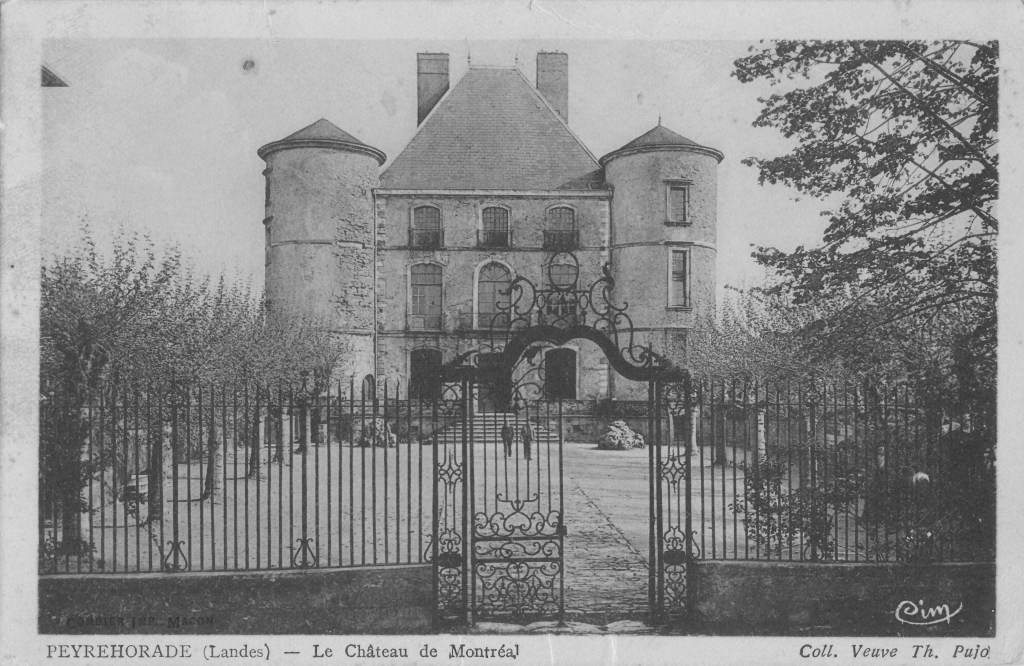
William Keepers Maxwell (1908-2000) edited the New Yorker magazine from 1936 to 1975. He wrote six novels over roughly the same period, the penultimate being The Chateau (1961).
Maxwell married a painter called Emily Gilman Noyes (1921-2000) in May 1945.
In 1948, three years into their marriage, the couple took a trip to France. He began this novel on their return, but it took thirteen years to complete it to his and everyone else’s satisfaction.
He initially refused to allow publication in either England or France, for fear that the real-life equivalents of his characters would be upset. Later, when he did seek their permission, one of his subjects refused it.
The Chateau has been called an anti-novel, because it subverts the standard conventions of novel writing.
The subject matter – two relatively youthful, naive and impressionable American tourists struggle to understand the language, culture and behaviours of an ancient European country – opens up many possibilities for subversion.
One can see how innovative, experimental forms of expression could be woven into the text, becoming integral to the narrative.
However, Maxwell sets aside most of these possibilities. His novel subverts only mildly and very occasionally, superimposing this tepid experimentation on top of a somewhat tedious narrative.
The tourist couple are called Harold and Barbara Rhodes, a thinly-disguised version of Maxwell and his wife. They are mostly good-natured but rather tiresome, as only American tourists manage to be.
The France they are exploring is still struggling to emerge from the icy grip of war. Some articles are rationed; many others are still in very short supply. The signs of bomb damage are still widely visible. A series of strikes threatens to interfere with their progress through the country.
Early in their peregrination, they spend two weeks as paying guests in the Chateau Beaumesnil, near Blois in the Loire Valley, in the charge of the genteel but impecunious owner, Madame Vienot.
Here they encounter a cross-section of her other guests, as well as various members of her extended family. Subsequently, they re-encounter several of these in Paris, staying for a while as seemingly unwanted guests in one couple’s apartment. For some reason they end up sharing with three young German men who are trying to go somewhere but can’t.
While visiting endless touristic hot-spots, eating in any number of restaurants and drinking in pavement cafes, they devote much time to wondering why their various French acquaintances behave as they do, or worrying whether they have slighted, or have been slighted by, one or more of them.
The experimentation, such as it is, is mostly confined to the interventions of an interrogative voice – presumably representative of us, the readers – who seems determined to pin down various matters that the narrator threatens to leave hanging.
When Maxwell belatedly decides to fill in some background about his twin protagonists, some fifty pages in, this voice presses him for further detail.
And, once both the holiday and the narrative are ostensibly complete, it reappears in a short second part entitled ‘Some Explanations’, providing a commentary of sorts.
As well as containing the author’s response to this reader’s questions, it also takes in some highlights of a second visit that Harold and Barbara make to France in 1953. The final scene updates us on whether things have changed for Madame Vienot and her family at the Chateau Beaumesnil.
There are also one or two other isolated examples of narrative subversion. Once, when the characters’ post-dinner conversation is reflected in a mirror, we are left wondering whether their speeches are real or merely a figment of Harold’s imagination. On another occasion, the inanimate elements of a Parisian morning scene appear to start a philosophical debate.
But the experimentation seems casually bolted on rather than fully integrated. It is strictly secondary and overwhelmed by the desperately dragging storyline.
Overall this is insipid storytelling, a relatively thin gruel, largely a waste of time.
TD
April 2025








 Eponymous
Leave a comment