
This is the second in a sequence of posts about music that means a great deal to me.
I’ve called the series Ouroboros – the snake with its tail in its mouth – because I’m hoping to finish exactly where I began, with Ya Jean by Madilu System (1993).
I hope to write a new post roughly once a month, each post marking another hour on an imaginary clock face, until I get round to Twelve again.
I’ve fixed the broad structure, but I haven’t planned the sequence – I’m going to try to work that out as I go along. I have a vague notion of some future choices, but nothing more than that.
I expect to make some fairly tenuous links!
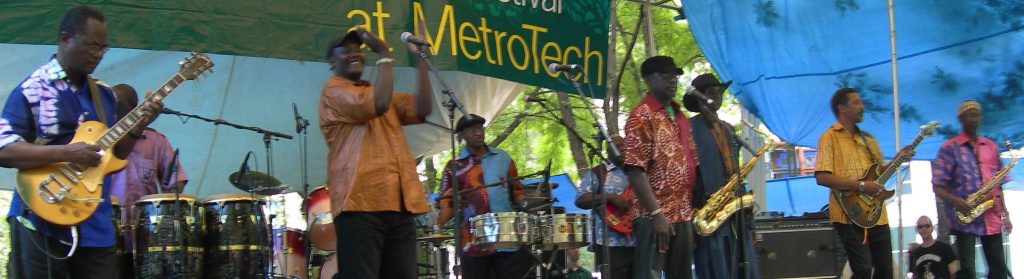
This month’s post is dedicated to Autorail, by Orchestre Baobab (1981), the seminal band from Senegal.
There are several possible connections between Autorail and Ya Jean, but the most obvious is probably encapsulated by the phrase ‘legendary African guitarists’.
Ya Jean featured Syran M’Benza, who was channeling his inner Grand Maitre, Franco.
While Autorail – besides sustaining a wonderfully lolloping, lilting, laid-back groove – is known for its outstanding guitar solo by the late Barthelemy Attiso.
He wasn’t Senegalese, but Togolese and, temperamentally, he was probably as far apart from Franco as chalk is from cheese. But he was an equally outstanding guitarist, composer and musical arranger.
If you need a second connection Ya Jean and Autorail are the two opening tracks on the compilation album African Moves, Volume 3, issued by Sterns Africa in 1995.
Autorail was originally released on an album called Si Bou Odja, in 1981. It was produced at the Golden Baobab studio in Dacca, Senegal by the young Ibrahima Sylla (1956-2013) and released through his company, eventually known as Syllart Productions.
In 1993, Sterns Africa released a CD called Bamba, the third release in its African Classics series. This was compiled from Si Bou Odja and another equally good studio album, Mouhamadou Bamba, also from 1981, also produced by Sylla.
All ten tracks were squeezed on to one CD, although the final track – Sibou Odia – had to be shortened by a minute or so for everything to fit.
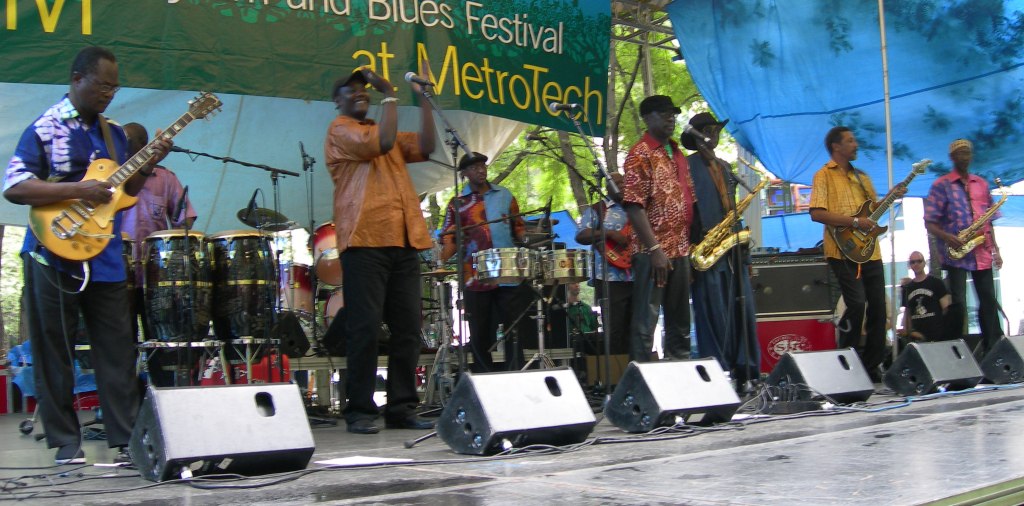
Orchestre Baobab
The band has a long and complex history spanning over half a century, including a lengthy hiatus between the first iteration and the second.
It was formed in 1970, when a trio of influential Dakar businessmen and politicians founded a prestigious private club, named after the Baobab tree.
Some say it was built around such a tree; others that the design of the interior resembled one – both stories may be apocryphal.
The owners were on the lookout for a suitably impressive house band, so they asked two well-known local musicians to recruit one.
Several members were poached from the Star Band, the house band at the Miami Club, which included some of the best-known and best-paid musicians in town.
Star Band had been formed by the Club’s owner, Ibra Kasse, in 1959, and he reputedly controlled it with an iron grip. He was a strict disciplinarian with extremely high standards, and wouldn’t tolerate wrong notes or anyone playing out of tune.
He also encouraged the vocalists to sing in their regional languages and was instrumental in blending Senegalese folk influences with the Cuban-influenced music then predominant on the Dakar club scene.
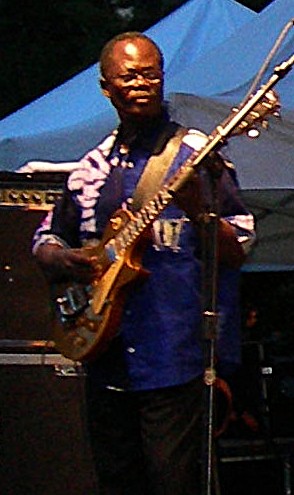
Prominent amongst those defecting in 1970 were vocalist Balla Sidibe (1942-2020), vocalist Rudy Gomis (1947-2022) and guitarist Barthelemy Attisso (1945-2021). They had graduated to the Star Band together, having played in Le Standard, now almost forgotten.
Two further members, both of whom were to feature on Autorail alongside Attisso, were Malian sax player Issa Cissoko (1946-2019) and singer Medoune Diallo (1949-2018), who wrote the lyrics. They both joined Baobab from the Star Band too, defecting a year later in 1971.
Some sources say that the lead vocalist on Autorail isn’t Diallo, but Thione Seck, who joined the band in 1974 as a precocious 18 year-old. But I’m not quite so sure: it sounds more like Diallo to me.
I’m going to credit him here until someone can prove otherwise.
Attisso had arrived from Togo in the mid-60s, intending to study law at the University of Dakar, but he needed a job to help pay his tuition fees.
He bought an instrument, borrowed a ‘teach yourself guitar’ manual from the University library and set to work. Later, he progressed to copying records and watching other musicians working the clubs of Dakar.
According to his own testimony, this took 18 months of solid practice, day and night, during which he was unable to study law. But, at the end of that period, he obtained his first regular employment in Le Standard and could also progress with his studies.
He has cited diverse influences during this formative period, including Franco, Django Reinhardt, BB King, Wes Montgomery and Carlos Santana.
Club Baobab soon developed from a small private club for the founders’ friends into a cosmopolitan night club, patronised by the rich, famous and influential of Dakar.
Over the next seven years, the band played there four or five nights a week, from 10.00 to 03.00. They also generated several albums which made their name throughout Senegal but didn’t generate much extra income.
Band members arrived and departed on a regular basis, some eventually returning for a second stint.
Baobab saw itself as a ‘melting pot’, combining its members’ musical influences and the musical traditions of their home regions and countries. Attisso eventually became the arranger, drawing together these diverse elements to create something new.
After 1977, they moved on to other Dakar clubs, first the Jandeer then the Balafon, which led to them being offered gigs and a recording session in France. They spent part of 1978 in Paris, but the trip wasn’t hugely successful, adding fuel to simmering tensions between band members.
In 1979, on returning to Dakar, they were offered a residency at Ngalam, initially a swanky restaurant but later also a club.
And in 1981, they recorded the two seminal albums mentioned above, followed by an equally significant album the following year, Ken Dou Werente.
But Youssou N’Dour – who had himself been part of the Star Band, before graduating to Etoile de Dakar and Super Etoile de Dakar – was emerging as the leading proponent of mbalax.
This evolving musical style foregrounded the spellbinding, suggestive rhythms of Senegalese drumming, sparking a major new dance craze.
Mbalax took Senegal by storm, eventually propelling N’Dour to international stardom, as he surfed the wave of Western interest in African music.
For a while, Baobab considered emulating him, putting their own spin on mbalax, but eventually they decided to stick with what they knew.
Their audiences gradually began to wane and, by 1985, Baobab had disbanded. Several of its musicians returned to other employment – including Attisso, who went back to Lome, the capital of Togo, to practice law – while others moved on to different bands.
But, meanwhile, unbeknown to its former stars, Baobab was acquiring cult status in world music circles, both in Europe and North America.
In 1989, World Circuit, controlled by leading world music producer Nick Gold, released Ken Dou Werente as a CD under the name Pirate’s Choice.
Then in 1993, Stern’s Africa issued Bamba.
Efforts to reunite the band began in 1997 or thereabouts. Gold was instrumental in securing the reunion but N’Dour helped too, stung by media stories that his own ascendancy had forced Baobab’s premature retirement.
Further reissues emerged: N’Wolof in 1998 and Roots and Fruit in 1999. Then, in 2001, Baobab played a celebrated reunion gig at London’s Barbican, convincing its surviving members that this renaissance was more than a flash in the pan.
In 2001 a remastered 2-CD edition of Pirate’s Choice appeared, followed in 2002 by Specialist in All Styles, produced by N’Dour, which featured new versions of several classic songs. In 2007 a similar collection was released called Made in Dakar and, in 2017, Tribute to Ndiouga Dieng.
I finally got to see the band on 31 January 2017, at London’s Roundhouse but, to my great chagrin, Attisso had decided to retire beforehand, choosing to devote the remainder of his days to his Togolese legal practice.
Baobab are still producing music. They released a single in 2023 called 50 Ans and another in 2024 called Jambar Yi, preceding a short tour. Their website mentions a new album in Autumn 2024 though, at the time of writing, that hasn’t yet materialised.
Autorail
So, to recap, Autorail dates originally from 1981, when it was a hit in Senegal, but it reached few Western ears until a decade or so later.
Despite extensive efforts, I have been unable to locate the lyrics, and I’m not even sure of the language in which it is sung.
Diallo would usually take the lead on songs in Spanish or French, but his first language was Fulani and he quickly acquired Wolof on arriving in Dakar as a teenager.
My best guess is that Autorail is mostly Wolof, but if you know differently, do please correct me.
I believe Diallo (if it is indeed he, rather than Seck) is praising Senegalese railways, more specifically the railcar service that operated at that time between Dakar and Thies, Senegal’s third city.
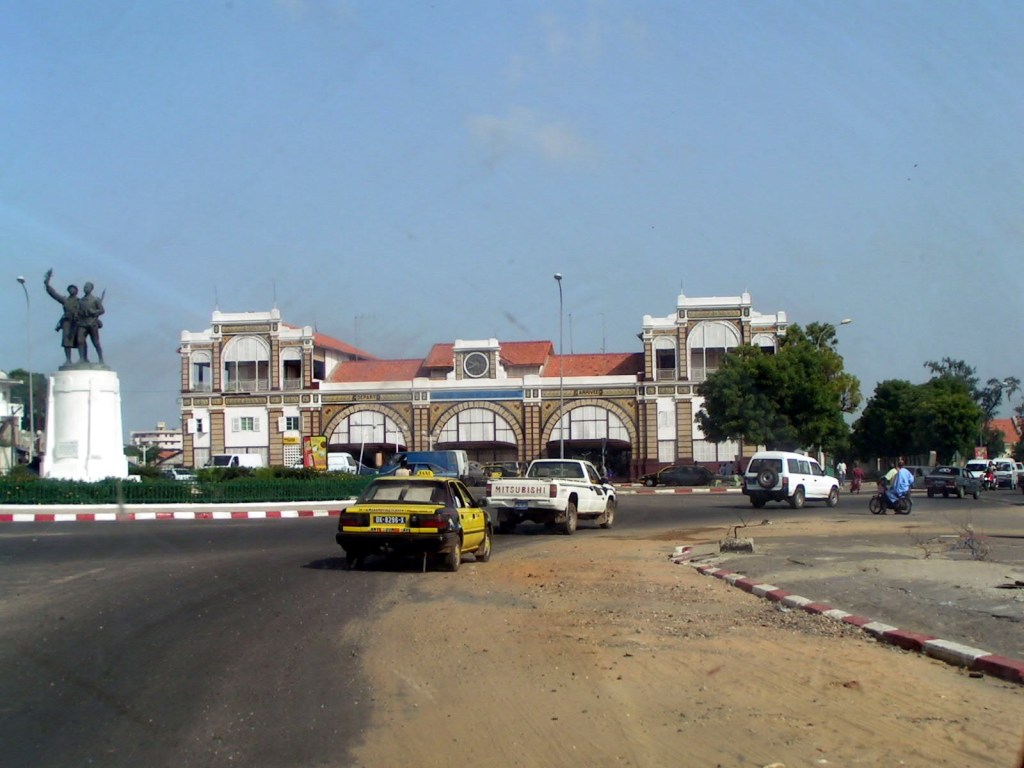
Thies lies some 45 miles east of Dakar and is a major railway junction, connecting the capital with Bamako and ultimately Koulikoro, on the banks of the Niger River, both located in neighbouring Mali.
The Chemin de Fer Dakar-Niger was once a source of considerable pride, even though it was a French colonial initiative. Construction began at the end of the Nineteenth Century, but it was not possible to travel from Dakar all the way to Koulikoro until 1924.
There was some modernisation between 1947 and 1957, by the colonial administration, but only after a celebrated strike by native Senegalese rail workers. They quite reasonably wanted the same rights and pay as the French working alongside them.
After independence, Senegal and Mali assumed responsibility for their respective sections of the track and, in 1962, agreed to jointly operate the service.

But, since Autorail was first performed, there has been significant decline. In 2003, the two countries contracted with a Franco-Canadian company to operate the line, as well as investing in the track and rolling stock.
This agreement should have lasted 25 years, but it was terminated early, in 2015. Work is now under way to restore passenger services under a new agreement.
All that said, the lyrics of Autorail are of secondary importance, because this is predominantly a showcase for Cissoko’s sax and, especially, for Attisso’s scintillating guitar.
He opens proceedings with a relatively simple motif, before Cissoko’s sax introduces a second theme, perhaps inspired by the plaintive call of a train’s horn. This is accompanied by the unmistakable rhythm of the train passing along the tracks, which is then sustained throughout.
Eventually Diallo comes in on vocals, sounding slightly nasal, backed by the other vocalists in chorus.
Then it’s Cissoko’s turn again, with Attisso playing behind him, before the vocalists re-enter.
Then Cissoko a third time, before Attisso’s riveting solo begins, at around 2m 25s. Roughly 50 seconds in, he distorts the sound of his guitar, completing the solo after some 90 breathtaking seconds.
Cissoko once more repeats his motif, before the singers rejoin with their refrain, then Cissoko gets an opportunity to play some bars of his own. Finally the singers repeat the refrain until the track fades out.
Roughly seven minutes of pure joy.
Personal relevance
Needless to say, I first heard Orchestre Baobab on Charlie Gillett’s radio show (see my previous post). I’m sure that Autorail featured on several occasions, including one show devoted to music inspired by railways.
Later, but back in the 2000s, when our son was still young, he, my late wife Kate and I had a special New Year’s Eve ritual.
After dinner and before Hootenanny (which was so very much better back then) we would play our personal ‘Top Twenties’ – our twenty favourite tracks that year.
We’d start our countdown with the three Number Twenties, before moving on to the three Number Nineteens and so on, concluding with three Number Ones.
Autorail was invariably my Number One.
But why do I love it so much?
When I heard it for the first time, it was already redolent of a lost past – and even more so now, some 45 years after its composition. There is nostalgia attached, perhaps for a time when everything seemed so much simpler, so much more straightforward.
Then there is the band’s outstanding musicianship, especially Attisso’s phenomenal guitar playing. He is relatively little known, but I consider him right up there with the best of the best.
And – in a world so often dominated by the biggest egos – his innate modesty set him apart in a class of his own.
Attisso also looked the antithesis of the stereotypical lead guitarist – bespectacled with a receding hairline, every inch the commercial lawyer – but he was also invariably superb.
Autorail was the door through which I discovered the exotic and hugely impressive soundscape of Orchestre Baobab. Over the years, I’ve bought every release of theirs I could lay my hands on.
So much of their music is outstanding. If you’ve never discovered them, you’re definitely missing out on part of your musical education.
Ultimately, though, my affection for Autorail boils down to this one simple fact: listening to it makes me happy.
TD
February 2025



 Eponymous
Leave a comment