
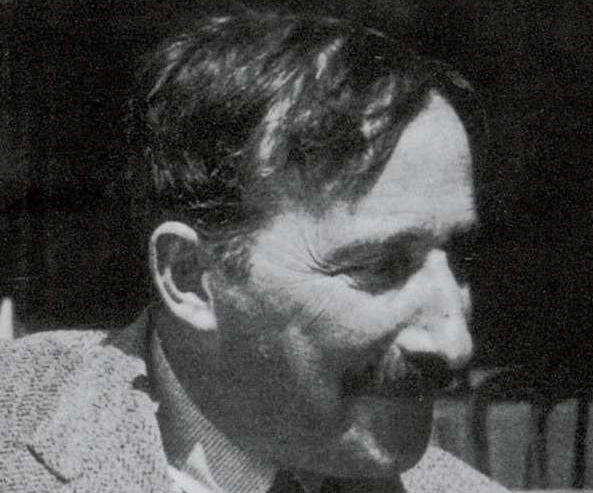
Stefan Zweig (1881-1942), seen here in 1936, was an Austrian Jew. He was a hugely popular writer in the 1920s and 1930s, but then went out of style.
Now he is fashionable again.
‘Impatience of the Heart’ (‘Ungeduld des Herzens’ in the original German) was first published in 1939, the English translation called ‘Beware of Pity’. I read the 2016 translation by Jonathan Katz which restores the original title.
It relates the experiences of Lieutenant Hofmiller, a young cavalry officer, immediately before the First World War.
Posted to a provincial backwater on the Hungarian border, he is invited to dinner at the palatial home of Kekesfalva, the wealthiest man in the neighbourhood, who lives with his daughter, Edith, and his niece, Ilona.
When dancing begins, Hofmiller is in his element. Believing he has neglected Edith, he invites her to whirl with him around the floor, only to discover that she is disabled, having lost the use of her legs.
Horrified by this awful faux pas, he befriends the girls and, out of pity, visits Edith most afternoons, entertaining her and encouraging her to undertake the various cures proposed to her.
But he struggles to come to terms with her disability, repulsed particularly by her crutches. He witnesses her frequent bouts of despair and her suicidal tendencies.
Unknown to Hofmiller, Edith has fallen in love with him. One evening he is asked to visit her in her room, where she is recovering from exhaustion. His chaste goodnight kiss is met with a frenzied sexual response.
Although he does not reciprocate her feelings, he eventually undertakes to marry her once she is cured. The family interpret this as a firm engagement and he seems to consent, only to deny the fact to his fellow cavalrymen later that evening.
To avoid scandal, Hofmiller’s Colonel posts him elsewhere. Although Hofmiller follows orders, he makes frantic efforts to set Edith’s mind at rest, worried that she might believe herself jilted.
All his efforts fail, owing to the chaos immediately following the assassination of Archduke Franz Ferdinand. Edith kills herself.
Filled with self-loathing, disgusted by his guilt and cowardice, Hofmiller grows sufficiently unafraid of death to become a decorated war hero.
The attitudes to disability displayed by the characters, including Edith herself, are very much of their time. Even so, the novel raises important questions about the nature and value of pity, and our healthy, able-bodied response to the universality of love and sexuality:
Here I was, twenty-five years of age, never having even dreamt that the sick among women, the maimed, the very young and the very old, the outcasts and the stigmatized, might so much as dare to love.
Ultimately, he decides:
No, it is not the healthy, the secure, the proud, happy people on this earth whom we should love – they have no need of it!… Only those whom Fate has laid low, those who suffer, the disadvantaged, the wretched and insecure, the unlovely, the humbled among us, only they can be truly blessed by love. Dedicate your life to them, and you truly restore what life has taken from them.
I thought this an excellent novel, both immensely readable and thought-provoking.
TD
April 2024









 Eponymous
Leave a comment